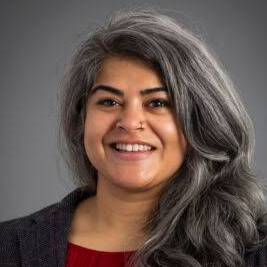
Azara Singh
Azara Singh, MBBS, is a pediatric neurologist and Assistant Professor at UW Health in Madison, Wisconsin, and a physician health and wellness advocate.
1
APPEARANCES
1
PODCASTS
Aug 27, 2026


Sam MackenzieHOST
What are you working on in terms of formalizing, maybe that's a better word, formalizing that process or helping child neurologists navigate transitions?

Azara SinghGUEST
Yeah, so I have been very lucky to be part of a bigger group of people who have really prioritized this work.
Azara SinghGUEST
So when you think about how, you know, our current understanding of how the process of transition should occur, really the earliest that this current process was talked about was 2011. when the American Academy of Pediatrics really sort of codified their best practices in terms of transition, which is now formalized as GOT transitions, which I really recommend everyone interested in transitions to look into.
Azara SinghGUEST
And then in 2016, I believe it was, the Child Neurology Society and the Child Neurology Foundation really led a lot of this work in terms of talking about transition best practices in the scope of child neurology.
Azara SinghGUEST
2016, they talked about how we should really be talking about transition preparedness starting as early as age 12, you know, to talk to families and patients about the eventual transition to adult neurology, doubling down on more formalized transition readiness assessments around age 14, and then starting this really sort of structured, regulated process from 14 onwards until that eventual handoff.
Azara SinghGUEST
What really stands out there is that the handoff, while important, is part of the process, right? Because really, really importantly, what we're focusing on is preparing patients and families for that difference in focus from pediatric and adult care models.
Azara SinghGUEST
Because pediatric care models tend to be very family-oriented, right? So we're doing a lot of care coordination.
Sam MackenzieHOST
So what does the center of excellence look like? And I guess my other question is, you know, if we're thinking about implementing tools as early as 12 or 14, If you're that busy, only child neurologist in Charleston, West Virginia, how much time do you have to devote to that? And I guess, is it the same problem that you're facing there versus a place like Madison?