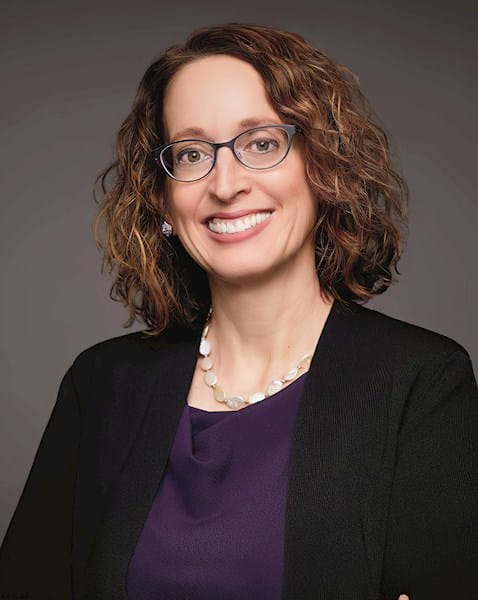
Ayelet Fishbach
Professor
14
APPEARANCES
10
PODCASTS
Nov 19, 2026


Ayelet FishbachGUEST
So sort of the takeaway there is that learning and doing new things it's kind of like a wake-up almost, right? It's like you're forced into presence and awareness because you don't know how to do the thing.

Ayelet FishbachGUEST
So sort of the takeaway there is that learning and doing new things, it's kind of like a wake-up almost, right? It's like you're forced into presence and awareness because you don't know how to do the thing.
Ayelet FishbachGUEST
So sort of the takeaway there is that learning and doing new things it's kind of like a wake-up almost, right? It's like you're forced into presence and awareness because you don't know how to do the thing.
Ayelet FishbachGUEST
So sort of the takeaway there is that learning and doing new things, it's kind of like a wake-up almost, right? It's like you're forced into presence and awareness because you don't know how to do the thing.

Ayelet FishbachGUEST
So sort of the takeaway there is that learning and doing new things, um, is kind of like a, a wake up almost, right? It's like you're forced into presence and awareness 'cause you don't know how to do the thing, and it can slow down time, your perception of time, which is pretty cool.

Ayelet FishbachGUEST
[upbeat music] Hello, I'm Ayelet, a professor of psychology and a motivation scientist.
Ayelet FishbachGUEST
At the beginning of the pandemic, when many people were mastering their baking skills, I sat down to write a book on what motivation science taught me about how to get things done.
Ayelet FishbachGUEST
If you ever put a psychologist, a sociologist, and an economist in one room, that basic principle, changing behavior by modifying the situation, might be the one truth they'll agree on.
Ayelet FishbachGUEST
So sort of the takeaway there is that learning and doing new things, it's kind of like a wake-up almost, right? It's like you're forced into presence and awareness because you don't know how to do the thing.
Ayelet FishbachGUEST
So sort of the takeaway there is that learning and doing new things, it's kind of like a wake-up almost, right? It's like you're forced into presence and awareness because you don't know how to do the thing.

Chris WilliamsonHOST
So the way that you can see your existence is basically that every single moment that you live can be a gift to the future version of you to look back on with pleasure.
Ayelet FishbachGUEST
And I think this phenomenon also explains why you have people report that Time has seemed to go by super fast during COVID.
Ayelet FishbachGUEST
People are like, oh God, we're in 2022? How did that happen? It feels like it's been a month.


Dan LappinHOST
Yeah, so if we could get into it a little bit, can you share a little bit more about this process of the motivation, how it's high at the beginning and it can be high at the end, but yet in that middle is where the struggle really takes place.
Ayelet FishbachGUEST
We think about motivation in terms of first people set a goal and then they need to monitor the progress.
Ayelet FishbachGUEST
By the way, they also need to think about this goal in the context of other goals, so managing multiple goals.
Ayelet FishbachGUEST
They also need to think about this goal in the social context, who's helping, who is interfering, but we'll put this aside and just think think about how we monitor progress and we all agree that we need to monitor progress if we don't know where we stand on the goal.
Ayelet FishbachGUEST
It's very easy to lose our motivation, but We also intuitively agree that when we start something, we are highly motivated, like the first step in the journey, and we are all geared up.
45 MINS LATER
Dan LappinHOST
Ayelet, what would you say to someone who is afraid to share their goals because they maybe are afraid to be on the hook? Because what if they don't accomplish them?


Scott DannerHOST
And just getting that 10 minutes helps me move the needle versus trying to do all of it every time the way that I intended from the beginning or the end.
Ayelet FishbachGUEST
So can I refer to a few things that you said? You said a lot there, and I have comments on everything here.
Ayelet FishbachGUEST
I love to read books on my Kindle because I can carry it everywhere, and it's always on me.
25 MINS LATER

8:20

So from a behavioral standpoint, how does uncertainty influence the way people are actually making decisions?
Ayelet FishbachGUEST
Uncertainty is really hard to model, in particular in the domain that we are discussing.
Ayelet FishbachGUEST
We're trying to, to predict consumer behavior, because uncertainty makes us nervous as, as consumers, okay? So, uh, that could lead to, uh, less, uh, purchasing and maybe, uh, uh, uh, try to, to save more because you don't know what the future will bring.
Ayelet FishbachGUEST
However, uh, fears of inflation, uh, lead people to, uh, stock up, okay? Because prices might, uh, uh, change.
Ayelet FishbachGUEST
Uh, uh, one way to relieve the, the nervousness is through consumption behavior, okay? And, and, and looking for, for deals.
Ayelet FishbachGUEST
And so again, we are going to, to get the same psychological state, which is being nervous, being uncertain, leading to more splurging and less, uh, uh, saving.
Ayelet FishbachGUEST
Also, learned helplessness, okay? Which is basically the, the psychological state of people that feel that they cannot control their life, that they don't know what the future will bring, sometimes lead people to feel that, "Eh, nothing really matters," okay? "I have no control, and therefore I might as well buy whatever I can afford today because I don't know what the future will bring." All this to say is that what we know is that people right now are more uncertain, are more nervous.
8 MINS LATER

speaker_3UNKNOWN
[laughs]
Ayelet FishbachGUEST
At work when you're not quite killing it, remove your ego, and you will be better able to learn.
Ayelet FishbachGUEST
Another solution is to seek discomfort, if only temporarily, instead of trying to avoid it.
Ayelet FishbachGUEST
When you seek discomfort temporarily, you realize that you can grow yourself, that discomfort is a sign of growth.
speaker_4UNKNOWN
[laughs]


Marielle SegarraHOST
Ayelet Fishbach is a professor of behavioral science and marketing at the University of Chicago Booth School of Business, and she says we need each other.
Ayelet FishbachGUEST
We, uh, do things with others, and when others are not around, they are in our mind.
Marielle SegarraHOST
One related finding from Ayelet's research is that in the presence of other people, our actions feel more meaningful to us, and that's true even if they're strangers.
Ayelet FishbachGUEST
We had people in China playing badminton, okay, as, as part of, uh, uh, some event, okay? And when there were more people in the audience, they felt that they either contributed more to the win or contributed more to the loss, but, uh, uh, that they, what they did mattered.

Lynne ThomunHOST
You found that enjoyment predicts success, but what if the goal isn't enjoyable, like boring work or exercise that you hate? What should people do then?
Ayelet FishbachGUEST
So this is critical, right, because, "Do what you enjoy doing," uh, sounds easy and is easy, okay? I like to eat ice cream and stay in bed late.
Ayelet FishbachGUEST
And so we set goals for things that are not easy, that are not necessarily very enjoyable, and now we need to find enjoyment, right? In that, uh, you know, the intuitive way to pursue these goals.
Ayelet FishbachGUEST
Certainly, uh, you need to embrace some discomfort as you develop a new habit, as you're doing something new, something that is hard.
Lynne ThomunHOST
Walk me through what they should do, step-by-step.