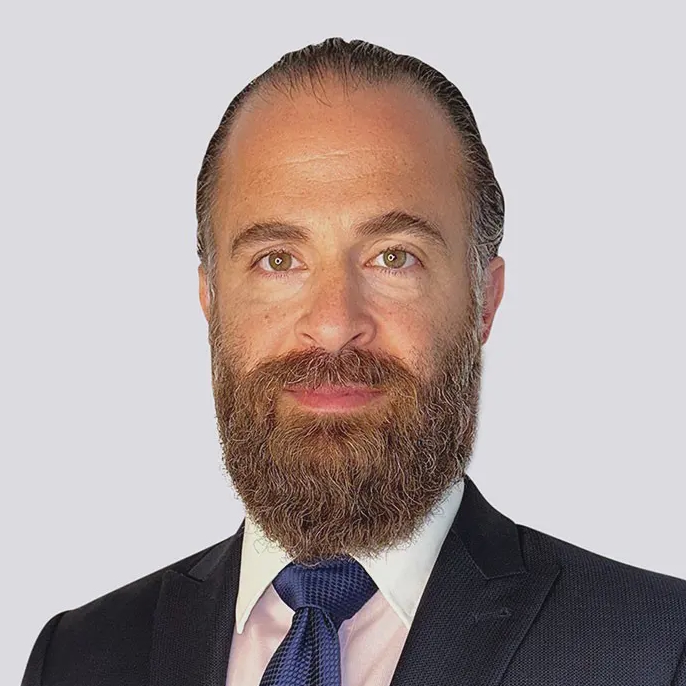
August Biniaz
Co-founder and Chief Investment Officer of CPI Capital, a real estate private equity firm, and host of the Real Estate Investing Demystified podcast.
12
APPEARANCES
12
PODCASTS
Sep 14, 2026


August BiniazGUEST
And even through that process, we learned lots because every time you get on a call with a CPA, they have their own im- interpretation of, um, uh, the treaty that exists between Canada and the US and the tax laws that exist.
August BiniazGUEST
Um, uh, and so we learned that, and then we would take detailed notes every time we were on a call with a CPA.
August BiniazGUEST
Uh, eventually we realized that if we wanna follow a certain guidance that we have a ... tax lawyer actually draft us a memorandum, a cross-border tax memorandum that it acts as a guide to us in every step we make.
August BiniazGUEST
Now, over the last six years, that memorandum has, um, uh, has been updated and has m-many mo- m- uh, many more moving parts to it that encompasses, uh, different deals that, that we get involved with.
August BiniazGUEST
If it's a development side or an acquisition side, depending on what lenders, um, uh, get invol- uh, g- you know, are, are involved in the deal.
23 MINS LATER

Kevin BuppHOST
So would love to know, you know, on that particular deal, you know, what changed, and at what point in time did you realize that the deal no longer worked?

Kevin BuppHOST
What did you see in the U.S. real estate markets that That made what I foresee to be the added complexity of investing in another country worth it, worth for you to make the leap of faith and move into another country.
August BiniazGUEST
Initially, it was just yield, just the return on investment that existed in the US.
August BiniazGUEST
But as I dug farther, I realized there were just so many advantages and so many disadvantages that existed in Canada.
August BiniazGUEST
Initially, I was introduced to US real estate, commercial real estate, because I was researching about strategies and the process on how to be able to raise capital and and putting deals together, the syndication model, structuring funds, and so on.
August BiniazGUEST
And a lot of that content was coming from US platforms, educational platforms, or podcasts, YouTube shows, books.
August BiniazGUEST
So a lot of the educational content was being created by US-based individuals.
8 MINS LATER


August BiniazGUEST
But in the book, he talks about a time where it's his shift from developing workforce and rental properties into actually developing mega projects in Manhattan.
August BiniazGUEST
And the story is that he goes with one of his dad's workers that goes and does collections on unpaid rents.
August BiniazGUEST
And when they got to the first apartment unit that they got to, And this fellow knocks on the door and steps to the side and tells Donald to stand to the side.
27 MINS LATER
speaker_1ADVERTISER
Check responses, setup required, compatibility and availability varies 18 plus.


Matt ZalkHOST
Walk us through how somebody ends up going from swinging a hammer to running a successful fund.
August BiniazGUEST
So there was times that we'd get my hands dirty and you have to, as a general contractor, kind of, you know, physically get involved in projects.
22 MINS LATER
Matt ZalkHOST
let's touch base for a second you mentioned we both mentioned the canadian investors there's i would imagine that there's a lot more complication in moving money across border than people tend to understand you mentioned doing a mutual fund structure in canada which allows people to invest self-directed funds uh similar to a self-directed ira in the united states can you uh Can you just give us a little bit of insight into that and how much work is involved in actually getting that stuff done? And then another question that I have is, did you specifically build that fund structure around a potential investor archetype or did you come to that from another way?


August BiniazGUEST
The real, uh, investors are the backbone of our company and, uh, our deals are syndicated, which allows everyday retail investors to participate and get exposure to institutional deals that historically have been only available to Wall Street or through some sort of other financial vehicle like a public REIT.
August BiniazGUEST
This is a way to invest in a, uh, large institutional asset and be on a one-on-one kinda basis with the founders of the company.
August BiniazGUEST
It kinda gives you that really intimate feel of investing and the progress of the deal.
August BiniazGUEST
We do both multifamily value add, where we buy existing properties and, uh, do, uh, certain upgrades, renovations, bettering the tenant profile, uh, making the property, uh, you know, run and be managed more efficiently, increasing the net operating income or increasing in turn the property value.
August BiniazGUEST
Uh, we usually hold the properties around five years depending on the, the loan terms and our exit strategy and so on.


Jim BeachHOST
Where's the market for real estate going right now? Is it city by city, or do we have an overall buyer-seller market? What's going on at sort of the macro level?
August BiniazGUEST
And today, relatively speaking, interest rates are pretty high, especially when you talk about residential real estate and commercial real estate.
August BiniazGUEST
Uh, they're basically pinged off of different, uh, treasuries, uh, with the, uh, residential being the 30-year treasury and the commercial loans being more of the five-year or 10-year treasury.
August BiniazGUEST
So, uh, when interest rates are high, the buying power for, um, purchasers are less.
August BiniazGUEST
So yeah, real estate is definitely going through a correction cycle when it comes to single family and a bust cycle when it comes to commercial real estate.
Jim BeachHOST
Uh, that's just an apartment building, is it? I don't understand why were you-- What's that term build to rent mean? Why are we making it a distinction from anything else?


August BiniazGUEST
I mean, you're talking about debt is such an important component of real estate, other asset classes, but particularly real estate, because you can't go out there and borrow money to buy stocks or other investments.
August BiniazGUEST
It's very industry standard to borrow money and get debt and buy real estate.
August BiniazGUEST
It's very normal, right? retail level, be it on people, consumers buying their home or be it on an institutional level.
14 MINS LATER


Chris LopezHOST
Now, from your perspective, you know, on the Canadian side, like what attracted you to the U.S. market? And then talk about, you know, what you've had to go through to be able to invest across the border.
August BiniazGUEST
But a very common question that comes up for us as well is, hey, why not invest in Canada? You're part of a G7.
August BiniazGUEST
Why not just invest in your backyard when it comes to multifamily acquisitions? And the answer there really is around cap rates, the yield that these properties produce.
8 MINS LATER
Chris LopezHOST
Talk to us about the investment thesis you have in the U.S. and right now in the market cycle we're in.

15:58
So yeah, bring us into kind of your day-to-day and how it's changed over the years maybe.
August BiniazGUEST
So I'm separating kind of the personal progress from the business kind of development and business growth ideas.
August BiniazGUEST
So yeah, on the personal side, it was just working on it kind of on a, day-to-day basis, try to build yourself and educate yourself and kind of have a vision and have an idea and surround yourself by great people and people smarter than yourself.
August BiniazGUEST
But on the business side, I would say that a real estate private equity firm is a really a Leviathan of a task is truly great tasks to achieve.
August BiniazGUEST
you know it's uh there's so many moving parts as you described the acquisitions the asset management the investor relations so many team members and the burn rate for such a company could be also uh astronomical uh it you know a company like that has a huge burn rate so if you're trying to start that you need to have either financial backing through investors or partners or yourself personally, or your team members need to have that financial backing to start such a venture.
8 MINS LATER
25:40
So what's your kind of tips and tricks, strategy for approaching high net worth individuals?


Jack HossHOST
Can you talk about the tools and what you might have implemented since the last time we've talked that has really significantly made a big difference in your operations?
August BiniazGUEST
As a boutique firm here at CPI, we're always out there learning about new strategies, tools, and softwares, including AI that other larger firms are utilizing and how we could bring that in-house.
August BiniazGUEST
Our plan is over the next 10 years to own over 30,000 apartment units, including BTR, which puts us on the list of NMHC's top 100 apartment owners in the U.S., The last person on the list today has 27,000 units.
August BiniazGUEST
So when you have those types of grandiose ideas and vision, you want to be able to have the tools that your team members can utilize to make their jobs more efficient and more productive.
8 MINS LATER


August BiniazGUEST
... putting it together, bringing it on to the partners, bringing the GC, bringing the architect.
August BiniazGUEST
Uh, and over the 10 years, what I'd learned with, um, my home building company, White Rhino Developments, which is no longer in business, when I did start CPI with a couple of great partners, my recommendation early on was we need to put a focus on raising capital.
August BiniazGUEST
We can always bring on a GC, we can always bring on talent, but you can never bring somebody to go out there and raise you $20 million.
7 MINS LATER


Gino BarbaroHOST
What are your thoughts about the war currently actually being somebody from Iran? What are your opinions about the war and where do you see this war going?
August BiniazGUEST
I mean, the analogy that I use as someone with Iranian heritage, you know, living in diaspora now for a majority of my life, but seeing what's happening to their country, it really feels like, you know, the Islamic regime is a cancer on the Iranian people.
August BiniazGUEST
So you have cancer, you're nearly dying from this cancer, but then the only cure is chemotherapy, which is also killing you in the process to get rid of the cancer.
August BiniazGUEST
You know, some reports have between six and eight million Iranians living in diaspora.
10 MINS LATER
Gino BarbaroHOST
Now at CPI Capital, August, walk me through when you started looking at deals initially, when you were first starting to look at multifamily, how has that evolved as far as your underwriting and looking at a deal today? And what's an opportunity today versus what an opportunity was to you when you first started out?