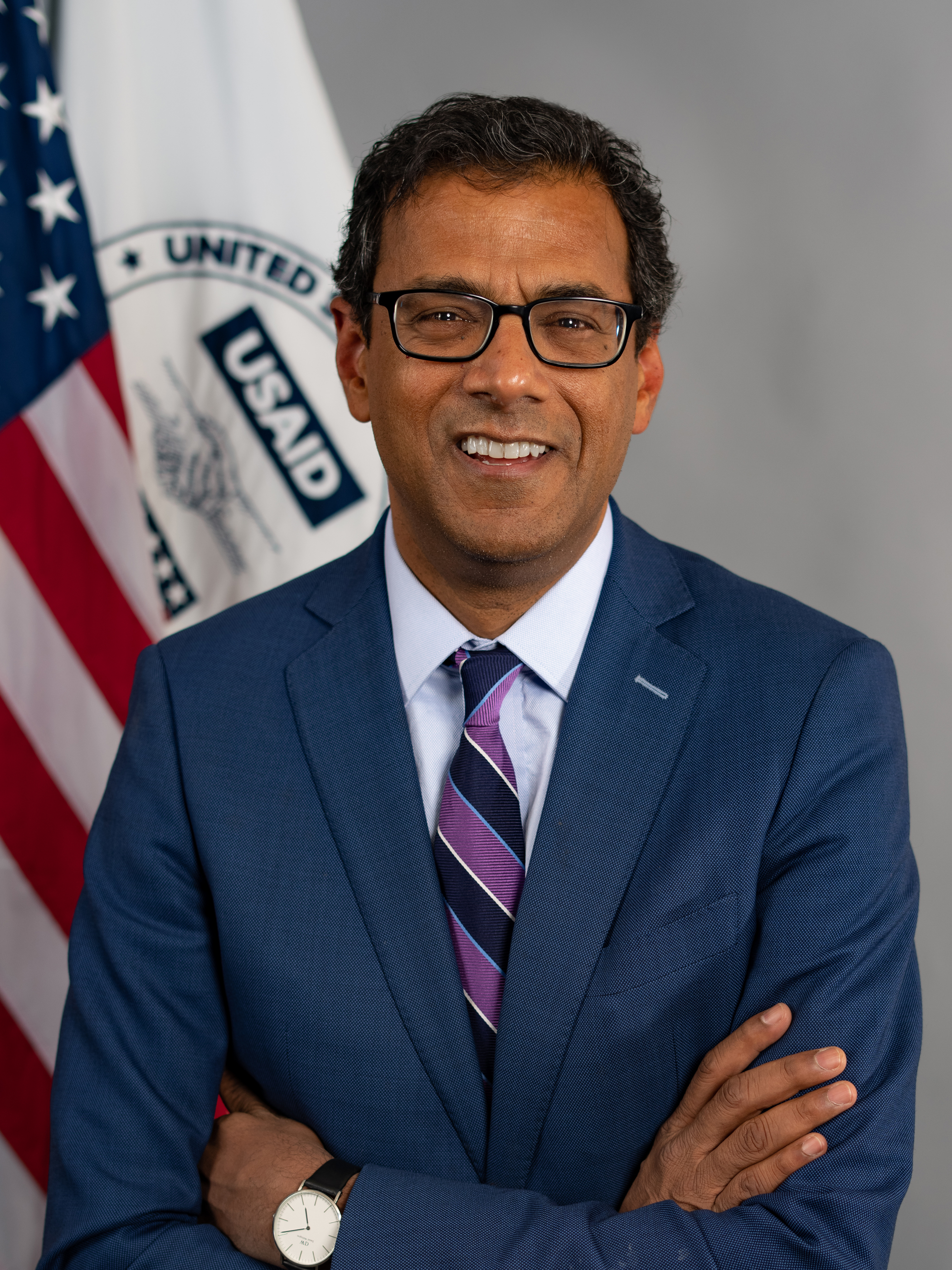
Atul Gawande
American surgeon and writer
33
APPEARANCES
26
PODCASTS
Sep 14, 2026

Atul GawandeGUEST
I'm now s- past 60, so that was a different place than when I'd written the book at r- in my mid-40s.
Atul GawandeGUEST
We moved to DC for work in the, in the last administration, and we actually decided that we would look for a place that's on one floor [chuckles] just in case we're staying long enough that we should age and wanna, you know, make it, make it convenient.
Atul GawandeGUEST
But I would say I'm still, you know, at age 60, the average American who has access to healthcare, access to good public health as well, will live 90 years on average.
Atul GawandeGUEST
So I'm aware on the one hand that I'm on the back end, uh, of the, of the age curve, but living my life still as the way you do when you think you have an infinite amount of time.
14 MINS LATER

Dan HarrisHOST
Um, I'd just be curious what your-- yeah, how you're processing all of this, what your thoughts are, h- how you think we should think about it.

40:13

What does it do for us? Sure, we give them, uh, free AIDS medicine, but what does that do for the United States? It, it, and that, that question removes the humanitarianism.

Atul GawandeGUEST
Here's the point that, uh, th- we always had expectations and accountability, but it was about getting good results from what we were doing for the country and the world.
Atul GawandeGUEST
That's very different from a predatory approach that says, "I'm going to hold your HIV funds hostage." In Zambia, that was, uh, HIV funds, TB funds helping more than a million people, until you give us your critical mineral rights.
Atul GawandeGUEST
In other countries, like Eswatini, Equatorial Guinea, humanitarian funds were hinged on taking d-deportees from the United States, third country nationals, and being put in their jails, uh, to i-instead of, uh, you know, getting due process in the United States.
41:46
What does the Ebola outbreak now tell us? Uh, what have we learned about it and what it means to how to be facing it without USAID?


Jane CoastonHOST
So what are the ways in which USAID benefited how the world viewed Americans, which I think is a critical element here?
Atul GawandeGUEST
As John F. Kennedy said in forming USAID, he said, "The point of assistance to the world is that we are assisting the US itself." And it assists us in ways that we're seeing now.
Atul GawandeGUEST
When we have had a year, uh, plus of experimenting with approaching the world saying, "We're going to use force first.
Atul GawandeGUEST
We want to extract the maximum deal and maximum immediate payoff we can get, and ignore the consequences for the future." So we, uh, cut off foreign assistance funds, but in countries like Eswatini and Equatorial Guinea said, "Well, we'll turn it back on if you take our, uh, our deportees, third-country nationals deported, and put them in your jails." We said, "We're going to only turn on your HIV funds if you give us access to your critical minerals in Zambia and DRC, the Congo." Um, and the result of that is, number one, we've abandoned important goals for the US and abroad, like stopping and ending HIV, stopping and ending tuberculosis, and building capacity and surveillance that can stop outbreaks going on around the world.
Jane CoastonHOST
What are some of the other most significant consequences since USAID has been effectively dismantled?
42:26
And so, uh, wh- when Elon Musk sits there, uh, and says zero point zero, uh, w- what, what would you wanna say back to him?
Atul GawandeGUEST
him?Um, there's many things that we have been pointing out continually along the way.
Atul GawandeGUEST
The bomb blast that was the shutdown of USAID and the closure of, uh, foreign aid for, uh, a big part of 2025 has had waves of effect.
Atul GawandeGUEST
What I described happening to emergency services, malnutrition, refugee assistance, disaster relief, that was the first wave with, uh, 700,000 estimated to have died from things like malnutrition, poorer outcomes at childbirth, and so on.
Atul GawandeGUEST
Now you're citing the data around wave two, where we're seeing resurgence of infectious diseases, HIV.
Atul GawandeGUEST
Uh, one of the data points in, that was also released was there are 77,000 children with HIV who are not getting treatment now that were getting treatment before.
44:24
Well, please go ahead and, and r- tell us what we should know about, uh, TB and malaria.
Atul GawandeGUEST
Well, what I'd point out is that the, uh, that first of all, in these areas, you've had over...


William BranghamCORRESPONDENT
Does any of this surprise you? A- and, and what does this mean for the larger fight against HIV/AIDS?
Atul GawandeGUEST
On the other, we're now finally starting to see some actual numbers about the magnitude of what's happened, and here's what I took away that was, that's really significant.
Atul GawandeGUEST
Some key pillars of fighting HIV is being able to get services to people who might be shunned from the medical system, people you named, like sex workers, people who inject IV drugs, gay or transgender people.
Atul GawandeGUEST
The second thing that you have to do is not only get people on treatment, you have to contact trace and test people who they are, uh, in contact with.
Atul GawandeGUEST
The numbers aren't as sexy as the closing of a clinic, but those are the w- things that start to happen when you, when you have a surge of HIV return.

William BranghamHOST
Does any of this surprise you? A- And, and what does this mean for the larger fight against HIV/AIDS?
Atul GawandeGUEST
On the other, we're now finally starting to see some actual numbers about the magnitude of what's happened, and here's what I took away that was ...
Atul GawandeGUEST
Some key pillars of fighting HIV is being able to get services to people who might be shunned from the medical system, people you named, like sex workers, people who inject IV drugs, gay or transgender people.
Atul GawandeGUEST
The second thing that you have to do is not only get people on treatment, you have to contact trace and test people who they are, uh, in contact with, and testing and prevention went way down.
Atul GawandeGUEST
The numbers aren't as sexy as the closing of a clinic, but those are the w- things that start to happen when you, when you have a surge of HIV return.

William BranghamCORRESPONDENT
Does any of this surprise you? And what does this mean for the larger fight against HIV-AIDS?
Atul GawandeGUEST
On the other, we're now finally starting to see some actual numbers about the magnitude of what's happened.
Atul GawandeGUEST
Some key pillars of fighting HIV is being able to get services to people who might be shunned from the medical system, people you named, like sex workers, people who inject IV drugs, gay or transgender people.
Atul GawandeGUEST
The second thing that you have to do is not only get people on treatment, you have to contact trace and test people who they are in contact with.
William BranghamCORRESPONDENT
I mean, it seems like the political choices, again, not the scientific choices, the political choices we are making are moving in the opposite direction right now.

William BranghamCORRESPONDENT
Does any of this surprise you? And what does this mean for the larger fight against HIV-AIDS?
Atul GawandeGUEST
On the other, we're now finally starting to see some actual numbers about the magnitude of what's happened.
Atul GawandeGUEST
Some key pillars of fighting HIV is being able to get services to people who might be shunned from the medical system, people you named, like sex workers, people who inject IV drugs, gay or transgender people.
Atul GawandeGUEST
The second thing that you have to do is not only get people on treatment, you have to contact trace and test people who they are in contact with.
William BranghamCORRESPONDENT
I mean, it seems like the political choices, again, not the scientific choices, the political choices we are making are moving in the opposite direction right now.


David RemnickHOST
This is an enormous number, so I think it would be worth specifying, uh, w- what-- people where? People dying of what? Maybe if you could, y- you know, put a, some more specificity on this, then it, it, it ceases to be just a gigantic number.
Atul GawandeGUEST
A big part of what USAID did was humanitarian response, disaster relief for, uh, tens of millions of people who are fleeing war or in conflict zones or were driven out by floods and those kinds of things.
Atul GawandeGUEST
WHO estimates, uh, that where eighty million people were reached by emergency health services in twenty twenty-four, that number in twenty twenty-five dropped by, uh, more than fifty million people.
Atul GawandeGUEST
That included, for example, uh, fourteen million people who were, uh, victims of severe acute malnutrition.
Atul GawandeGUEST
Like a, a peanut bar that gives you your calories for the day distributed by community health workers that the US manufactured but was cut off.
David RemnickHOST
What has he been doing with the CDC and other agencies that fall under Health and Human Services, his agency? What's he had to say about all this?

David RemnickHOST
So I think it would be worth specifying, uh, w- w- what... people where? People dying of what? Maybe if you could, y- you know, put a, some more specificity on this, then it, it, it ceases to be just a gigantic number.
Atul GawandeGUEST
A big part of what USAID did was humanitarian response, disaster relief for, uh, tens of millions of people who are fleeing war or in conflict zones or were driven out by floods and those kinds of things.
Atul GawandeGUEST
WHO estimates, uh, that where eighty million people were reached by emergency health services in twenty twenty-four, that number in twenty twenty-five dropped by, uh, more than fifty million people.
Atul GawandeGUEST
That included, for example, uh, fourteen million people who were, uh, victims of severe acute malnutrition.
Atul GawandeGUEST
Like a, a peanut bar that gives you your calories for the day distributed by community health workers that the US manufactured but was cut off.
David RemnickHOST
What has he been doing with the CDC and other agencies that fall under Health and Human Services, his agency? What's he had to say about all this?


Kate BowlerHOST
But sometimes I feel like they're just saying, like, what's the future of being human in healthcare?
Atul GawandeGUEST
And the thing that the tech people have a hard time understanding is healing is not a correct diagnosis and treatment.
13 MINS LATER

Atul GawandeGUEST
And what he saw was incredible loneliness, depression, not much will to live and not feeling they were anywhere that anybody would call home you know the most common things families would find when they walked in the door and saw a family member was you know when can i go home and the reason why was that that he diagnosed was there wasn't life and they didn't have a chance to give and share in life.
Atul GawandeGUEST
And so he started by introducing plants that people would take care of and grow themselves, and then said, why can't we have pets? And he said, you know what, we're gonna make this a place where everybody who wants an animal can have an animal, and made it a place full of birds and cats and dogs.
Atul GawandeGUEST
And yes, the staff had to sometimes help with dealing with letting the dog out or things like that, and needed to make it into a friendly place for that.
21 MINS LATER

Vivek MurthyHOST
And when we think about what you and I are discussing today, this goal of trying to tailor care to what people's actual goals are, to their values, to understand who they are as a whole person and not just as a diagnosis, when you look at what's coming, and it's already here in some ways with artificial intelligence, do you see AI making that goal closer within REACH? farther? What do you think the impact of AI is going to be?


Preet BhararaHOST
Where do we stand today on public funding? Are we, are we, are we good? Are we not good? Could we always use more? What's going on with the Trump administration and, and, and the, and the money to, to fund the research that you described a minute ago to fight cancer?
Atul GawandeGUEST
It's very concerning to me on multiple fronts, um, and so let me try to unpack that a little bit.
Atul GawandeGUEST
First of all, the National Institutes of Health, um, had, uh, its budget slashed-- w-well, frozen.
Atul GawandeGUEST
Last year, there was a dramatic drop in the number of approved awards that the NIH gave out, including in cancer.
Atul GawandeGUEST
Among the, the very hardest hit were ones like HIV, which, um, you know, is affected by some of the policies around whether you can have targeted efforts to diseases that hit, um, uh, you know, diverse populations, the gay community in that particular case, sex workers and so on.
18 MINS LATER
Preet BhararaHOST
What, what, w-w-what is the residual effect of public trust in people in your profession, public health professionals, in the wake of COVID? Is that, is that stagnating at low? Is it, does it depend on if you're a red state or a blue state? How do you, how do you look at that?


Natalie OrpettHOST
It's all well and good," you know, thinking again of our skeptic who thinks in very traditional, sort of narrow terms of what national security means, thinking, "Okay, making other people health-healthy in countries around the world is sure good for America's reputation, but what does it really get us?" So I'd, I'd love to hear from you some more sort of concrete examples of the type of work that USAID does and what its connection is to the United States' security that goes beyond, "It's a gesture of goodwill, and that makes people feel good."
Atul GawandeGUEST
Let me start with where you started, which is the how much money goes to USAID.
Atul GawandeGUEST
What does that actually mean? The average American taxpayer pays a little over $12,000 per year in taxes.
Atul GawandeGUEST
What is that getting you? When I arrived in office, one of my goals, you know, the clear goal I had to ta- uh, take, uh, charge of was around COVID and addressing the pandemic.
9 MINS LATER
Natalie OrpettHOST
But tell us also about what could have been done, what reforms are needed, and what the appropriate way would have been in your view for addressing them.

Natalie OrpettHOST
It's all well and good," you know, thinking again of our skeptic who thinks in very traditional, sort of narrow terms of what national security means, thinking, "Okay, making other people health- healthy in countries around the world is sure good for America's reputation, but what does it really get us?" So I'd, I'd love to hear from you some more sort of concrete examples of the type of work that USAID does and what its connection is to the United States' security that goes beyond, "It's a gesture of goodwill, and that makes people feel good."
Atul GawandeGUEST
Let me start with where you started, which is the how much money goes to USAID.
Atul GawandeGUEST
What does that actually mean? The average American taxpayer pays a little over $12,000 per year in taxes.
Atul GawandeGUEST
What is that getting you? When I arrived in office, one of my goals, you know, the clear goal I had to ta- uh, take, uh, charge of was around COVID and addressing the pandemic.
10 MINS LATER
Natalie OrpettHOST
But tell us also about what could have been done, what reforms are needed, and what the appropriate way would have been, in your view, for addressing them.


Yascha MounkHOST
Uh, is there a way for us culturally to hold those two truths in our heads at the same time, uh, especially in a moment that's increasingly polarized?
Atul GawandeGUEST
Let me start by saying, um, look, doubt and concern about medicine is not new.
Atul GawandeGUEST
Uh, you know, people-- I- if anything, it's, people have more confidence in medicine than they did, you know, in the nineteenth century, when you would go to doctors, and you would be bled, or you would be subject to treatments that often left people worse off rather than better off.
Atul GawandeGUEST
Um, and, uh, and you know, today, we're in a space where between public health and what medicine's been able to do, we've essentially doubled the human lifespan, and people spend about half their life dealing with a chronic illness now.
Atul GawandeGUEST
After age forty or fifty, most people have one or more, um, to navigate, and you have people to navigate that w- with.
19 MINS LATER
Yascha MounkHOST
Um, you know, back a few years ago, when you were assistant administrator of the agency, um, what did it do?


Atul GawandeGUEST
Well, go back to inauguration, and I was leading global health until 11:59, 2,500 people in 65 countries responding to everything from Ebola outbreaks, to Russia cutting off medicines to Ukraine, to, you know, dealing with improving nutrition and addressing child malnutrition and HIV.
Atul GawandeGUEST
So at noon, I'm gone, and within about six hours, the president has signed an order saying that all of this kind of work is being brought to a halt, that all foreign assistance for humanitarian purposes or otherwise is halted.
Atul GawandeGUEST
Marco Rubio has turned the executive order into instructions explaining that even medicines on the shelf, food in the warehouses cannot be distributed.
Atul GawandeGUEST
It, it becomes apparent within about two to three weeks that hundreds of thousands of lives are at risk, that hundreds of thousands of people will die.
Atul GawandeGUEST
And Doge is swinging Elon Musk's chainsaw, and there is, uh, no stopping or even attempting to address that concern.


Atul GawandeGUEST
I was leading global health at USAID when I departed at 11:59 on January 20 at inauguration.
Atul GawandeGUEST
Uh, a few hours later, President Trump, uh, signed the executive order saying that all foreign assistance needed to come to a halt.
Atul GawandeGUEST
By that weekend, um, half of the global health staff was being let go because they were contractors, and their contracts came to an end.


Amy GoodmanHOST
Explain how you know this and your recent trip to visit the survivors of South Sudan.
Atul GawandeGUEST
One of the things I was most worried about is the advances we've made in malnutrition.
Atul GawandeGUEST
People don't recognize it, but in the last 20 years, we've discovered the protocols that could take a 20% death rate for children with severe acute malnutrition coming to hospital facilities.
Atul GawandeGUEST
How does that happen? It does it by moving more of the care for the severely, acutely malnourished closer to the home with community health workers, with a measuring tape and a scale, checking on the weights and heights of kids, and catching early signs of severe acute malnutrition.
Atul GawandeGUEST
Then when they and they can get a fortified food, therapeutic foods formulated in the United States, much of it manufactured by American farmers and deliver it at home and rescue 85 percent of those children.

Amy GoodmanHOST
Explain how you know this in your recent trip to, uh, visit the, um, the survivors of South Sudan.
Atul GawandeGUEST
Um, one of the things I was most worried about is the advances we've made in malnutrition.
Atul GawandeGUEST
People don't re- recognize it, but in the last 20 years, we've discovered the protocols that could take a 20% death rate for children with severe acute malnutrition coming to hospital facilities and have brought that down to less than 1%.
Atul GawandeGUEST
How does that happen? It does it by moving more of the care for the severely acutely, uh, malnourished closer to the home with community health workers with a measuring tape and a- and a scale, checking on the wi- weights and heights of kids and catching early signs of severe acute malnutrition.
Atul GawandeGUEST
Then when they... and they can get a- a fortified food, therapeutic foods formulated in the United States, m- much of it manufactured by American farmers, and deliver it at home and rescue 85% of those children, and then the remaining 15% go for complications, or they're very young, to hospitals.

JonathanHOST
Can you just for- summarize what has happened to USAID under- and global, uh, assistance under Trump?
Atul GawandeGUEST
Well, let me go even just one week before it all happened because I was the outgoing leader of Global Health at USAID, and I did not see what was happening coming at all.
Atul GawandeGUEST
This is an agency that has had bipartisan port- support for six decades, since its founding by John F. Kennedy.
Atul GawandeGUEST
Um, and the work that it had done, I got to lead the global health part where we had 2,500 people in 65 countries working on problems like controlling HIV, eradicating polio, reducing maternal and child deaths, uh, and moving countries from, uh, you know, extreme poverty, uh, to being middle income countries and- and- and higher in the world.
Atul GawandeGUEST
Um, I didn't see it coming because that support had been there because for the last two decades, USAID, in recent analysis, had saved 92 million lives.
Atul GawandeGUEST
And when, uh, the inauguration happened, I left office at 11:59, and within hours, the president signed orders halting the foreign aid.
18 MINS LATER
JonathanHOST
What was your answer?
52:24
What have we lost in what Donald Trump, Elon Musk, and Marco Rubio have done, and what are we facing in the coming years?
Atul GawandeGUEST
Well, I think that study that came out, um, indicated what, what we have lost.
Atul GawandeGUEST
That study was looking at the totalitary, the totality of USAID's funding and indicated that over the last 20 years, as you, as you pointed out, 92 million lives were saved.
Atul GawandeGUEST
That was also through the development programs that advanced economies, advanced education systems, advanced agriculture so that countries were moving to self-alon- reliance.
Atul GawandeGUEST
And we've had a number of countries, many that have moved off of aid during that time.
Atul GawandeGUEST
So what we are seeing is a, you know, a, a slashing of the, well, well, the elimination of the agency.
38:04
Uh, if you had had that chance, what would you have told him? What would you tell him tonight?
Atul GawandeGUEST
You know, there were plenty of opportunities, if he had the curiosity to know about the programs and how they operated.
Atul GawandeGUEST
You know, these- this is with half the budget of my hospital system here in Boston where I practice surgery.
Atul GawandeGUEST
And, uh, you know, $24 per American, reaching hundreds of millions of people and saving lives across the world by preventing or- and death from HIV, preventing deaths from malaria, addressing childhood, uh, diseases and illnesses of all kinds.
Atul GawandeGUEST
That work, um, was producing enormous benefit and saving lives by the millions.
Atul GawandeGUEST
That is what has now been shut down, is causing, you know, the counts of deaths already are in the tens of thousands to hundreds of thousands, and it's going to continue to climb.
39:12
And the chaos now is spreading, uh, created by this sort of thing, is spreading to other countries, including normally peaceable countries where there might be a refugee camp, like say Malawi, where difficulties are breaking out there that they've never witnessed before because of the deprivation caused by Elon Musk and Donald Trump.
35:51
Uh, but what is the scale of the deprivation that has been, that has occurred because of this, uh, cu- this cut of USAID?
Atul GawandeGUEST
The estimates are that, uh, from malnutrition alone, it's over 50,000 malnutrition deaths for children thus far.
Atul GawandeGUEST
You have estimates still to be made about deaths related to complications of childbirth after cutting, um, uh, m- m- maternal and child health funding.
Atul GawandeGUEST
Um, it is, uh, s- se- se- Senator Rubio, or I should say Secretary Rubio, um, testified that-... you know, the aid is continuing, that 85% of HIV, uh, funding is moving, and it's just not true.
Atul GawandeGUEST
I confirmed that, uh, just yesterday, uh, speaking to a state official, a State Department official, off the record.
Scroll for more appearances