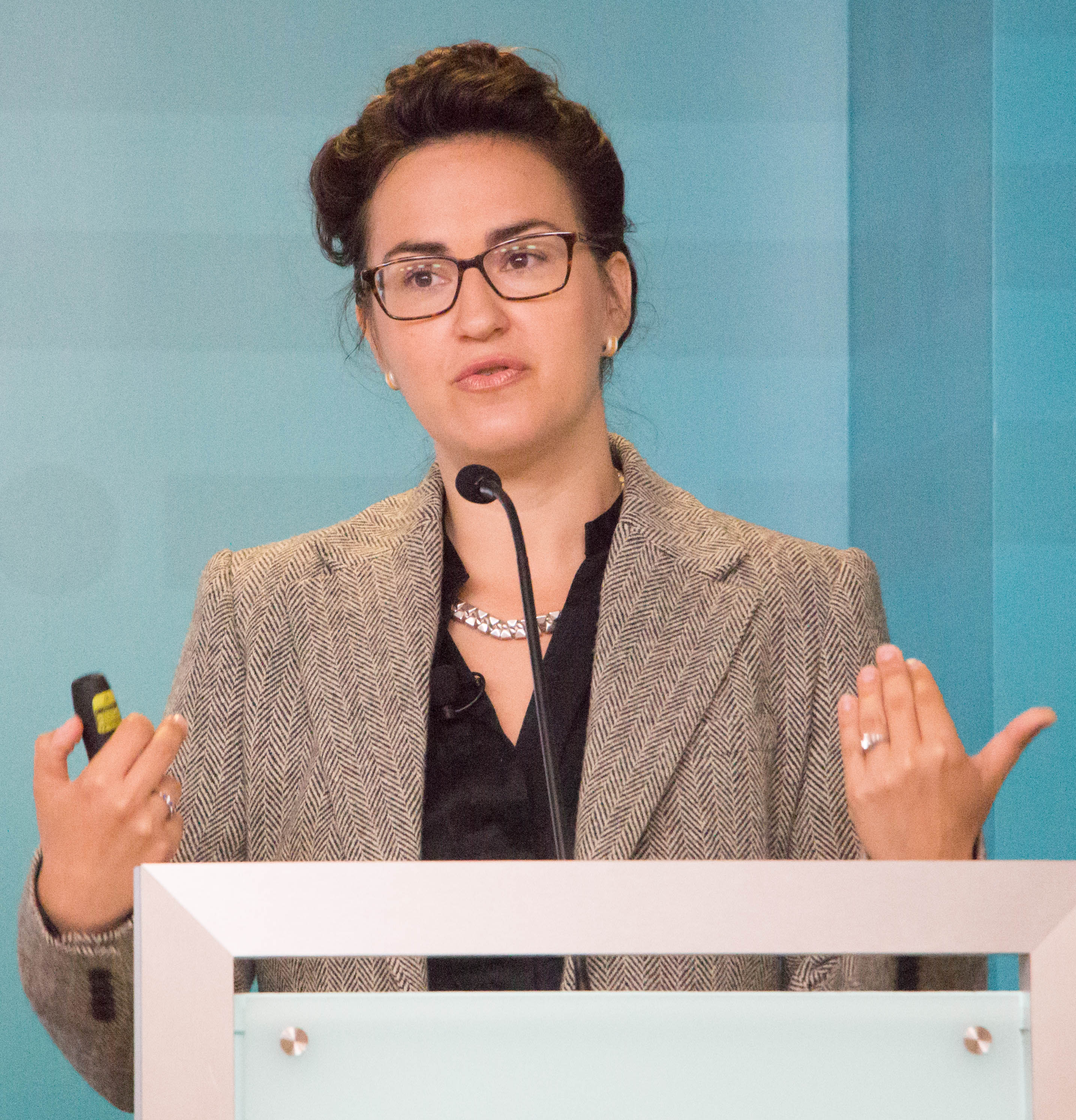
Athena Aktipis
Psychologist
3
APPEARANCES
3
PODCASTS
Sep 29, 2026

33:01

What are the parallels between the turning point humanity faces today and the major evolutionary transitions of the past? What can those earlier transitions teach us about navigating the ones that we're experiencing today?

Athena AktipisGUEST
Well, I would start by saying the major transitions in evolution are really about how do you go from individuals acting as sort of small self-interested units to larger units that are able to have shared goals and alignment and have... higher order goals and capacities, things that, you know, can't just be accomplished, the level of the individual.
Athena AktipisGUEST
To me, one of the most interesting things about humans and human societies, which in a lot of as individuals, we don't, you know, in hunter gatherer societies, people rarely are able to, you know, survive for very long by themselves.
Athena AktipisGUEST
Like, you know, as humans, we're kind of obligately social, but also, we can operate more on an individual basis.


Athena AktipisGUEST
And, you know, one thing that I didn't anticipate when I put together the first zombie apocalypse medicine meeting, I don't even remember how many years ago now, a long time ago, is that talking about things in terms of the zombie apocalypse.
Athena AktipisGUEST
And, you know, really, I mean, I told everyone, like, you're going to write your talk about like it's the zombie apocalypse.
Athena AktipisGUEST
You know, the talk is about how we're using science and, you know, all of these approaches like in this context.

Athena AktipisGUEST
There's some very interesting work on human behavior in post-disaster contexts.
Athena AktipisGUEST
One of my favorite books on this is Rebecca Solnit's book called A Paradise Built in Hell.
Athena AktipisGUEST
And it's about in the aftermath of disasters, the spontaneous helping that arises among people you'd expect, sometimes people you wouldn't expect.
Athena AktipisGUEST
One of the topics that she delves into a lot in the book is the aftermath of the major earthquake in San Francisco right at the beginning of the 1900s.
Athena AktipisGUEST
In this time, there was so much destruction, so much uncertainty, so much loss and devastation.

Richard SergeiHOST
What do you think some of the lessons learned will be over the next six months to a year about cooperation in the pandemic?