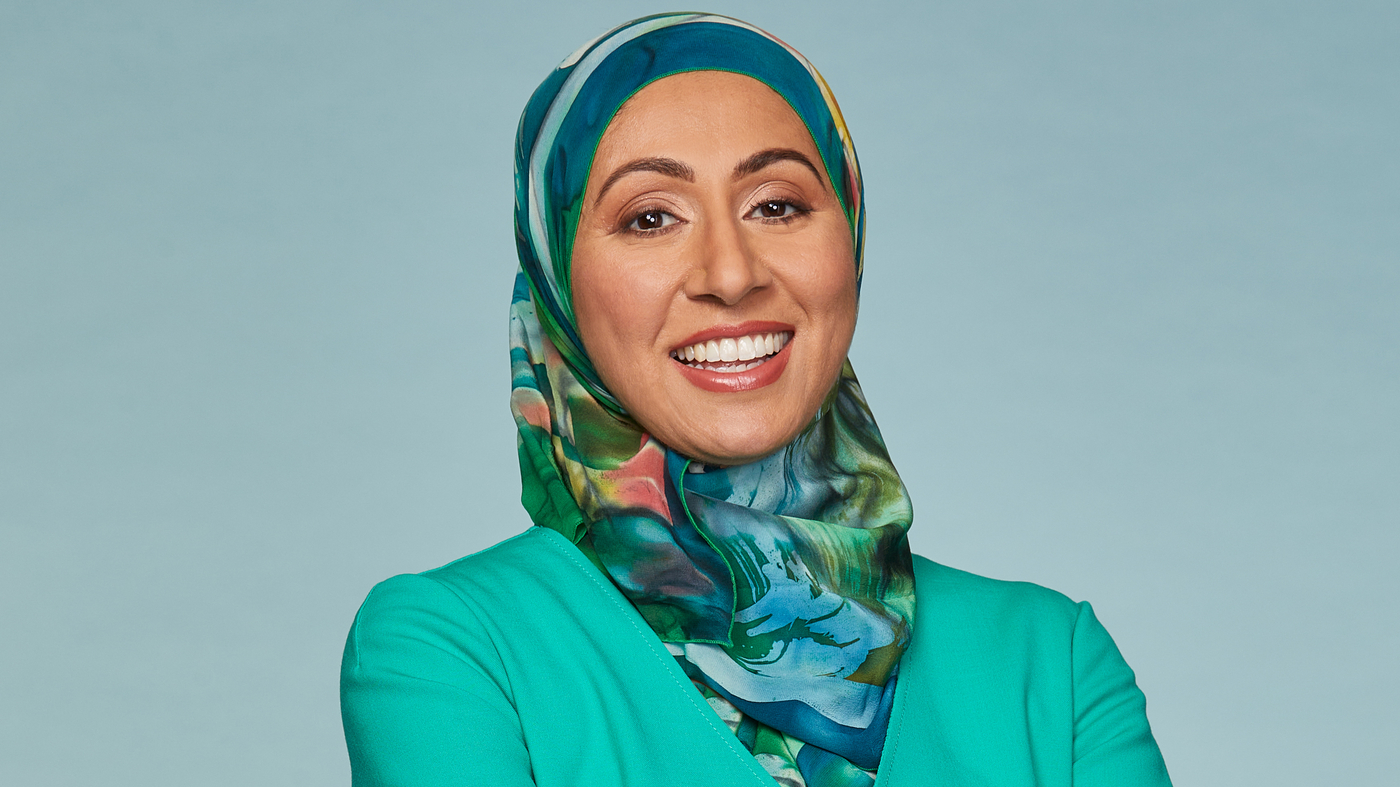
Asma Khalid
Internet personality
13
APPEARANCES
8
PODCASTS
Oct 23, 2026

Naila BudhuHOST
Asma, can I go back to the tape that we played of President Trump earlier, the comments that he made? Are those intended for a domestic audience, particularly as how we've seen different Republican leaders and candidates react to that this week?

Asma KhalidGUEST
Well, we are less than two weeks away from a midterm election in which the president's approval rating is really at a historic low as we're heading into these midterms.
Asma KhalidGUEST
Democrats feel really optimistic about their potentially like expanded Senate map.
Asma KhalidGUEST
You can listen to the president's words himself as he was campaigning for candidates.
23 MINS LATER

Adam FlemingHOST
Although maybe not quite as bad as the Oval Office showdown l- at the start of last year.
Asma KhalidGUEST
But I do want to echo James on what he said around the sort of veracity of a Donald Trump True social post online because, you know, as we were just having this conversation, I went back to look because I was like, "I know there was another ceasefire similarly announced to this just a few weeks ago." And indeed it was September 14th, 2026, and Donald Trump posted, "Ukraine has agreed not to hit Russian energy targets.
Asma KhalidGUEST
Russia has agreed to do likewise." So if indeed that was the case, and if both parties had signed up to it, why are we here just, what, about a month later having a very similar conversation? The impetus for President Trump is that this is all happening in the context of, uh, less than a month away from the American midterms, and so I, I think that's just worth really, really keeping in mind.
Asma KhalidGUEST
But e- essentially, what you are seeing from this administration is a desire to allow greater oil supply globally, greater diesel supply, and so they want to ensure that, that Russian diesel is not hit in any way.
Asma KhalidGUEST
And, and one thing I will say, Adam, though, is that, you know, it was interesting to hear Dan talk about the sort of skepticism of whether there will be a deal because we've heard similar claims from this White House before about an energy ceasefire, and they haven't actually, um, both parties haven't actually signed up to it.
Donald TrumpSOUNDBITE_SPEAKER
But he could have settled it many times, and he chose not to.


Asma KhalidGUEST
I mean, here, I'll speak very personally, but at the BBC, it really prioritizes what it calls due impartiality.
Asma KhalidGUEST
It's, in fact, something that every employee has to go through a training of, and I did at the very beginning.
Asma KhalidGUEST
In an American news outlet, I think this focus on impartiality, it feels different.
20 MINS LATER

Asma KhalidGUEST
I wanted to write this piece originally tied to the 250th anniversary of the United States, because I think as we thought about what it means to be an American in this moment, it had become abundantly clear to me that the idea of Muslims being part of that fabric, it is contested by some of my fellow Americans.
Asma KhalidGUEST
and then the more i thought about it and the fact that this is also the 25th anniversary of 9 11 i talked about how i think it is difficult to think of these two anniversaries in part because uh in the eyes of some americans muslims are not their fellow americans i mean there's really no other way to put that and i've i've heard that from some folks i've met on the campaign trail we have heard some of those comments as well made by by lawmakers uh i think That to me, one of the things is that as we sometimes think about Islamophobia, I've heard it described as being a problem that affects Muslims.
Asma KhalidGUEST
If we look at how we've sort of internalized the ways in which obviously 9-11 and the horrific, horrific, deadly attacks that took place that day.
5 MINS LATER
Asma KhalidGUEST
Well, I, uh, to start, we've seen a shattering of the four-year truce between the Houthis and the Saudi-backed internationally recognized government in Yemen, um, and their fighting threatens to restart a civil war that was not only, um, incredibly costly for Saudi Arabia, but incredibly deadly for the Yemeni people.
Asma KhalidGUEST
And for the first few months of this Iran war, the Houthis to, I think some analysts' surprise, actually sat on the sidelines, and we didn't see them firing into the Red Sea the way they did, um, after October 7th.
Asma KhalidGUEST
But what we're seeing now from this Houthi offensive appears to be an effort to expand their territorial control over Yemen's coastline and take control of these vital shipping routes that James mentioned.
Asma KhalidGUEST
And the real concern to your question is that Iran and its proxies are now closer to, um, controlling or at least the ability to disrupt two vital choke points for Western shipping, the Bab el-Mandeb on the southern end of the Red Sea and the Strait of Hormuz, of course, in the Gulf.
20 MINS LATER

Elizabeth HagedornGUEST
And I think, you know, in this moment where our society is so polarized, to me, that story I, I've always loved because it, that moment of, of shared decision-making, to me, just seems so profoundly American.

Asma KhalidGUEST
I wanted to write this piece originally tied to the 250th anniversary of the United States, because I think as we thought about what it means to be an American in this moment, it had become abundantly clear to me that the idea of Muslims being part of that fabric, it is contested by some of my fellow Americans.
Asma KhalidGUEST
And then the more I thought about it and the fact that this is also the 25th anniversary of 9-11, I talked about how I think it is difficult to think of these two anniversaries in part because in the eyes of some Americans, Muslims are not their fellow Americans.
6 MINS LATER
Asma KhalidGUEST
Brian, I wanted to write this piece originally tied to the 250th anniversary of the United States, because I think as we thought about what it means to be an American in this moment, it had become abundantly clear to me that the idea of Muslims being part of that fabric, it is contested by some of my fellow Americans.
Asma KhalidGUEST
And then the more I thought about it and the fact that this is also the 25th anniversary of 9-11, I talked about how I think it is difficult to think of these two anniversaries in part because in the eyes of some Americans, Muslims are not their fellow Americans.
6 MINS LATER


Asma KhalidGUEST
It, it feels very early to say, and the reason I, I make this argument [laughs] is that I think Michigan and Wisconsin showed us differing results to a certain degree.
Asma KhalidGUEST
I think what the, the governor's race in Wisconsin, where the progressive candidate did not win the primaries, and then the Michigan Senate race, where the progressive candidate did win in the Senate Democratic primary, I, I think they're being interpreted maybe in sort of, uh, overgeneralized ways.
Asma KhalidGUEST
And right now to me, the fact that in both of those races you saw really, really, uh, you saw a lot of competition, to me that signals that maybe the end result is not determined, right? Like, I don't- I think if you look at what happened in Michigan and Wisconsin the other day, there's not a real definitive winner of the Democratic Party.
Asma KhalidGUEST
Is it the centrist moderate wing of the party or is it the progressive populist wing of the party? I think anybody who's saying they have a definitive winner is, is really just overstating [laughs] the reality.
7 MINS LATER

Waleed AlyHOST
Are we looking at an infiltration of communism? Are we looking at, um, just a broad progressive agenda that will fall apart the minute the divisions are exposed? How hard is this? How progressive is this exactly?

Asma KhalidGUEST
Um, there's a lot to, to dive into, I think, just around, uh, Abdi's complicated feelings.
Asma KhalidGUEST
But I wanna end here in his story by saying that one of the things that I think is so profound that he told me is that, you know, over all these years, his brother could not get a visa to the United States.
Asma KhalidGUEST
Um, it's sort of a complicated story, but as many, uh, many listeners might recall, there were restrictions on Somalis coming to the United States that were set up during President Trump's first term and now extended.
Asma KhalidGUEST
Um, on top of that, the, the diversity visa program that Abdi used to enter the United States, it was indefinitely suspended in December.
Asma KhalidGUEST
Uh, I'm sure many folks remember there was that mass shooting at Brown University, and following that shooting in December, uh, the Trump administration decided to suspend that lottery program.
9 MINS LATER
Bridget BergenHOST
You know, it- do you feel like the American dream in US politics has actually changed, or is the dream the same and the politics around who gets to chase it that's shifted?
Asma KhalidGUEST
But, but I think that the challenge is that the, that the midterm elections are not a national election in the true sense, and so what might be advantageous for a Cuban American demographic, a Cuban American electorate in a part of Florida isn't necessarily advantageous in, in Michigan or in Minnesota.
Asma KhalidGUEST
I do think, as you heard from Cecilia, there is certainly a chunk of Republican voters who support what President Trump's ambitions, however they might be, right, to put additional pressure and strength on, uh, additional pressure on Cuba.
Asma KhalidGUEST
I think that the other challenge, though, is that you look at an American electorate that sees President Trump's global adventures, we could say, um, increasing, um, adventures around the globe, whether it's in Venezuela or Iran, and has questions about why a president who said he was gonna focus on the United States and on domestic policy is engaged, particularly in the war in Iran.
Asma KhalidGUEST
And I, I don't know how you separate Cuba from that, particularly if Cuba, in some capacity, evolves into a military qu- you know, military escapade.
23 MINS LATER


Geoff BennettHOST
So what's the story that you're aiming to tell with this documentary series, and why does it matter right now?
Asma KhalidGUEST
I covered a lot of campaigns, and I will say that there's long been, uh, an active debate in our country about who gets to be an American, and I think that those conversations and that debate has become even more ripe now as we're inching closer to our nation's 250th birthday.
Asma KhalidGUEST
Uh, debates over who is an American, what it means to be an American, and whose story is told.
Asma KhalidGUEST
And, uh, I think what's really interesting about this series, and what attracted me to being a part of it, is ultimately that the, the story is a lot more complex.
Asma KhalidGUEST
It's a lot more nuanced, and, uh, I, I think that that's what people will find when they see the series, is that, um, there's a, there's a really diverse part of America that we're not always told about.

Adam FlemingHOST
But I also wondered, is this part of his efforts to kind of internationalize the problem of the Strait of Hormuz and basically get some help from erstwhile allies?And actually, there's a more, there's a more subtle point there about some kind of like multilateral, multinational thing happening in that part of the world further down the line.
Asma KhalidGUEST
Yeah, I mean, it's a really good question, right? I mean, is this part of-- I mean, he told them to go get your own oil.
Asma KhalidGUEST
I mean, I think the thing that's hard with President Trump is that there are often true social posts that he puts out.


Kimberly AdamsHOST
the United States in that, like do you see the rest of the world kind of just changing the way that they're seeing the United States and our place in the global structure?
Asma KhalidGUEST
Donald Trump has made it very clear that he wants to focus on the United States.
Asma KhalidGUEST
Nonetheless, I'm a firm believer that what the United States does impacts the rest of the world and vice versa.
Asma KhalidGUEST
Um, it's why I actually wanted to work on this show, is that I think no matter how much the US might want to focus on its domestic politics, um, it is interconnected.
Asma KhalidGUEST
And so, uh, yes, the world might be looking at the United States in a different way, but I also would make the argument that, that Trump has been heavily, heavily involved in a number of world conflicts, perhaps more so than he c- he would have, I think many of his supporters would have thought he would in his first campaign or second re- reelection bid.
Asma KhalidGUEST
He was heavily invested in the, the effort to end the war in Gaza, and likewise, he has sought many times to try to end the war in Ukraine though he hasn't been as successful in doing that.
Asma KhalidGUEST
Um, so as much as he talks about the desire to turn more inward, we've seen in reality he remains fairly, uh, invested on the global stage, at least to this point.