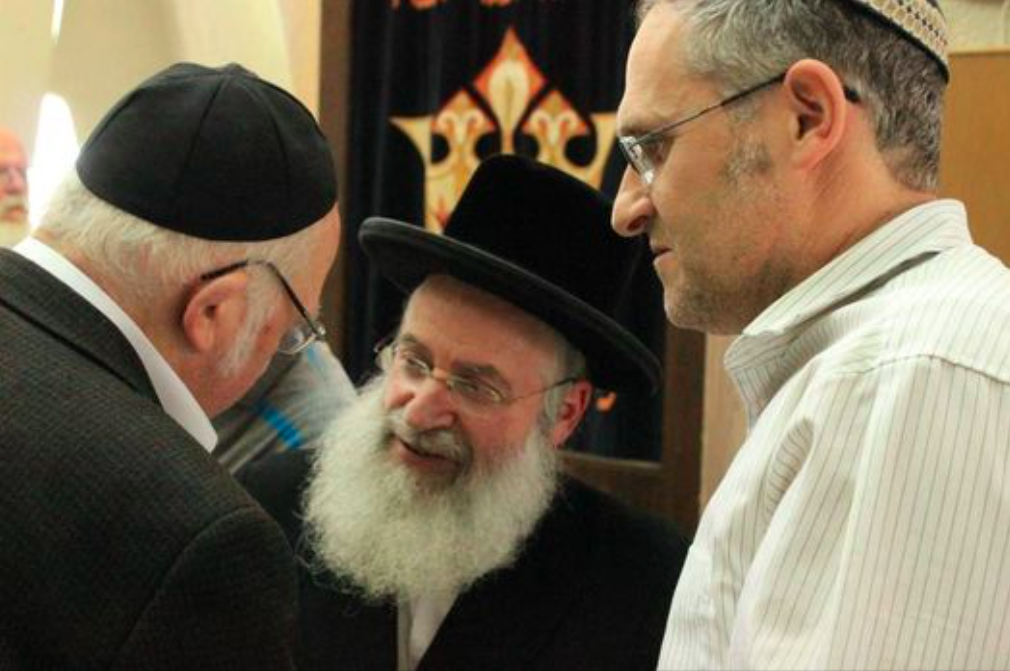
Asher Weiss
Rabbi
45
APPEARANCES
2
PODCASTS
Oct 28, 2026

Asher WeissGUEST
Everyone, as it's Erev Shabbos, we'll turn our attention from the laws of Shabbos to the mentality of Shabbos, as Rev.
Asher WeissGUEST
Ramon presents it in his Sefer on Shabbos, and the meaning of Shabbos, the significance of Shabbos.
Asher WeissGUEST
The first place that we look is the first time that Hashem presents Bnei Yisrael, with the concept of Shabbos, which is in parashat B'shalach, and the mitzvah of man.
Asher WeissGUEST
In regards to the mitzvah of man, Hashem sends the man every day in the Midbar, but not on Shabbos, and sends a double portion on Erev Shabbos, on Friday.
Asher WeissGUEST
and presents the nature of Shabbos as Hashem puts it and as Moshe puts it in Pasuk Chaf Gimel and then Pasuk Chaf Hei.
Asher WeissGUEST
Moshe describes that Hashem has explained to him that Shabbaton, Shabbat, Kodesh, Lahashem, Machar.
Asher WeissGUEST
Everyone, if a liquid is not fully cooked or if it's fully cooked but it's cooled off completely and a dry food that has not been fully cooked, is not allowed to be put into a cle-richon.
Asher WeissGUEST
So, for example, let's say you have a potato kugel that is fully cooked in a 9x13, and you take it out of the oven, that 9x13 is a cle-richon.
Asher WeissGUEST
Even once it's out of the oven, you're still not allowed to put anything that is either a cooled-off liquid or a not fully cooked solid into that potato kugel, to add it in, whether that's a spice or some other ingredient.
Asher WeissGUEST
Second halacha, and even, by the way, if let's say what you want to do is put something onto that potato kugel in order to just cool it off, but it's either a solid that is not fully cooked or a liquid that is fully cooled off or not cooked, all of those would be prohibited to put into that 9 by 13, because that's considered a cleritia.
Asher WeissGUEST
a liquid that is fully cooked and is not fully cooled off can be put into a kli reshon, even if it is in the process of cooling off, as long as that kli reshon is not on the fire.
Asher WeissGUEST
Everyone, moving into the details of cooking on Shabbos, we'll begin with kli rishon.
Asher WeissGUEST
It's prohibited to put anything onto or into a pot on the fire, whether it's dry or whether it's liquid, whether it's fully cooked or whether it's not fully cooked, whether it's already warm or whether it's cold.
Asher WeissGUEST
If it's a pot on the fire, you're not allowed to put something into it, onto it on Shabbos.
Asher WeissGUEST
What case are we even talking about? For example, putting salt into soup or something like that.

Asher WeissGUEST
Is this a relevant topic? Does this bear any halachic relevance? So let us first just have a look at the sugya, the fundamental sugya in Nozi Adav Chav Yema.
Asher WeissGUEST
In this week's parasha the Torah tells us the story of Benoist Leut who violated Not only his honor of Elohim, but a grave of Elohim.
Asher WeissGUEST
They wanted to bring children to the world, the future, after the Khurban of Isdaim.
Asher WeissGUEST
V'amarev Yehuda l'olim ya'aseh kodim met'olim v'mitzv'sofele sholol l'shmo, sh'metoch sholol l'shmo, bol l'shmo.
26 MINS LATER

Asher WeissGUEST
entire year were called Alexander, then Alexander ceased to be a Greek name and ultimately was transformed to be a Jewish name.
Asher WeissGUEST
We're continuing with the general principles of cooking on Shabbos and the distinction between a liquid or non-solid cooked substance, whether it is cooking or hot, rather, or was hot.
Asher WeissGUEST
something that had been fully cooked versus something that was fully cooked but then cooled off.
Asher WeissGUEST
Something that was fully cooked and then cooled off can have Vishal again in a Kli Rishon.
Asher WeissGUEST
If the food, let's say the soup was fully cooked and it was put in the fridge overnight, if you were to put that soup back onto the fire or into a Kli Rishon, that is on the fire, that would be bishl achar.
Asher WeissGUEST
One of the critical distinctions in the general principles of Bischel is when you can violate the prohibition of cooking on the same item.
Asher WeissGUEST
And that brings us to the world of liquid foods, davar lach, like a soup or a chalant or something like that.
Asher WeissGUEST
If it's fully cooked, we're talking about fully cooked, Last time, yesterday, we spoke about the process of getting two fully cooked.
Asher WeissGUEST
But once it's fully cooked, even if it's not cooled off entirely, so you have a soup that's on the fire, you remove it from the fire, and it takes four hours for it to cool off, something like that.
Asher WeissGUEST
This morning, we're continuing with the general principles of Bishel B'Shabas, of cooking on Shabbos.
Asher WeissGUEST
Last week, we started off the general principles by explaining that the threshold of cooking is, for a solid food, is a third or a half cook, depending on between Rashi and the Rambam.
Asher WeissGUEST
Nonetheless, even if you've already accomplished, if you violated the prohibition of cooking, and then let's say somebody takes that food off of the flame, and then you bring it back onto the flame, let's say it's an egg, and you realized, oh, no, I'm cooking this egg, and it takes, let's say, three minutes to cook an egg.
Asher WeissGUEST
Somebody comes and grabs the pan and takes it off of the flame, and then somebody else comes along and says, well, I mean, it's already macha ben jussay, so it's cooked already.
Asher WeissGUEST
One of the, uh, distinctions that we're going to make, God willing, uh, in our exploration of Hilchot Shabbos, uh, to distinguish Shabbos, uh, and, uh, and to, uh, uh, and to make it, uh, special, um, is that on Erev Shabbos, uh, we're going to, uh, we're gonna cease our Halakhic exploration of Shabbos and turn to, uh, Hashkafic, uh, exploration and understanding, uh, of, of what Shabbos is, uh, on a, um, on a, a spiritual plane, um, in addition to, uh, to on its, on its Halakhic plane.
Asher WeissGUEST
Uh, and, uh, and as a, uh, as a jumping off point, uh, there is, uh, one of, one of the children's books that we have, I can't remember, uh, the-- I can't remember the name of the, uh, of the series, but in, in one of these books, it's one of the series, there are a whole bunch of them, uh, of, of these, uh, of these books in the series.
Asher WeissGUEST
Uh, it's about Shabbos, and the girl's question that's kind of the refrain of each of the pages, oftentimes these children's book-- th-these children's books have, is what makes Shabbos special? Like, why is Sha- here we are, we're, we're, uh, we're making the house, uh, clean in a different way, we're wearing our clothes in a different way, we're preparing food that's different.
Asher WeissGUEST
What is it that makes Shabbos special? Uh, and, uh, and then she gets to Friday night, and, uh, and, uh, and she's presented, uh, with answers.
Asher WeissGUEST
And as I was reading this book, I was very curious, uh, uh, what the-- what exactly this book was going to answer to this, you know, k- [chuckles] rather esoteric, uh, question, what makes Shabbos special? Um, and, uh, and this wasn't the book's starting off point.
Asher WeissGUEST
Everyone, we're ready to begin the applications, the principles of Bischel, of cooking.
Asher WeissGUEST
So the prohibition of cooking with something that is liquid, even if it's not completely hot and it's only Yad Tzoletos Bo.
Asher WeissGUEST
So first of all, once you cross the threshold of heating something to Yad Tzoletos Bo, which we said is approximately 120 degrees Fahrenheit, then you have violated the prohibition of cooking.
Asher WeissGUEST
If you've placed, let's say, a pot of water on a fire that will cause the water to reach 120 degrees, you violate the melecha of cooking.
Asher WeissGUEST
As soon as the water reaches that temperature based on the action, that you did.
Asher WeissGUEST
Once the water is 120 degrees, then there's quite a ways that that water can go.
Asher WeissGUEST
So now that we've discussed the different modes of transferring the heat from the heat source to the food, now let's present the different types of food in halacha categories, that is, and the different types of heat.
Asher WeissGUEST
The first category is liquid food like soup, for example, that is not yet fully cooked.
speaker_1UNKNOWN
How could Rebbe Yochanan not know the answer?
12 MINS LATER
speaker_1UNKNOWN
living in Yisr, you're not allowed to leave.

Asher WeissGUEST
This week, we read Parshas Noach, [clears throat] which mostly describes the story of the flood and the salvation of Noach, the restarting of, uh, of humanity with Noach and his family, and, uh, concludes with the Dor HaFlaga, the generation of dispersion, uh, after, um, after building the Tower of Bavel.
Asher WeissGUEST
We're gonna look at each of those incidents, even though, um, three-quarters or more, uh, of the parshah is, is devoted to Noach and the generations that go from Noach to Abraham.
Asher WeissGUEST
Um, we're gonna pick up on, on one specific element in the story of the flood and, uh, and, um, and, and then we'll discuss, uh, the, uh, the, the generation of, of the Tower of Bavel.
Asher WeissGUEST
Um, one, one question that, uh, that has, um, somewhere in the, in the back of my head has always kind of fluttered around, and Rabbi Fierer, uh, brought the, the question to, to the forefront, um, is the, uh, is the sort of anticlimactic, um, elongated, uh, falling action of the flood.
Asher WeissGUEST
Um, the flood has a, a pretty standard buildup of, uh, of the warning and the building of the ark and the animals coming and the rain beginning, and it's seven days of rain, and the waters are increasing, and all of that goes in a, in a kind of standard, uh, trajectory that you would expect in any sort of, uh, story with the rising action, uh, and rising waters.
Asher WeissGUEST
Um, and, and then, uh, there is, uh, there's a, a bit of a, a, a falloff and, uh, [clears throat] and, uh, the, the water just, uh, just, uh, kind of, you know, remains, um, and the, and the ground dries up.
22 MINS LATER
speaker_1UNKNOWN
[Hebrew]
Asher WeissGUEST
We're discussing the, uh, the essential, um, uh, components of cooking and the parameters of the transference of heat from the heat source, uh, into the food.
Asher WeissGUEST
Uh, and, uh, and within the world of, uh, of kli rishon, of the, uh, the utensil that was on the fire, uh, one, uh, one more caveat, uh, within that, that if the, uh, if the, uh, the pot has cooled to below, uh, yad soledet spo, uh, below, uh, uh, whether that temperature is, uh, is a hundred and thirteen or a hundred and twenty degrees, uh, or, um, or if it's, uh, an even higher, um, uh, temperature.
Asher WeissGUEST
Uh, but let's assume, uh, for our purposes that, uh, that the standard is somewhere between Rav Shlomo Zalman Auerbach at one thirteen and Rav Moshe Feinstein at one twenty.
Asher WeissGUEST
Uh, so somewhere in that range is gonna be, uh, essentially what we consider yad soledet spo.
Asher WeissGUEST
So if the pot has cooled below that temperature, then it's, uh, it's permissible, uh, regardless to, uh, to add, uh, an, an ingredient, uh, to, uh, to that pot at that point because, uh, it's, uh, it's below yad soledet spo.
Asher WeissGUEST
Uh, and, uh, and now that we've, uh, presented the core nature of the melacha, uh, which is to, to heat, uh, a substance, food in particular, but, uh, any substance to change its chemistry for the, for, uh, for use.
Asher WeissGUEST
Uh, so now we, we need to look at the three components, uh, that are involved in cooking and the, uh, and the gedarim, the boundaries of each of those, uh, three items.
Asher WeissGUEST
Uh, the three components are the, the heat source, the, uh, the, uh, the, the heat, uh, the, the application of the heat, and, uh, and the type of food that the heat is being applied to.
Asher WeissGUEST
So we'll begin with the application of the heat, uh, following in the, uh, in the Seder of, uh, of the Shemirat Shabbat KeHilchasa, Rabbi Yehoshua Neuwirth, uh, Talmud of, uh, Rosh Yeshiva in Arabat, but he quotes from numerous sources, and we'll also see, uh, other sources as, as, uh, we go throughout, uh, our journey.
Asher WeissGUEST
So there are different types of, uh, of keilim, applications, basically, utensils that transfer the heat to the food.
Asher WeissGUEST
And we're beginning officially our new series in Hilchos Shabbos, uh, beginning with the melacha of Bishul, of cooking.
Asher WeissGUEST
Uh, and, uh, included in cooking is, uh, cooking, roasting, insulating, and baking.
Asher WeissGUEST
And the essential principle behind the melacha is anything that you prepare for eating by, uh, by the heat of a flame where you alter the, uh, the, the, uh, the structure, the nature of, of the food by heat in order to prepare it for cooking.
Asher WeissGUEST
Uh, if you're, uh, if you were, uh, cooking something, uh, in order to, uh, to turn it into, uh, a dye like the, uh, like they did in the, in the Beis Hamikdash with the Zamanim, uh, or if you were drying something that you were making with heat, uh, you wanted to, a piece of pottery or something like that, you were drying it in a kiln, that would also be the melacha of Bishul.
Asher WeissGUEST
So basically anything that for functional uses you're changing an item by virtue of heat, that constitutes the melacha of Bishul.
Asher WeissGUEST
Uh, we'll, uh, we'll conclude our initial introduction to the laws of Shabbos after yesterday presenting the, uh, relationship between Shabbos and the Beit HaMikdash, uh, both, uh, in, uh, in concept and, uh, with, uh, with textual inferences.
Asher WeissGUEST
Uh, today, we'll, uh, we'll link the, the concept of melacha to the melacha, uh, of, uh, of building the, um, the Beit HaMikdash and the Mishkan.
Asher WeissGUEST
Uh, specifically, uh, the, the prohibited labors, uh, the thirty-nine categories of, of prohibited activities on Shabbos.
Asher WeissGUEST
The, the number thirty-nine is, is derived from, uh, from, uh, a tradition, um, not, uh...
Asher WeissGUEST
Uh, the-- one of the themes, uh, that, uh, that's critical to, uh, to, uh, discuss in the, in the laws of, uh, of Shabbos and in the introduction to Shabbos itself is Shabbos' relationship to the, uh, to the Mikdash, to the Mishkan.
Asher WeissGUEST
Uh, when, uh, when the, the laws of, uh, of the building the Mishkan are first presented right at the conclusion and at the beginning of Parashat Ki Tisa, uh, we're told, "However, you should keep the-- you should keep Shabbos." After the sin of the Golden Calf, before returning to the reconstruction of the, uh, of, of the mandate to build the, uh, the Mishkan, we first have that introduced with the laws of Shabbos, and based on this, uh, the, uh, the Halakha, um, is, as described in, in, uh, in the Midrashim and, uh, and another Ma'amarei Chazal, that building the Mishkan did not supersede, uh, Shabbos.
Asher WeissGUEST
And that's because Shabbos has a sanctity that supersedes the sanctity, uh, of the Mikdash.
Asher WeissGUEST
Uh, in introducing the laws of Shabbos, uh, o- on, uh, one element, uh, that, uh, uh, that we, we ought to, uh, to recognize, uh, and, uh, and highlight, um, and, uh, we could perhaps even, uh, initiate with, uh, an exploration of these topics.
Asher WeissGUEST
But it's the, uh, the positive, uh, obligation element of Shabbos that, uh, Shabbos does not only, uh, include a lo ta'ase of lo ta'ase melacha, uh, but it includes a positive obligation of tishbos, uh, to, uh, to rest.
Asher WeissGUEST
The Minchas Chinuch, uh, explains that a, a practical ramification of this, uh, in the, um, in the times of the Mikdash would be that if someone, uh, inadvertently, uh, confused, uh, Friday for Shabbos or something of, of that sort, and so they didn't, uh, uh, they did melacha and didn't rest on Shabbos, they would not only be liable to bring a, a sin offering for violating the prohibitions of Shabbos of doing melacha, uh, but they would also bring a Korban Olah over not resting.
Asher WeissGUEST
Uh, and, uh, and in addition to that, there are two other biblical obligations of zachor, to remember, which is, uh, which we understand halakhically to be, uh, accomplished via kiddush and havdalah, to separate the day, to, to distinguish the day from, from other days, um, of, uh, of mekadesh hashabath, to, to follow in, in the, uh, in the model that Hashem sets for us in this week's parasha, in Bereshit, by, uh, resting on the seventh day.
Asher WeissGUEST
Everyone, welcome to the new Zman of Three Minute Learnings after, uh, after davening, Torah for Your Commute.
Asher WeissGUEST
Uh, we'll, uh, in, uh, in honor of the shul's Yovel year, this year we'll be learning Hilchos Shabbos in, uh, in several different formats.
Asher WeissGUEST
Uh, this week, God willing, we'll introduce, uh, Shabbos in, uh, uh, in, in brief.
Asher WeissGUEST
Uh, and every Erev Shabbos, uh, we'll, uh, we'll continue, uh, our introduction into the broader themes of, of Shabbos and, uh, a- and learn halacha, uh, over the course of the week.
Asher WeissGUEST
Component of the introduction to, uh, to Hilchos Shabbos, uh, that we'll discuss is who's obligated, uh, in Shabbos, uh, as it's presented in the Asaras Hadibros.
Asher WeissGUEST
The core component of the prohibition, lo ta'aseh melacha, to not do productive labor.
Asher WeissGUEST
Everyone, as tomorrow is Hoshanah Rabbah, a few, uh, words to, to get us into the, uh, the appropriate mindset.
Asher WeissGUEST
Uh, the Gemara towards the end of Sukkah, uh, c- presents a machloket between Aba Shaul and the Chachamim.
Asher WeissGUEST
Aba Shaul says that there is a biblical basis for the, uh, for the, uh, the mitzvah of Arabah, that it's a biblical mitzvah to take the aravos and march around the, uh, the Aron based on, uh, arvei nachal, that it's, uh, that it's put into the plural, uh, to have, to have, uh, uh, willows, uh, of the brook.
Asher WeissGUEST
Willows plural refers to the ones that you take in your arba minim and the ones that you take for the mitzvah of Arabah.
Asher WeissGUEST
Uh, the Chachamim say, "No, it's not, uh, that, that's not an indication of, uh, for the, uh, for the second, uh, mitzvah, uh, but rather it's a halacha l'Moshe miSinai." So this was one of the traditions that Hashem gave to Moshe Rabbeinu orally at Har Sinai and has been passed on, uh, since then, like having square tefillin, having black tefillin, et cetera.
Asher WeissGUEST
Uh, so, uh, so it's, uh, either way, it's either, uh, from Hashem at Sinai orally or from Hashem at Sinai, uh, with this biblical reference to arvei nachal.
Asher WeissGUEST
We've already discussed that for the sake of work, uh, that's, uh, the classic example of holchi darachim, uh, those who are traveling, they're traveling for business.
Asher WeissGUEST
Uh, that's, uh, uh, that's in the Rama explicitly, uh, that's in Tosfos explicitly, uh, that that's what the Gemara is referring to, and that's how Rav Moshe Feinstein and, uh, the, and, um, uh, and Rav Ovadia Yosef, um, pasken.
Asher WeissGUEST
Uh, but the question is for, uh, for expanded purposes, for other purposes, does that Mishnah permitting, uh, per- exempting one from the sukkah when they are holchi darachim, does that, uh, include people who are traveling, uh, for, uh, for leisure, which is inherently, um, optional.
Asher WeissGUEST
It's inherently a choice, and it's, uh, also a specific choice to, to do so at, at this specific time.
Asher WeissGUEST
So there's some, uh, Achronim who, uh, who indicate that holchi darachim is not limited to traveling for business, and it might apply to other circumstances as well.
Asher WeissGUEST
Everyone, uh, one of the questions that comes up every year, um, for, uh, on, on Sukkot is the permissibility, uh, to go on, uh, on trips into Ulum and, uh, and, uh, go to places, uh, for business or- or, uh, what have you, that don't give you the opportunity to sit in a, uh, sukkah to eat your meals.
Asher WeissGUEST
So there's a, uh, there is a braisa quoted in the Gemara in Sukkah, uh, that says, uh, Tana Rabanan, that travelers, uh, are, are free from the obligation of sukkah during the day, but are bound by it, uh, by night, and people who are traveling at night are free from the obligation of sukkah at night, but are obligated during the day.
Asher WeissGUEST
And travelers who are traveling by day and by night are exempt from sitting in the, in the sukkah, uh, both during the day and at night.
Asher WeissGUEST
Rashi comments on dwelling in the sukkah that it's based on Teshuva Ein Taduru, uh, that a person travels from their home, and when they travel from their home, they're exempt from sukkah.
Asher WeissGUEST
And so similarly, when a person travels, uh, they're exempt from, uh, from sukkah.
Asher WeissGUEST
Uh, but all of the, of the Rishonim, uh, and, uh, and Ach- and Achronim who, uh, who deal with halakhic topics address this, uh, this issue essentially, and, uh, and, um, uh, question, uh, the parameters.
Asher WeissGUEST
Yeah, I think many of us, if not all of us, uh, have, uh, uh, an issue with, uh, with, uh, fallen decorations, uh, or moved schach.
Asher WeissGUEST
Uh, so we'll discuss the, uh, the muktzeh status, uh, and the ability to, uh, uh, to move tho- those, uh, Sukkah decorations.
Asher WeissGUEST
Uh, in a standard situation, um, once the, uh, the Sukkah is set up, the Gemara in Sukkah explains, and this is the classic example of a category of muktzeh limitzvah, so meaning set aside for its mitzvah, which may even be a biblical level oblig- uh, prohibition of muktzeh to move that item from its, uh, its mitzvah status for the course of that Yom Tov.
Asher WeissGUEST
Um, and, uh, there's a machloket in the Rishonim whether that only applies to schach or whether it even applies to the walls.
Asher WeissGUEST
Uh, we've been discussing, uh, elements of, of sukkah that, uh, that people tend to, uh, to encounter, uh, in advance of, uh, of Yom Tov putting up their sukkahs, uh, and, uh, decis-- various decisions that, uh, to make, uh, in that process.
Asher WeissGUEST
Uh, the, uh, one of the main, uh, major questions, uh, bizmanenu, uh, is the use of, uh, reed mats, uh, or bamboo mats for, uh, for schach.
Asher WeissGUEST
Um, and, uh, and it goes back to, uh, to a Mishnah in Sukkah, in yud tes samech beis, uh, where there's a machloket between the Tanna Kamma and Rabbi Eliezer in regards to two different types of mats, large reed mats and small reed mats, uh, where they come down on the, on the same side, uh, but, uh, but both are, are listed in the Mishnah.
Asher WeissGUEST
And based on that, the, uh, the Gemara, uh, discusses what the distinction is between, uh, the large mats and the small mats, uh, with the, uh, with Rishonim, uh, coming to, to conclusions on, on what that is with the, uh, uh, the, uh, the Ritvat saying that it's based on, uh, the individual usage.
Asher WeissGUEST
That for small mats, everybody uses small mats for, uh, for reclining on, uh, but for large mats, uh, that's where there's a, a subjective distinction.
Scroll for more appearances