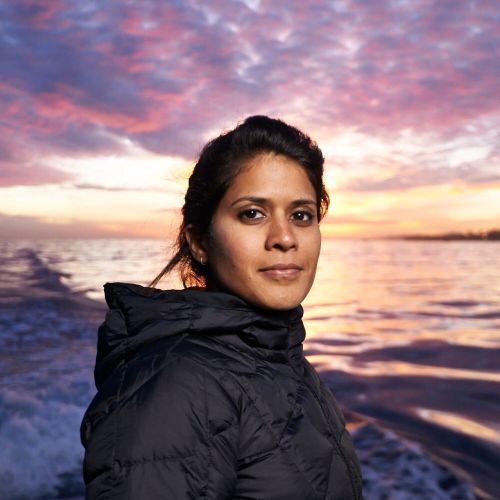
Asha de Vos
Sri Lankan marine biologist
1
APPEARANCES
1
PODCASTS
Jul 24, 2026


Flora LichtmanHOST
Was it surprising to see blue whales? Like I know you were looking for sperm whales, but would- did you not expect to see blue whales in this area?

Asha de VosGUEST
They had been documented in 1983, but nobody had done any research on whales in Sri Lanka consistently since then because the country had gone through a war, and, you know, access was limited, and there was lots of things, right? And I think there's two exciting and really surprising things.
Asha de VosGUEST
One is that, you know, these are the largest animals that have ever roamed our planet.
Asha de VosGUEST
And the second exciting thing is that they were aggregating in a small patch of ocean in like warm, tropical waters, right? And we normally expect to see aggregations like this where they are feeding.
Flora LichtmanHOST
[gentle music] Why was it important to you that, you know, you as a Sri Lankan were, were leading this research? Explain for other people why that felt important.