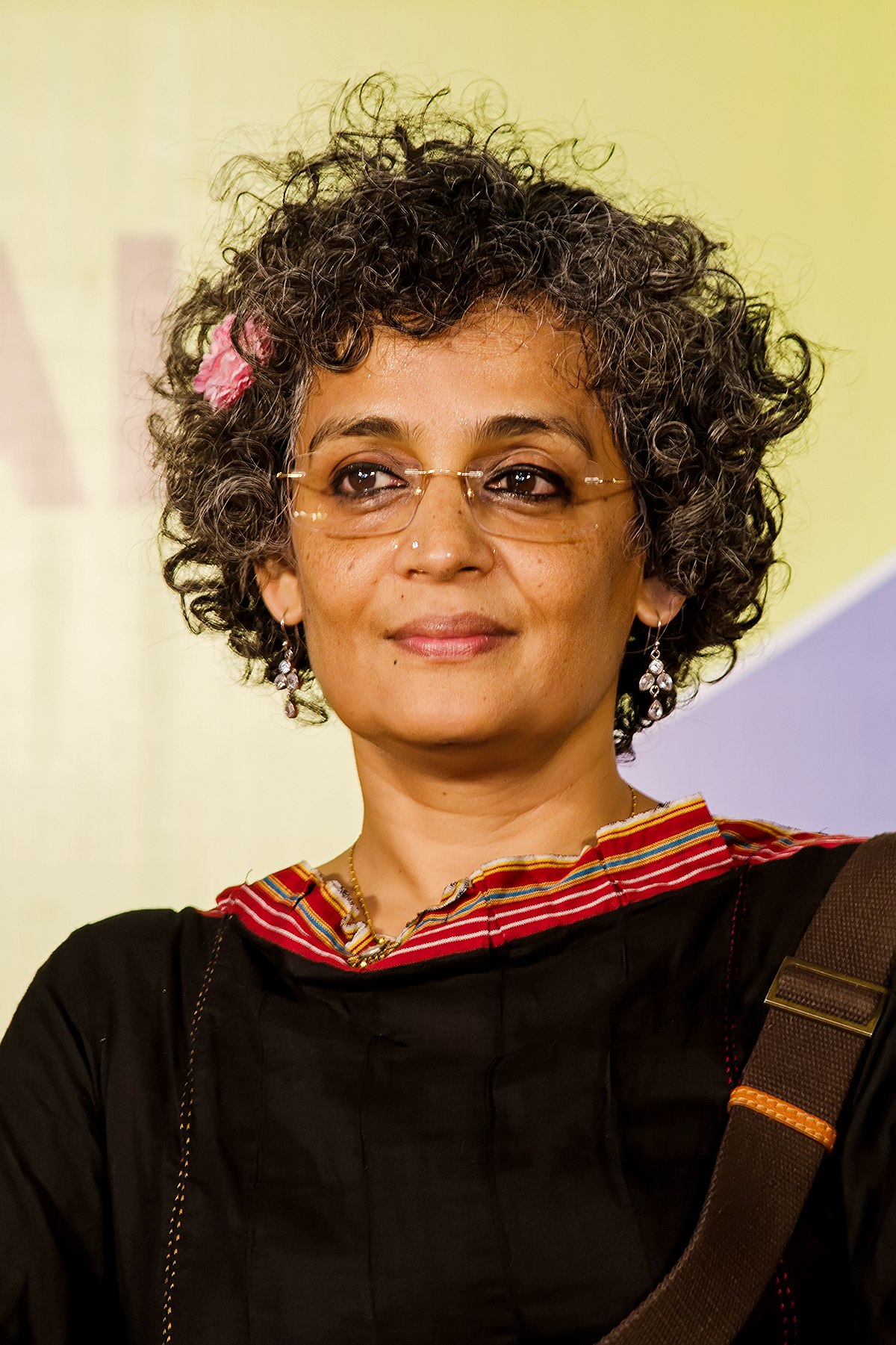
Arundhati Roy
Indian author
11
APPEARANCES
10
PODCASTS
Oct 2, 2026

5:05
So I was wondering, how do you approach writing about moments who in themselves carry such formidable pain?

Arundhati RoyGUEST
Well, firstly, I want to say something before I answer that question, which is that it wasn't only that.
Arundhati RoyGUEST
She was also the woman who introduced me to literature, to politics, to a way of looking at the world.
Arundhati RoyGUEST
You know, she introduced me to the Vietnam War, to Nazis in Germany, to the slave boats in the Mississippi, to Kipling, to Shakespeare.
6 MINS LATER
12:10
So when you began writing Mother Mary Comes to Me, were you then trying to separate truth from memory or was that not at all an objective of yours?

speaker_0NARRATOR
[laughs]
Arundhati RoyGUEST
That first night in a Mrs. Roy-less world, I spun unanchored in space with no coordinates.
Arundhati RoyGUEST
I always wanted her to go out like a queen, and now that she had, I didn't make sense to myself anymore.
7 MINS LATER
speaker_0NARRATOR
Join us now for a conversation with Arundhati Roy.

Arundhati RoyGUEST
First of all, the flashpoint, of course, was the continuous and consistent leak of these public exam papers for which students spend years preparing.
Arundhati RoyGUEST
And the poorer ones, you know, their parents sell land, sell their homes illegally.

Marco WermanHOST
So if the cockroach movement has exposed a generation's frustration with corruption, unemployment and accountability, what do you think comes next?


Arundhati RoyGUEST
Well, how would I compare it to Bangladesh, Nepal and Sri Lanka? You know, I don't think those comparisons would be correct because India is too vast and diverse a country for, you know, a simple sort of student-led coup to take over.
Arundhati RoyGUEST
It's just like, for example, the whole of South India, although they are supporting this movement, they have largely been unaffected by Modi, you know, and so the rage against him isn't there because he doesn't exist there.
Arundhati RoyGUEST
But you'd have to ask, you know, of course, the left, the left has been pushed back, the traditional, what we call the parliamentary left has been pushed back.

Amy GoodmanHOST
Arundhati, if you can talk more about them reshaping the narrative of the government-controlled media, challenging Modi's carefully constructed image to the world, because they're using Instagram, they're using YouTube, as they reshape the narrative of these protests to a global audience.

Arundhati RoyGUEST
Well, how would I compare it to Bangladesh, Nepal and Sri Lanka? You know, I don't think those comparisons would be correct because India is too vast and diverse a country for, you know, a simple sort of student-led coup to take over.
Arundhati RoyGUEST
It's just like, for example, the whole of South India, although they are supporting this movement, they have largely been unaffected by Modi, you know, and so the rage against him isn't there because he doesn't exist there.
Arundhati RoyGUEST
But you'd have to ask, you know, of course, the left, the left has been pushed back, the traditional, what we call the parliamentary left has been pushed back.
Amy GoodmanHOST
Arundhati, if you can talk more about them reshaping the narrative of the government-controlled media, challenging Modi's carefully constructed image to the world, because they're using Instagram, they're using YouTube, as they reshape the narrative of these protests to a global audience.

Arundhati RoyGUEST
Well, uh, how would I compare it to Bangladesh, Nepal, and Sri Lanka? You know, I, I, I, I don't think those comparisons would be correct because India is too vast and diverse a country for, you know, a, a simple sort of student-led coup to take over.
Arundhati RoyGUEST
Like, for example, the whole of South India, uh, although they are supporting this movement, they have largely been, uh, un- unaffected by Modi, you know? And so the rage against him, uh, uh, isn't there because he doesn't exist there.
Amy GoodmanHOST
Arundhati, if you can talk more about them reshaping the narrative of the government-controlled media challenging Modi's carefully constructed image to the world, uh, because they're using Instagram, they're using YouTube, um, uh, as they reshape the narrative of these protests to a global audience.

Arundhati RoyGUEST
Well, uh, how would I compare it to Bangladesh, Nepal, and Sri Lanka? You know, I, I, I, I don't think those comparisons would be correct because India is too vast and diverse a country for, you know, a, a simple sort of student-led coup to take over.
Arundhati RoyGUEST
Like for example, the whole of South India, uh, although they are supporting this movement, they have largely been, uh, un- unaffected by Modi, you know? And so the rage against him, uh, uh, isn't there because he doesn't exist there.
Amy GoodmanHOST
Arundhati, if you can talk more about them reshaping the narrative of the government-controlled media challenging Modi's carefully constructed image to the world, uh, because they're using Instagram, they're using YouTube, um, uh, as they reshape the narrative of these protests to a global audience.

Arundhati RoyGUEST
But anyway, so when The God of Small Things came out, Mrs. Roy was worried about what secrets it might reveal.
Arundhati RoyGUEST
There she read it hurriedly and was greatly relieved that it wasn't any kind of exposé.
Arundhati RoyGUEST
At first, she said she couldn't understand what the fuss was all about, and then she studied it closely, and after her third or fourth reading, she was home by then, she summoned me to her bedside.
Arundhati RoyGUEST
It was a bright afternoon, and the light that filtered through the curtains was bordello red.
9 MINS LATER
Adam BilesHOST
So could you be- just be able to, for people who haven't read the book, give us a bit of a sense of the societal context of your childhood and Mary Roy's activities?

Arundhati RoyGUEST
So, uh, (sighs) I mean, you know, when people m- label her like a radical feminist or something, those labels don't sit well with her or me because she was so eccentric and so non-righteous about what she did and she was such a wild character.
Arundhati RoyGUEST
So I wouldn't, you know, use those words to describe her, but yes, uh, she was an iconic person in feminist circles because, especially because of the case that she won.
Arundhati RoyGUEST
Uh, less so because of the school because fewer people knew about the school, but to me it's as revolutionary.
Arundhati RoyGUEST
We lived in this little town where there was so much conservativeness and all kinds of passive and active violence against women and she would just go into courtrooms, to hospitals, to places where she had heard, you know, women had been beaten up or raped or whatever, and she would try and tell them, "Look, there's an option.
Arundhati RoyGUEST
You don't have to be like this." You know? So, uh, it was, it was a- a- a wonder to watch that.


Arundhati RoyGUEST
She married the first man who asked her to marry him, who was, uh, from Bengal, and she went off with him, had two children, and then realized that he was addicted to alcohol, so she left.
Arundhati RoyGUEST
And she was about 31 or something, or 32, with two young children, my brother and me, no money, a degree in education, and she came back down south really broke, really ill.
Arundhati RoyGUEST
She had terrible asthma, and while she was in that state, her older brother and mother came and tried to evict her from this little cottage that we were squatting in, basically, which belonged to her cruel father, who was dead by then.
Arundhati RoyGUEST
And that's when she realized that there's a law, uh, called the Travancore-Christian Succession Act, which basically gives a girl a fourth of her brother's, uh, share, or 5,000 rupees, a pittance, whichever is less.
Arundhati RoyGUEST
This dark part of my mother also had a- another side which was that she is the one who, who, who introduced me to literature, to reading.

25:05

How did that make you feel, that she seemed to have a complicated relationship with you even as you became an enormous success?
Arundhati RoyGUEST
Well, first of all, uh, as we've spoken before, you know, success was in itself without her and her opinions a complicated thing for me.
Arundhati RoyGUEST
But, you know, occasionally it used to break my heart that she had such a thorny, you know, response to it.
Arundhati RoyGUEST
But at the same time I always was very clear in my mind that I never wanted to defeat her.
Arundhati RoyGUEST
That involved being mauled and shredded and having to piece myself together sometimes.
9 MINS LATER
35:20
You touched on this a little, and so I would love to hear your thoughts on how you view parallels between the Hindu nationalist movement in India and the MAGA movement here in the United States.