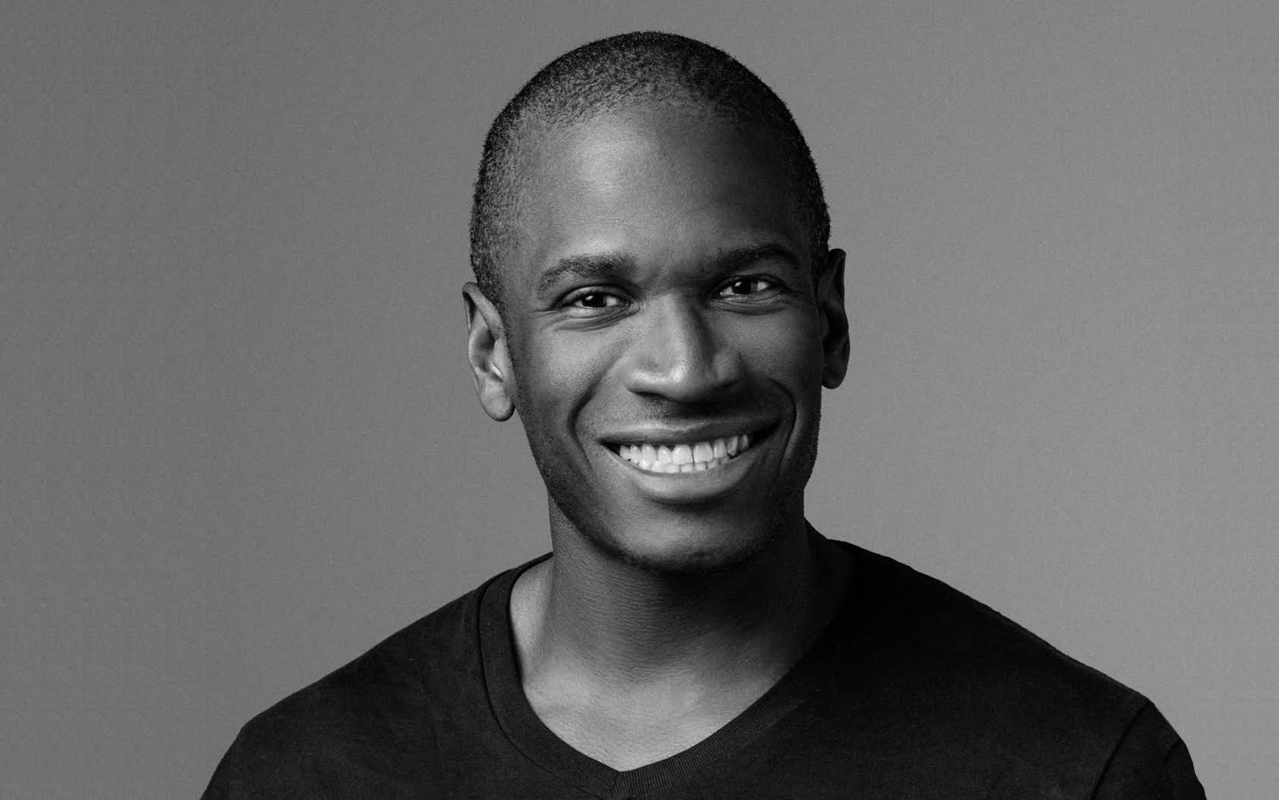
Arthur Hayes
American businessman
36
APPEARANCES
21
PODCASTS
Oct 27, 2026

Arthur HayesGUEST
Yes, that's my crypto thesis is that this is obviously, no one disagrees that this is the largest cap expenses to railroads as a percentage of GDP.
Arthur HayesGUEST
What happens when everyone's all in on AI, whether it's US, China, Japan, like everyone in the world, either you're building data centers or you're selling commodities or intermediate goods to the United States to build data centers.
Arthur HayesGUEST
And so if that is not the case, then are you going to not print the money to have a recession? Because that doesn't make any sense.
10 MINS LATER
Maggie LakeHOST
And you believe that they need, is this a separate system? So you're making a bet that they will thrive there and that will be superior to any kind of existing payment system or digital system or stable coin or something that's out there now?


Arthur HayesGUEST
And so everybody's competing for the scarce pool of private assets to buy bonds.
Arthur HayesGUEST
At the top of the list is, you know, the hyperscalers, right? If you're going to build God, do you care what rate you pay on your 10-year bond? They don't care what they pay.

Imran LakhaHOST
Yeah, but I mean, I know you were quite a big bull on hype early on, but I think recently you kind of got out of that long, is that right?

Arthur HayesGUEST
this guy who graduated from, I think it was Dartmouth or some Ivy League school.
Arthur HayesGUEST
He was like, you know, second-rate football player, and he didn't know what he was gonna do with his life.
Arthur HayesGUEST
Somehow he made his way to Tokyo and started doing index rebills on, on, uh, the Nikkei and different Japanese indices, and the book talks about his time in, in Tokyo, and I think it was, like, maybe the late '90s, something, somewhere around there.
Arthur HayesGUEST
Like, it's much more interesting than, you know, being like everybody else and going to New York or LA or whatever else that most Americans think they're gonna do after they graduate from university.
13 MINS LATER

Avi FelmanHOST
I mean, and so when, when did the volume really start coming? Was that in 2017, 2018? Um, like, when did, when did you think BitMEX really became like a household name in the world of crypto?

Arthur HayesGUEST
think what? Drake was really, this isn't what he was saying, but the practical implications of what he was advising was proper address hygiene, which is something that people have been preaching since I've gotten into crypto, which is do not reuse addresses.
Arthur HayesGUEST
Obviously, you shouldn't be using wallets that are using the protocol of Satoshi coins.
Arthur HayesGUEST
Those are the most at-risk coins from this theoretical quantum encryption issue.
Arthur HayesGUEST
So I think it's like you and your friend are in the forest and a bear is chasing after you.
8 MINS LATER
AndyHOST
It feels like if the rate hike didn't do it, what's next? Is there another bigger hike? Is the situation out of control in your lens? What is actually happening with regards to why the bond yields have kept rising oil is still at an elevated rate right we got one hike we may get another in december after the midterms like what like is the system are we experiencing like the first very obvious uh to the kind of like the mainstream investor that the system's completely broken like what's happening

Ran NeunerHOST
And I mean, I know your outcome is that they just have to print money, but what is the collision?
Arthur HayesGUEST
The collision is that OpenAI, Anthropic, and SpaceX signed on the dotted line, and they said, "We will consume trillions of dollars worth of compute once you have, once your data center goes live." Right? So they don't have to spend any money now, they just get to sign paper, and, and be like, "Oh, great, look.
Arthur HayesGUEST
We, we have a customer," and they said they'll start paying us in two years when we deliver the data center.
Arthur HayesGUEST
Okay, so you deliver the data center in late 2027, early 2028, and now Anthropic and all these companies are like, "Oh, shit, we need to find hundreds of billions of dollars to pay these people, 'cause this is what we're contractually obligated to do." So one of two things happen: either you don't have the money and you raise it, you don't have the money and you cannot raise it, or your product is so successful that finally unit economics are positive and you can afford to pay for it.
Ran NeunerHOST
But for those of people who are hearing about it now for the first time, tell us about Flop.
Arthur HayesGUEST
So if we believe that there are going to be all these agents, and they don't come with a payment network out of the box, they get to choose one, then whoever creates that network will have created the most valuable network ever to be have created.
Arthur HayesGUEST
Why? Because you have trillions of economic agents who exist 24/7, trade at the speed of light.


Arthur HayesGUEST
So what is the payment network of AI? Our theory that it should be whatever, some currency that we create that's directly convertible into compute, and that is what, why you would hold it.

Arthur HayesGUEST
So Marquee last year was I think half a million sing dollars on like a random weekday minimum spend, and it was fully booked all week last year.
Arthur HayesGUEST
This year, not a single booking, and it was all shitcoin projects spending investor money, um, on Marquee and, you know, average DJs.

Arthur HayesGUEST
... and it might not have been, you might have not have even been alive when we issued all this credit, but you're here now, and we need to stop issuing all this credit, allow natural bankruptcies to occur, allocate losses within the system, and this could mean massive unemployment and a reduction in economic activity.
Arthur HayesGUEST
So what do you do? You print money to delay the can, and then you hope for a productivity miracle, and now it's about, all about AI.
Arthur HayesGUEST
Whether you're US or China, it's, there's some new technology that's gonna allow us to grow so fast to outlive all this debt that we've issued.
Arthur HayesGUEST
The point is that they're gonna continue printing money instead of allowing the chips to fall where they may.
17 MINS LATER


Spencer NicholsHOST
One of the things that I want you to help us understand in our audience at home to understand, Arthur, is what happened with Besant in this bond buyback? What took us from the events in Iran that precipitated this What spurred this buyback? And what has that done to Bitcoin?
Arthur HayesGUEST
So obviously, since the Iran war started in late February of this year, developed market bond yields have been rising, especially in the US.
Arthur HayesGUEST
And myself and a lot of other analysts have noted that it seems that there is a paying threshold for the US Treasury Department, regardless of which administration is in charge.
Arthur HayesGUEST
Now, in US President Biden's term, his treasury secretary, Janet Yellen, basically printed a bunch of money through issuing a lot of treasury bills over treasury bonds in 2023, when the 10-year-old almost hit 5%.
Arthur HayesGUEST
And that was sort of the spark of the first leg of this rally post FTX for crypto and a lot of other risk assets.
13 MINS LATER
Spencer NicholsHOST
Can you speak a little bit to that and what your outlook is for the gold market in that regard?
AndyHOST
What's your read on the macro?
Arthur HayesGUEST
And what really happened, I think, last night and going in is it's, you know, Euro, Euro, yen.
Arthur HayesGUEST
I wrote a whole piece about this, and this is my new hobby horse, right? And it's usually Japan has something to do with everything in global financial markets in this modern era.
Arthur HayesGUEST
So basically, starting in mid-July, late July, whatever it was, Ministry of Finance person Katayama in Japan basically stated that domestic institutions, and she was really saying the GPIF, which is the largest pension fund in Japan, a quasi-government institution, need to reevaluate their ownership criteria and own less foreign assets and buy more domestic Japanese assets.
28 MINS LATER

Rob KlagesHOST
And we're, we're going to see enough kinetic money printing that is going to send the market higher than it thinks is an, is the amount of money printing we're seeing based on the signaling.

Arthur HayesGUEST
So we're not gonna achieve any sort of meaningful valuation for the token itself above just operating a really cool spot market for compute unless we have agentic commerce that's native to the Flop network.
Arthur HayesGUEST
They'll come to some sort of agreement in a swarm or bilaterally do some sort of deal.
Arthur HayesGUEST
And then as Albert said, there's gonna be disagreements, and then how do you adjudicate those? Now, we, we really haven't thought about that too deeply on our particular protocol, 'cause we're more fo- more focused on getting miners on board, validators, making sure that we can actually do proof of use- useful inference, making sure the AI agents can eat.
Arthur HayesGUEST
But I think this is definitely something that's absolutely going to be needed because, of course, if humans disagree, then the agents have to disagree because they're essentially a derivative of, of our own sort of, um, [clears throat] proclivities as economic agents.
48 MINS LATER

14:19

What's your kind of view as to Bitcoin as an asset and maybe what should we expect over the next 12 months?
Arthur HayesGUEST
The marginal dollar or yuan or euro or yen of liquidity went to AI and you know, that's still happening to some extent, but now we've moved past that.
Arthur HayesGUEST
But yeah, if you're talking about 2024, '25, people were just funding data centers and, you know, equity investments in all these AI companies and, you know, Bitcoin was, you know, the ugly stepchild.
21 MINS LATER
Arthur HayesGUEST
So we have this AI boom, and what is the AI boom? It's an AI CapEx expenditure, right? We're building this substrate that is supposed to allow us to train these models, and then for inference to be processed, and this new AI life form can do all these wonderful things for, you know, human civilization.
Arthur HayesGUEST
In the beginning, let's call it, um, ChatGPT launched November 2022, it happened out of cash flows.
Arthur HayesGUEST
You know, the hyperscalers, the Googles, the Metas, the Oracles of the world, they had cash on their balance sheet.
8 MINS LATER
speaker_2UNKNOWN
Oh.


David LinHOST
And, um, I know capital is going towards that sector, uh, and we'll talk about that, but is there a particular reason why you're looking at it now?
Arthur HayesGUEST
So basically, I had this self-discovery of, like, trying to understand what a token was.
Arthur HayesGUEST
Like, what is it? Is it 5 characters of tech? Is it one second of video? Like, I don't know what a token is.
Arthur HayesGUEST
And what I landed upon was that, number one, a token doesn't have a fixed definition.
Arthur HayesGUEST
But at the end of the day, everything that we do in AI, and computers in general, is basically floating-point operations per some unit of time.
23 MINS LATER
David LinHOST
Um, and then, um, I just wanna have you s- talk about this chart and how you, we can extend this analysis to the AI CapEx story, uh, starting with how housing and, uh, S&P peaked around two thousand and seven.
Arthur HayesGUEST
And the point w- and the point was that there was $2.5 trillion sitting inert on the Fed's balance sheet in the reverse repo program.
Arthur HayesGUEST
And by raising the yield on the short-term debt that the treasury is issuing because you, you're putting more supply into the market, that the money market funds would take the money out of the Fed and buy the bills because they yielded slightly more than the reverse repo.
Arthur HayesGUEST
That is what got all markets out of the funk of the, you know, early 2020s, the COVID hangover.
Arthur HayesGUEST
That's why markets ripped gold, Bitcoin, stocks, right? This is the, the, you know, the Yellen put, if you wanna call it that.
20 MINS LATER


Tony EdwardHOST
And do you think the only solution, they'll go back to it just like they did in 2008, is to print their way out?
Arthur HayesGUEST
And the problem with this situation is that you can't print transistor economies, uh, of scale, right? Or Moore's law.
Arthur HayesGUEST
Like, just because the Fed decides that they wanna print and save these banks from these bad loans doesn't mean that semiconductors are all of a sudden, um, going to say, "Oh, yeah, I was at a, you know, two nanometer process.
Arthur HayesGUEST
Let's go back to 28 nanometers so that these guys can make some money." Like, this just doesn't happen.
Arthur HayesGUEST
So, you know, just like in, if you think about what happened in 2008- Fed comes in, starts printing.
22 MINS LATER


31 MINS LATER

Marvin BarthHOST
And so isn't there an incentive for the sovereign to now make sure that people are continuing to transact on that train? So please take whichever of those questions you like most and run with it.

Arthur HayesGUEST
My highest conviction trade, the best shitcoin that I'm excited about, is Cards.
Arthur HayesGUEST
So my analyst came to me last week with a short report saying that he believed that the Cards token was undervalued because the market is not appreciating how the protocol is going to turn the eighth most profitable revenue business in crypto on chain, the Cards protocol, into actual money in the pocket of token holders.
Arthur HayesGUEST
He believed that the team has started to do buybacks, and hasn't really announced yet.
Arthur HayesGUEST
I took a look at the market cap, it looked a bit small, or for me, and I said, "Uh, I'll pass." But then I do a lot of reading of smaller accounts on social media, and there were other people starting to talk about the same thing.
Arthur HayesGUEST
I thought, "This is a great setup." So we went in with some small size at this particular market cap.

Arthur HayesGUEST
Or it disappoints and just the math of if I amortize an asset at six years but it has a useful life of two, then all of a sudden, all those H100s and Blackwells that you underwrote are essentially re-- worthless.
Arthur HayesGUEST
And it's not as if the frontier labs can train on anything bad, because if it's all about I need to have the best model and you need a 1 or 2 or 5% incremental improvement could lead to a compounded permanent moat of my competitors, I cannot use the Neo cloud with H100s and, and Blackwells.
Arthur HayesGUEST
I need to have whatever the ne- the newest NVIDIA or Huawei chip is, and, you know, I have to do that.
Arthur HayesGUEST
And I think that's when the rubber meets the road, and then that's when we march to market, uh, on this and we see, okay, where's the revenue? Where's the capital returns? Does this make sense? And, uh, I have a feeling that that, that will be the test.
Arthur HayesGUEST
And the greatest part for crypto is that if we do get an AI credit event, number one, it'll be bigger than 2008 because the whole world is on this delusion that AI is the most, the biggest technology ever.
15 MINS LATER

Jennifer SanasieHOST
Talk to me about how you're watching that story today, and what, what's your reaction when it comes to Strategy's business model?
Arthur HayesGUEST
So obviously people have been very afraid of what happens when MicroStrategy has to sell Bitcoin to, you know, cover dividend payments or any sort of bond repayments.
Arthur HayesGUEST
And so obviously Saylor did this 32 Bitcoin test as he claimed to inoculate the market on Strategy selling Bitcoin.
Arthur HayesGUEST
There's been other salacious hot takes of Saylor talking about some m- Jedi Mind Tricks about him, you know, not really saying that he never would sell Bitcoin and all, all those sorts of things.
Arthur HayesGUEST
So I think people are very, um, scared o- of what could happen on, on the downtrend.

Jennifer SanasieHOST
Talk to me about how you're watching that story today and what's your reaction when it comes to strategy's business model?
Arthur HayesGUEST
So obviously, people have been very afraid of what happens when MicroStrategy has to sell Bitcoin to cover dividend payments or any sort of bond repayments.
Arthur HayesGUEST
And so obviously, Saylor did this 32 Bitcoin test as he claimed to inoculate the market on strategy selling Bitcoin.
Arthur HayesGUEST
There's been other salacious hot takes of Saylor talking about some Jedi mind tricks about him not really saying that he never would sell Bitcoin and all those sorts of things.


Arthur HayesGUEST
I went on my trusty AI friend on Perplexity and I said, okay, well, obviously this story is all about AI.
Arthur HayesGUEST
So how much debt has been issued since ChatGPT was launched commercially on November 30th of 2022 and the current moment.
Arthur HayesGUEST
And so I did some analysis and based on the estimates and some of the public data that it has, it estimated about $1.4 trillion of debt and various different types has been issued to fund AI, CapEx and related build out.
Arthur HayesGUEST
If we look at global US dollar M2 over the same time period, one and a half trillion of increase on a macro level in terms of the amount of dollars as measured by M2.
Arthur HayesGUEST
What, what happened there in the middle? What changed? So I think at the beginning of the year, I wrote a piece about how I think Bitcoin was forecasting this AI deflationary credit event, and the monetary authorities were not going to print enough money until they saw a financial crisis.
Arthur HayesGUEST
And I later held this whole thesis about, you know, the NASDAQ was flat since October when Bitcoin hit its all-time high, that Bitcoin was following the, uh, US SAS ETF IGV, um, down, like, you know, 50%, whatever it was, from 126,000 down to the low of 60,000.
Arthur HayesGUEST
And I was like, "Yeah, this is a credit event." And then we had February 28th happen in the US, um, you know, shots fired on Iran and set up this whole, you know, fucked up war, and it crystallized a liquidity positive event for the markets.
Arthur HayesGUEST
You know, drones, AI, AI-enabled drones, AI intelligence is running, um, you know, some part of the warfare for, for, you know, for all combatants involved.
27 MINS LATER

Danny KnowlesHOST
Is that because like the short-term debt is more sort of money like in the economy than long duration debt?
Arthur HayesGUEST
Um, so basically, you know, there, due to the colas- the COVID stimulus program, you had these however many trillions of dollars were printed and a lot of people basically s- um, shoved that into, uh, the banking system and, um, money market funds.
Arthur HayesGUEST
Let me just earn the 5.5% in a money market fund," which is higher than what they get at a commercial bank, at least in the United States.
Arthur HayesGUEST
And so the money market funds had all this money and what they can do is they can park that money at the Federal Reserve and they can earn a rate which is pretty much, um, commiserate with the, uh, effect, Fed funds effective rate.
Arthur HayesGUEST
There's a bit of nuance around that, but essentially the Fed guarantees if you give us money into this facility, we give you a rate and they have to do this to be able to pin or manipulate short-term rates at the level, uh, that they want them to be at.
33 MINS LATER
Jennifer SanasieHOST
I think people are probably watching this interview and wondering, you know, what does this mean for me? What are the next months, year? What's that going to look like?
Arthur HayesGUEST
So, you know, every loan is an asset at a bank, right? And so if you have credit card payments, auto loans, mortgages, somebody is servicing that debt.
Arthur HayesGUEST
And at the higher income end, you know, $120,000 a year annualized income, they have a lot of debt, and they're paying it off, and they were paying it off quite fine, and once you leave your job, then you're on unemployment, at least in the United States.
Arthur HayesGUEST
So you were earning, say, $150,000, now you're earning $40,000, and what do you do? You have to cut back on spending.
Arthur HayesGUEST
You're not going to the fancy restaurants, the malls, you're not buying the discretionary items, and you're certainly not using these SaaS companies like Adobe and all these sorts of things, right? These are why these companies are getting crushed.
Arthur HayesGUEST
and then you think about consumer finance well if the bank concept has an asset and now you have an asset that was paying fine and worth 100 now it's worth zero you have a hole in your balance sheet and what do we know what happens what happens the fed comes and prints money but as we stand right now the fed believes and every other central bank believes that ai is a productivity enhancer we're going to grow there's not going to be inflation so therefore they don't need to provide more money.
speaker_3HOST
What's your core thesis of why our audience should be paying attention to HyperLiquid?
JenHOST
I think people are probably watching this interview and wondering, you know, "What does this mean for me? What are the next months, year? What is it g- What's that gonna look like?"
Arthur HayesGUEST
So, you know, every loan is an asset at a bank, right? And so if you have credit card payments, auto loans, mortgages, somebody is servicing that debt.
Arthur HayesGUEST
And at the higher income end, you know, $100,000, $200,000 a year annualized income, they have a lot of debt.
Arthur HayesGUEST
And once you lose your job, then you're on unemployment, at least in the United States, and that caps out in, like, $30,000, $40,000 a year.
speaker_2HOST
Where are you thinking this is going, considering the fact that, you know, Friday seemed to be, be cleared a h- cleared a, cleared a hurdle when it comes to stable coins
Scroll for more appearances