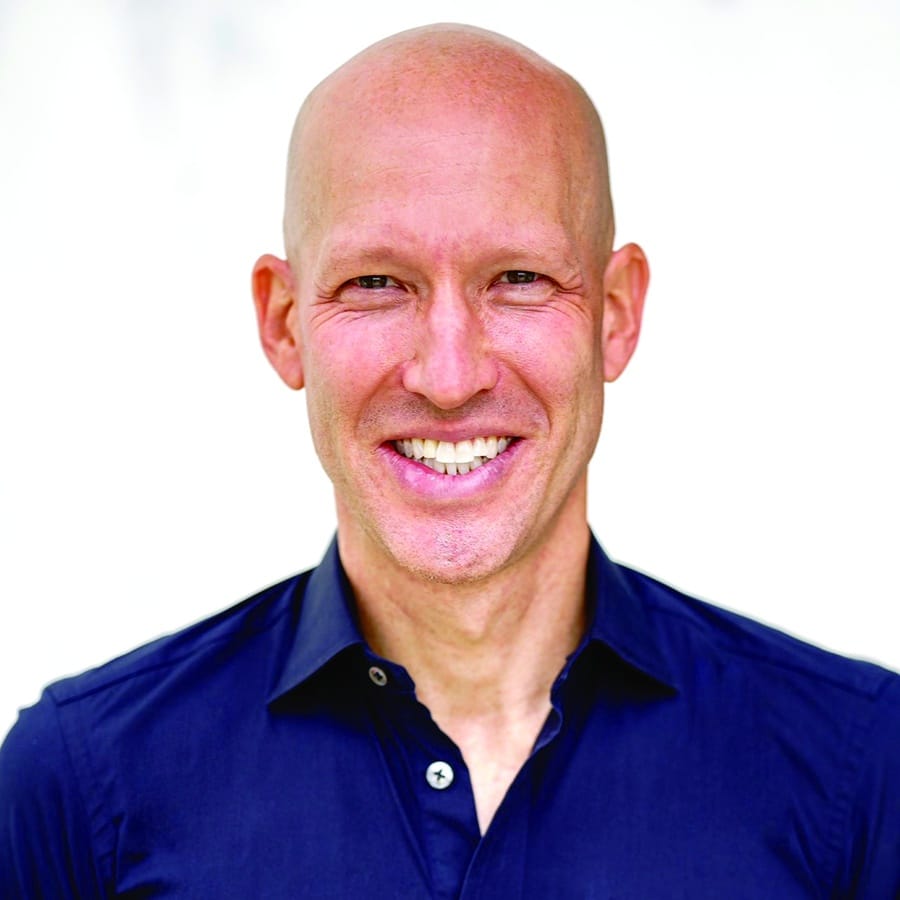
Ari Redbord
7
APPEARANCES
7
PODCASTS
Sep 22, 2026

Jacob RobinsonHOST
Here's Ari Redbord of TRM Labs, who spent over a decade as a federal prosecutor on why the math on this problem is about to get much, much scarier.

Ari RedbordGUEST
AI has supercharged all of our activity, right? It allows an individual person to do so much more than we could do even a few months ago.
Ari RedbordGUEST
And criminals are always early adopters of transformative technology, right? One of my favorite stories is that in 1908, the Model T Ford rolled off the assembly line.
Ari RedbordGUEST
And that was the year that we realized that we also needed to create a federal police force.
38 MINS LATER
Jacob RobinsonHOST
How do you know if something you're doing is working? Some policymakers want to see fewer scam reports, and Ari has sat across from them, and he explains why that whole way of thinking is actually backwards.

Ari RedbordGUEST
Um, I don't-- I've never seen anything move as fast as, as, as AI, not the internet, not crypto.
Ari RedbordGUEST
And, um, y-you ask anyone, I'm the most positive guy in crypto, um, you know, I think, I think sort of famously so.
Ari RedbordGUEST
Uh, [chuckles] but, um, but this is an area that I, that, that, that makes me very nervous.
Ari RedbordGUEST
And i-if you ask me sort of what keeps me up at night, it's exactly this question.
23 MINS LATER


Ari RedbordGUEST
Yeah, look, you know, uh, I think over the last couple years, uh, I've tried to carve out a pretty c- a pretty specific lane here for, for where, where I should be really engaging, and that is on the law enforcement front.
Ari RedbordGUEST
And obviously, we've seen a lot of conversation around law enforcement over the last few weeks, and really even beyond.
Ari RedbordGUEST
I would say the latest draft of the bill even strengthens it further when it comes to law enforcement provisions.
Ari RedbordGUEST
I mean, original drafts had language around Bank Secrecy Act, right? Like every crypto firm is now under the Bank Secrecy Act directly, real-time information sharing.
8 MINS LATER


Nicole PerlrothHOST
Here's Ari Redbord, who heads up global policy at TRM Labs, and before that led financial and terrorism investigations at Treasury.
Ari RedbordGUEST
You know, in the Sony Pictures context was, "Hey, we could create disruption, or maybe we could steal usernames and passwords on the internet," to all of a sudden, "Wow, we can actually steal money that we can launder and use."
24 MINS LATER
Ari RedbordGUEST
I blanch now when people use the term state-sponsored or even Lazarus to describe what's happening in North Korea, because to me, that sort of has a state-sponsored feel to it.

speaker_3ADVERTISER
Can you give us a lay of the land for all of these various groups in North Korea, how they're incented, how they're structured? Like, what do we know about them?
Ari RedbordGUEST
I think my own views of this have evolved over time, particularly recently.You know, going back even a few years, I've just always thought to myself, "This is North Korea." And I've kind of rejected this idea that these are North Korea state-sponsored, right? I would never use that term in our writing or the way we talked about these things.
Ari RedbordGUEST
These are state actors, hard stop, right? This is the North Korea government who's realized that...
Ari RedbordGUEST
You know, I, stepping back for a moment, right, like when I talk about the enemies of the United States and our allies, I think about China and Russia and Iran, and I put North Korea in there as well, which is crazy, right? This is a country with absolutely no economy whatsoever, and yet they're competing on the global stage because they've professionalized cyber crime, essentially.
Ari RedbordGUEST
There is absolutely no economy, so it's always been, how do we steal and then ultimately launder funds? And crypto's just the latest iteration of that.
47 MINS LATER
Ryan Sean AdamsHOST
I mean, is this just, in your mind, giving a gift to the bad guys? Do you see some upside here? Like, what would be your take specifically on something like Tornado Cash or Zcash?

Ari RedbordGUEST
It's called the virtual asset unit within the FBI, and there's a team of crypto tracers, and they're the best in the world.
Ari RedbordGUEST
They've built investigations involving ransomware and North Korea hacks and terrorist financing, and what they're doing is they're using TRM to track and trace the flow of funds to ultimately identify that individual.
Ari RedbordGUEST
Because ultimately what you want at the end of the day are those funds to be cashed out at a cryptocurrency exchange.

Nancy GraceHOST
So what information do you have to input in order to get that Bitcoin account, if any?

Ari RedbordGUEST
The first thing that you look for in a letter like this is, is there a Bitcoin address? And if there is, what you know is that every transaction to and from that address, it moves on an immutable public ledger, right, a blockchain.
Ari RedbordGUEST
So you're able to use tools like TRM to track and trace the flow of funds, and it becomes this cat and mouse game, right? The bad actors are moving funds in and out of addresses, and you're tracking them, hopefully, potentially, to a cryptocurrency exchange, which actually might have the underlying user information.
Ari RedbordGUEST
'Cause right, at the end of the day, what you wanna do is take that cryptocurrency address and associate it with an individual actor, so then you can go ahead and use all the law enforcement authorities that we typically use in the real world, right? Get cell records, get email accounts, and really start to understand who the person is behind that account.
Ari RedbordGUEST
A lot of it depends on, uh, is this a criminal network? Is this address already associated with illicit activity, or is it actually sending funds to a cryptocurrency exchange that might have that underlying data?

Anderson CooperHOST
And ultimately, is there a financial institution or a, a cryptocurrency exchange that one could serve a subpoena on or ask for cooperation from?