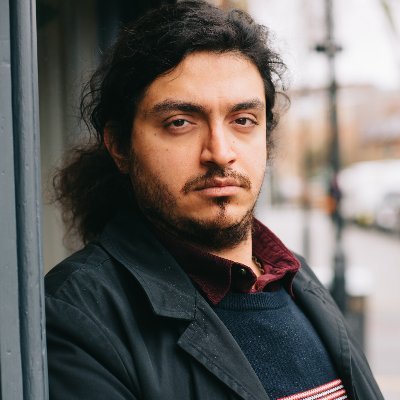
Arash Azizi
Writer
28
APPEARANCES
20
PODCASTS
Aug 14, 2026


Arash AziziGUEST
They had all supported the revolution, but they're-- it's fair to say they support factions that are mostly excluded from power by early 1980s.
Arash AziziGUEST
So Islamic Republic is left with an attempt to construct a new Islamist republic, and it doesn't have its intellectuals.


Geraldine DoogueHOST
And what about Israel? Are they prepared to let, you know, have this m- greater, the greater Middle East, which includes Israel or not?
Arash AziziGUEST
It's, it's a terrible fantasy in which it will continue to occupy Palestinian land.
Arash AziziGUEST
It will then continue to kill thousands of Palestinians with impunity, and somehow it will also get recognition and normalization and, and it will be sort of accepted a- as a country by, by the, by the, by its Arab neighbors.
Arash AziziGUEST
Uh, under Netanyahu, there was an Israeli journalist who called it cakeism, you know, having your a- ca- cake and eating it too.
Geraldine DoogueHOST
So there's still enormous amounts of energy, is there, being expended on this business of trying to make the women's hijab almost the marker buoy of whether they've succeeded? I mean, this is an own goal, isn't it?

Ali VelshiHOST
And that's the problem we're in right now, right? So there's some thinking that, uh, the Iranians don't really believe that no matter where these negotiations take place, whether the Omanis or the Pakistanis or the Qataris are, are mediating these negotiations, there's a f- there's some belief amongst the Iranians that no deal with America is worth the paper it's written on.
Arash AziziGUEST
Yeah, unfortunately, that's, um, you know, that, that is a belief that some are com- and some people are just not sure- hopeful that they can get a deal at all, uh, and I mean some people in the establishment.
Arash AziziGUEST
But I think enough people also understand that obviously the problem also does originate, uh, from Iran.
Arash AziziGUEST
This anti-American, anti-Israeli crusade that has really defined, uh, Iran for so long, it's, it hasn't done Iran any favor.
Arash AziziGUEST
And I think m- enough people, even in establishment, understand that they need to change their ways.

Arash AziziGUEST
This has started because of they started having a new standoff with Saudi Arabia, effectively ending, declaring an end to a ceasefire that has held for some time.
Arash AziziGUEST
But if the Houthis go ahead and do that, um, you know, it will have a massive effect on the economy.

Ayman MohyeldinHOST
Tell us more about how you understand this new round of violence and how the Iranian regime, uh, and who within the Iranian regime may have been agitating for it.


Arash AziziGUEST
I think the reason they do it is that they panic that they're going to lose the control of the Strait of Hormuz.
Arash AziziGUEST
There are some people in the regime, they have also proponents in D.C., so you can hear them on Twitter and other places, who basically claim, I think wrongly and frankly a little foolishly even, that Iran's real leverage is the Strait of Hormuz.
Arash AziziGUEST
So if they're using this southern route, we're going to lose this ability, so let's close it and show that we can close it.
18 MINS LATER

Arash AziziGUEST
But as for my gut reaction, um, first of all, one goes over the legacy of this man, and it's a terrible legacy, I think, from most perspectives.
Arash AziziGUEST
I think regardless of actually what politics you have, even if you were kind of proponent on some, uh, s- you know, some factions of this regime, he will be seen, he will be come to seen, um, to have had a terrible legacy.
Arash AziziGUEST
Throughout his rule, he-- When he started his rule, Iran had just finished an eight years war with, with Iraq.
13 MINS LATER

Venetia RaineyHOST
What, what was the message that they were trying to send with all of this stuff?


Elise JordanHOST
Arash, what are you hearing from your sources about this deal and the timing of it tonight as this big celebration is happening at the White House?
Arash AziziGUEST
And it also, in the last 24 hours, 48 hours, a hardliner fringe really came out strongly against this deal.
Ayman MohyeldinHOST
Have the Iranians from either state-run media or official news organizations or semi-state-owned news organizations, have they given any more clarity as to what the terms of this Memorandum of understanding looks like because so far in the last 12 hours or so, we have not gotten that much more clarity on what's in it, the sequencing of what plays out over the course of the next several days before Friday when it is supposed to be signed.

Antonia HyltonHOST
And then it's become clear from both the prime minister, Benjamin Netanyahu, and just the actions of the IDF that they didn't agree to what the United States might have ideally wanted out of that scenario.
Arash AziziGUEST
Iran continues to insist that Lebanon is included in the ceasefire and that there will be only a ceasefire if Israel withdraws from Lebanon and stops all the attacks there.
Arash AziziGUEST
Because what Israel can do there then is to play the spoiler, right? So Israel will keep things up in Lebanon in order to stop the So if Iran and the United States have agreed on a deal, and if they let Israeli escalations in Lebanon stop it, they're effectively letting Israel have a veto, and neither side is going to like that.
Arash AziziGUEST
So I think Iran sees that it's important to say that Lebanon is important for them, and they'll continue harping on that.
Ayman MohyeldinHOST
What is the decision-making process like inside Iran if we know about it? And to what extent do you think we will see Mujtaba Khamenei at some point publicly to kind of either lend his support to a deal or to keep his distance from it if he's not necessarily behind


Iain DaleHOST
Can you bring us up to date with the latest state of play? What is actually happening or perhaps, more importantly, not happening?
Arash AziziGUEST
Uh, you know what's happening is basically that Iran attacked Israel, Israel attacked Iran back.
Arash AziziGUEST
Uh, but Iran doesn't want to return to the full war, so they've both called it quits at this stage, basically.
Arash AziziGUEST
Um, they've, they've both showed that attacks on each other will have consequences, and Iran has to stop.
Arash AziziGUEST
Um, and they very much want these negotiations with the US over some sort of an interim deal to succeed.


Mario NawfalHOST
Where do you see all of this right now, both as a journalist, as an Iranian in the diaspora? Where do you see these developments? How do you put them together?
Arash AziziGUEST
His son is not a new supreme leader, but we have to see what kind of a durable regime arrangements we'll have.
11 MINS LATER
speaker_6ADVERTISER
that.


Arash AziziGUEST
And there really is a huge gap, so I don't think Rubio is wrong there in some...
Arash AziziGUEST
So the Islam Republic, since nineteen seventy-nine, tried, first of all, to bring about an Islamist Puritan society in which everybody is good Muslims and observes all rules of Islam and all.
5 MINS LATER

Roland OliphantHOST
So I just was wondering, I mean, who is right? Is there really a, a kind of division, a power struggle going on in- i- inside Tehran at the moment, or do you think they are all singing from the same hymn sheet?
Arash AziziGUEST
But where Sanam is right and President Trump is wrong is that, you know, the hardliners-- And what do we mean by hardliners here? Let's clarify it.
8 MINS LATER
speaker_14UNKNOWN
What, what can you tell us about him and what, what his character or the fact that he seems to be well, one of the people in power now, or certainly the person leading negotiations with America, what does that tell us about the state of Iran and where it's going, and I suppose whether these peace talks succeed or whether there's gonna be more war?


Matt GallowayHOST
What is your sense as to how-- And again, there's a range of, of, of feelings and emotions that you describe, but what is your sense as to how people's feelings have changed over the course of this war?
Arash AziziGUEST
I think, I think a lot of people, um, who might have, you know, a lot of people might have had, you know, openly or semi-openly or, or in their hearts, uh, feelings that, okay, maybe if, if the supreme leader, who many people hated because, you know, he was a heinous dictator, maybe if he's killed, something better will immediately happen, or maybe the war will help weaken the Islamic Republic and pave the path for a better future.
Arash AziziGUEST
But they're also worried about, and this is hard for people to understand sometimes, like, you know, that they're very worried about the war ending also.
Arash AziziGUEST
So as they're, a lot of people are terrified by the war, um, they might want it to stop, you know, one minute, but another minute they're thinking, "Well, wait a minute, what if it just stops and the regime is more brutal?" Or, or, "What is it gonna-- What is gonna happen the day after?" So there's this terrible, um, feeling of uncertainty, um, and fear of, um, of things getting worse as they consistently have now for years for Iranians, um, that really, you know, contr- it, it, it sort of rules people's lives.
Matt GallowayHOST
And so end with w- a little bit more on what you said earlier, which is if the war were to end today, where would that leave the people of Iran?
Arash AziziGUEST
Well, you know, they will be, both people and the regime, you know, would be left, um, in a very concerning, um, situation, by which I mean the regime will have problem, um, providing for their basic economic needs, um, and providing basic, um, security to people.


Audie CornishHOST
Um, can you talk about the disconnect between the military gains and this moment that the president promised?
Arash AziziGUEST
Well, the, the Islamic Republic continues to control, um, the streets, the security forces, um, and the opposition, unfortunately, still doesn't have the necessary sort of organization to challenge it.
Arash AziziGUEST
Now, of course, it is possible that after the war ends in whatever shape, in the aftermath, um, there might be mass uprisings, there might be a sort of challenge, uh, to the regime.
Arash AziziGUEST
Um, but it would be quite difficult, uh, to bring it down even then, because even though the regime has been, yes, its military capabilities have been weakened, um, but it continues to have a lot of repressive capacity.
Arash AziziGUEST
Look, there's a-- the, the real disconnect is that the president, uh, from the very beginning, uh, has spoken of two goals that are not necessarily to do, to do, have nothing necessarily to do with each other.
Arash AziziGUEST
One is, like, regime change and, you know, preparing the conditions for regime change as he spoke here.
Audie CornishHOST
What are you seeing in the potential off-ramp here? The, the plans offered by, let's say, the US administration.

Arash AziziGUEST
Look, I'm a political guy, and I feel politically helpless, and that's terrible.
Arash AziziGUEST
You know, to be a political guy who doesn't have an organized political force is like being a footballer who says, "I'm a footballer and I love football, but it's just, there's just one tiny problem.
9 MINS LATER

Hamish MacdonaldHOST
And can you just explain then for listeners why it's him that is the focus rather than the actual president, Pazeshkian?
Arash AziziGUEST
The president in the Iranian system usually is a bit like prime minister in some authoritarian systems, by which I mean, you know, you're sort of a caretaker who runs government ministries, but the real locus of power are not these ministries, are the revolutionary guards, are these sort of other unaccountable institutions.
Arash AziziGUEST
You know, he was very much a very humble constituency MP from northwestern Iran.
7 MINS LATER

Arash AziziGUEST
But after that, it insists on its nuclear program, and this is really one of the follies of, of Khamenei, again, the Supreme Leader of Iran.
Arash AziziGUEST
There's this terrible mistake that the Iranian regime obviously makes, which is that they neither dart toward a bomb, which they haven't really done weapons work since 2003.
13 MINS LATER

David McCloskeyHOST
I, I think the first is, y- you know, of all of the different reasons that have been given for epic fury, what do you think is the most compelling? W- why, why are the US and Israel doing this right now?
David McCloskeyHOST
Who is this guy who is going to be so important to, you know, really the future of U.S.-Iranian relations?
Arash AziziGUEST
Let me first also very briefly say that 1953 happens, the US and UK are able to organize this coup, and it's kind of crazy that it kind of works, on its own terms works.
Arash AziziGUEST
Of course, now we consider it a fiasco in many ways, obviously for Iranians, it was a fiasco that got rid of our democracy, but it's able to work on its own operational terms, i.e. it successfully changes the government.
Arash AziziGUEST
Although, if you did want to change the government, coups have a much better chance of going, if you ask me, than, you know, airstrikes and hoping people will rise up and stuff.
33 MINS LATER

Gordon CoreraHOST
But it is important, isn't it, in terms of the legacy, which is what we're really looking at, of mistrust and enmity between these two countries, that hostage crisis that takes place.

Nicole JohnstonHOST
How much of how this war progresses is really down to them? Who's really in charge now?
Arash AziziGUEST
The Revolutionary Guards is a powerful force that controls much of Iran's politics, economy and military.
Arash AziziGUEST
It is very much a constellation of a few different networks, each of which has its hands in different places.
Arash AziziGUEST
There are elements who, um, might prefer some sort of a normalization with the West.
Arash AziziGUEST
There are elements who have different opinions on how much, uh, internally repressive the regime should be or, or socially.
7 MINS LATER
Nicole JohnstonHOST
Do you see any sign that the next chapter in Iran will be any less brutal or repressive than the one that we've had for almost the last 40 years?

Arash AziziGUEST
Clearly, we are entering in the post-Khamenei phase, and I am cautiously, cautiously optimistic that some of the worst policies of Khamenei will be abandoned in due time and that our country will emerge to be some sort of more, uh, more normal, basically.
Arash AziziGUEST
But unfortunately, at this moment, it's clear that it is going to be US and Israel, as well as different factions inside the regime, who get to determine our fate.

Leila FadelCORRESPONDENT
That first moment when you heard the strikes were happening, what was your overarching emotion?
Arash AziziGUEST
And when Khamenei was killed, a moment that I had sort of waited for all my life, and I always thought I would be happy, it was hard for me to feel anything.
Arash AziziGUEST
I definitely couldn't celebrate as, as my country was under bombardment, and I was worried about my family dying.

Arash AziziGUEST
Of, of for long, many Iranians have been very worried about this, that this will lead into a state collapse and civil war.
Arash AziziGUEST
Um, you know, uh, many of people who support such plans, um, amongst our Kurdish compatriots are, you know, try to be optimistic about it.
Arash AziziGUEST
But, um, the chances are that this could go very wrong, that it could lead to a civil war, and that it could end up being suicidal for them is a lot.
Arash AziziGUEST
Um, and, you know, some, many Iranians that I s- I spoke to, uh, believe that this will bring about a large coalition against such an effort, because Iran's territorial integrity is very important to many of us.

Jake TapperHOST
What is the best case scenario here? Do you think there's any way this ends with a less oppressive leader of Iran, uh, somebody who, who embraces human rights, somebody who embraces the freedoms that the Iranian people deserve?


Hanna RosinHOST
Now, he didn't name them explicitly, but given what Anne just said, what are the realistic choices right now?
Arash AziziGUEST
We, Iranians who want democracy, have failed to create a credible, ready alternative.
Arash AziziGUEST
Of course, a, a big reason for this is regime's brutal repression, um, of any time anything tries to take shape inside Iran.
14 MINS LATER
Hanna RosinHOST
Arash, what do you think the expectations are inside Iran, given everything Anne just said? Are people being realistic about this? What impressions do you get?
Arash AziziGUEST
... and, yeah, so it's, but, but it's also, we also know that he is not a-... person who bluffs without doing things, right? He pulled out of a nuclear deal.
Arash AziziGUEST
Um, but from the Iranian perspective, you know, from any Iranian national interest perspective, the regime must give up all that it needs to give up to avoid this war, because any prolonged war will be disastrous for Iranian people.
Arash AziziGUEST
Just hard to imagine after this massacre that we've just gone through, after everything that we've gone through, another war will be just the most-- the worst thing that could happen.
Iain DaleHOST
Do, do you think that any military strike by America might bring people back out on the, on the streets because they would see that as finally, uh, someone coming to their aid?


Shumita BasuHOST
Arash Azizi is an Iranian-American contributing writer at The Atlantic and a lecturer at Yale University.
Arash AziziGUEST
A lot of people went on the streets with the hope that somehow Trump will be behind them, whatever that means.
Arash AziziGUEST
So Iranians now face a situation in which they have been killed in very high numbers by the regime.
Arash AziziGUEST
The status quo is untenable, and now a river of blood separates the regime and the people, which it already did, but even more than ever before.
Shumita BasuHOST
Azizi was surprised to learn that some favored intervention from the United States.
Arash AziziGUEST
These are people who are very wary of the examples of Iraq, of the examples of Libya.
Arash AziziGUEST
First of all, the regime has never been so diplomatically isolated and so troubled at home.
Arash AziziGUEST
At the same time, people of Iran have been sort of angrier than they've ever been.
Arash AziziGUEST
But this shows itself in the protests having the most sort of insurrectionary character compared to the previous ones.
Shumita BasuHOST
But even if it's holding firm right now, Azizi said last year's conflict with Israel and the U.S. had fundamentally destabilized the regime, leaving it vulnerable.
Scroll for more appearances