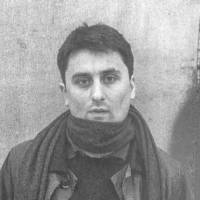
Anton Jager
Author
8
APPEARANCES
8
PODCASTS
Sep 17, 2026

Daniel TuttHOST
Would you agree that there is something like an ideal from which we gauge the deficiency of the age of hyperpolitics?

Anton JägerGUEST
Well, I mean, it's a descriptive contrast, but it obviously has some normative valence.
Anton JägerGUEST
So people have rightly noted that the chronology does charge mass politics with more potency or more potential than its successors.
Anton JägerGUEST
And I think I'll put my cards on the table that, yes, I'm partial to certain mass political principles insofar as I think social change was easier to achieve and even instantiating ruptures with contemporary society was something that was easy to pursue also under mass political conditions.
Anton JägerGUEST
So I'll say a couple of things also relating to the valorization or at least The profound ambivalence, I think, the end notes line has about hyperpolitics as something that is both a symptom that is inevitable, that cannot be contested, that just has to be mediated or reflected on, but also something that, as you say, is also valorized, that they sometimes don't seem to approve of, and which they, I think, gentrify as a political form today.
Anton JägerGUEST
So I also want to clarify that mass politics in the book, and certainly to my mind, has no intrinsically revolutionary meaning.
24 MINS LATER
Daniel TuttHOST
Um, Could you speak to this question? I know this is not exactly covered in hyperpolitics, but perhaps you might offer some of your speculations.


Ezra KleinHOST
So from your perspective, is MAGA hyper politics? Is it the coming of something new? How do you see what is happening there on the American right?
Anton JägerGUEST
I think it's an interesting and complicated question because the first Trump term and the second term, term are q- Obviously very different.
Anton JägerGUEST
I mean, for the first election victory, he himself and his entourage were surprised that he even won.
Anton JägerGUEST
The Heritage Foundation Project twenty five, that indicates that they were better prepared and that there was a project of institutionalization which they consciously pursued.
Anton JägerGUEST
The question whether MAGA is a mass movement and whether they've managed to reinvent, I'd say even certain forms of twentieth century far right mass politics, which I think is also related to the so called F question debate, whether Trump is a fascist or not.
6 MINS LATER
Ezra KleinHOST
Uh, money can talk very loudly, but I actually always think it doesn't talk as loudly as people think it does, 'cause I've watched a lot of money fail to get its way in American politics and elsewhere, that it's just so much easier to block anything than to achieve anything, that almost people don't believe in achievements.


Liz FranczakHOST
But again, it's this kind of like they want to like Pinocchio it or Trojan horse a kind of like to get these achievements out of a state that cannot produce it because of the structure of the American state and also their position within it.
Anton JägerGUEST
So I think there's an attempt to speed run, but also just to, to cheat yourself into collective agency and capacity, which I think is like a very tempting element also in contemporary political culture, precisely because the internet and, or the new public sphere incentivizes this quick fix shortcut mentality, which I think has also been stimulated by the rise of finance, which is not the most patient form of economic activity in many ways.
Anton JägerGUEST
There wasn't a blueprint for what a deconstruction of the administrative state and this profound reordering of American foreign policy looked like.


Anton JägerGUEST
It tries to, uh, paint a sketch of where we are and what the limits and obstacles are.
Anton JägerGUEST
It doesn't trade in prescriptions very comfortably, and I would certainly not position myself as a guru that can somehow give people recipes to magically solve all their problems.
Anton JägerGUEST
I think the real question the book asks itself, what would it take to reinstitutionalize the new political engagement activity we're seeing in the last decade and a half? What would it mean to institutionally stabilize it, to give it longevity, and to make politics more institutionally articulate? And there it-- you cannot hope for the cloning of a dinosaur, to use- Uh, a rather complicated metaphor.
Anton JägerGUEST
What do I mean by cloning a dinosaur? It doesn't really make any sense to look for these 20th century institutional models, the kind of mass parties that bound voters and members to them for a very, very long time, sometimes for the entire lifespan of some of these members, and simply think one can transplant this model into the 21st century, and that people are willing to spend their entire lives inside these parties.
6 MINS LATER

James KamarasamyHOST
We've seen, uh, certainly in the short term, a change of leader can make a difference to the Labor Party in the UK.
Anton JägerGUEST
I think leaders in an age of sort of increasing fluidity and volatility offer at least a sense of stability when everything has become highly insecure and, and precarious.
Anton JägerGUEST
It used to be the case that people joined certain parties because they agreed with the ideology or the party program of those parties, and now it's actually the other way around.
Anton JägerGUEST
It's the leader that determines the party program, and once the leader leaves, there's no actual independent ideology or program through which people might be attached to a certain organization.
James KamarasamyHOST
How can political parties, political leaders then tap into this politicization with weak institutions? I- is there something that they can do? Do they just need to strengthen institutions, or is there something else that they should be looking at in terms of how they can make use of this desire that's out there for political activity?


Mark LeonardHOST
So why don't you g- give us a short, uh, definition of what is hyperpolitics, and then, uh, we can go into, into the kind of meat of it.
Anton JägerGUEST
The very short bite-sized definition is hyperpolitics is repoliticization wi- without reinstitutionalization.
Anton JägerGUEST
To put it more concretely, what it really describes is a change in political culture, particularly in the West in the last 10 to 15 years.
Anton JägerGUEST
Now, the reason I focus on the West is not because of any sort of servanist or parochial prejudice, but more because I simply don't have the linguistic and cultural capacity to talk about, uh, most of those non-Western settings with any confidence.
Anton JägerGUEST
Um, and what it's really trying to look at, as I said, is a change in political culture in which there has been a marked increase in political activity on a number of metrics, so whether it's voter turnout, whether it's protest activity, spec- particularly spectacular one, but also, let's say, political communication also as facilitated by the newly social internet.
20 MINS LATER
Mark LeonardHOST
It does feel more like a revolutionary movement than one which is about trying to uphold the status quo.

SamHOST
Where, where did that concern come from?
Anton JägerGUEST
I mean, it, it's partly an outgrowth of a previous academic trajectory, I almost have to say.
Anton JägerGUEST
That I wrote a PhD about populism, particularly the history of American populism in the late nineteenth century.
Anton JägerGUEST
But I very quickly realized that writing a history about the late nineteenth century U.S., in which the word populism is introduced or used for the first time, obviously obliges you to also take part in some of contemporary conversations about what populism is.
Anton JägerGUEST
And, I mean, I even wrote a book about contemporary populism as well, which came out with Verso, I don't know, th-three or four years ago.
SamHOST
Instead of going over centuries, it's sort of decades.


Sam MoynHOST
Um, [lips smack] and so I just wanna, I just wanna understand, especially since, you know, later on you kind of acknowledge that the anti-political phase is, is, is very deeply similar to the hyperpolitical phase, just why we shouldn't start by kind of questioning whether there has been much repoliticization yet.
Anton JagerGUEST
Yes, I think this is a very legitimate question because there's a tendency also to describe what I call high politics as a form of pseudo-politics.
Anton JagerGUEST
So it looks as a form of repoliticization on the surface, but since there's so little durability, longevity, and also substance to it, there's a question whether we should even talk about repoliticization in any concrete, meaningful sense.
Anton JagerGUEST
Um, and I also just want to make clear that some of these quantitative data are also indications.
Anton JagerGUEST
There's obviously a more atmospheric argument you can make about how politics has now intruded into the private sphere in a way that it didn't in the '90s and 2000s.
28 MINS LATER