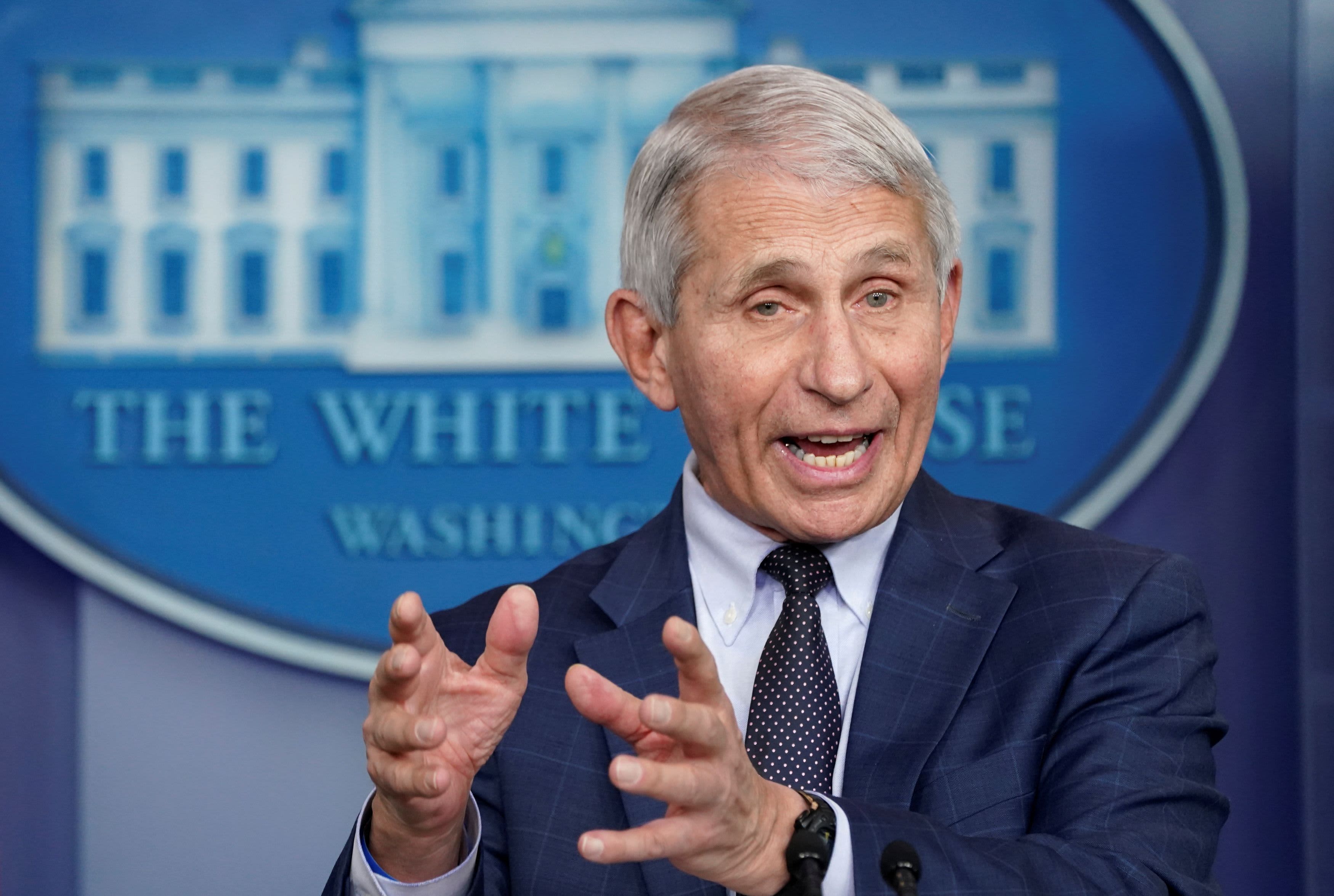
Anthony Fauci
Physician and former Chief Medical Advisor to the President of United States
16
APPEARANCES
13
PODCASTS
Aug 6, 2026


Anthony FauciGUEST
Oh, I think, David, regardless of what your persuasion is politically, when you look at government.
Anthony FauciGUEST
government money well spent and look at the investment in the PEPFAR program and the number of lives clearly that was saved by the investment in PEPFAR over a period of more than 20 years.
Anthony FauciGUEST
As I mentioned, it is responsible for saving the lives of over 25 million people.
Anthony FauciGUEST
So I would challenge anyone to look at any other public health program that for the amount invested resulted in that extraordinary, extraordinary result of saving the lives of so many people, not only because every life is precious and worth saving if you could do it, but for the United States, it has served as an extraordinary form of soft power where our image throughout the world, particularly in Sub-Saharan Africa and the Caribbean countries and countries in Asia and those who've benefited from the PEPFAR program.
Anthony FauciGUEST
It has done more for the image of the United States as a country that really cares about the rest of the world, I think, than almost any other program.
7 MINS LATER
Anthony FauciGUEST
You know, if you look at interventions, medical interventions, and the risk benefit of a medical intervention, vaccines shoot to the top of the pile as the most effective and the safest.


Anthony FauciGUEST
Members of the committee, I served at the NIH for over 54 years, 38 of those as director of the National Institute of Allergy and Infectious Diseases.
Anthony FauciGUEST
Over that period, I proved that I believe in and respect the value of legitimate congressional oversight.
Anthony FauciGUEST
In fact, I testified before and or briefed Senate and House committees well over 200 times over those 38 years.

2:36

What can you tell the American people about what's going on? Should they be scared?
Anthony FauciGUEST
But it's something that we as public health officials need to take very seriously.

Joshua MachtHOST
What's the government gonna do and, and planning to do to, to ensure that it's widely distributed?
Anthony FauciGUEST
Yes, uh, with the caveat that you're never gonna be able to guarantee when you're dealing with vaccines, that's just the nature of vaccinology, that you're gonna have a safe and effective vaccine.
Anthony FauciGUEST
But the early preliminary data on what several of these candidates can induce, they can induce the kind of immune response that you would predict would be protective.
Anthony FauciGUEST
But your specific question, what is success? What does that mean? For the most part, I mean, the perfect thing would be to have a vaccine that completely protects you against infection.
Joshua MachtHOST
And I guess the question is has coronavirus, has it perhaps mutated into a form that maybe is not much, much worse than the flu?
Joshua MachtHOST
But do you think as public health officials, either it hasn't been explained in a way that has connected with enough people, or we just haven't gotten the word? I mean, what is the part of the public health officials on this?
Anthony FauciGUEST
Well, public health officials have had a very difficult time because if everything we were dealing with was in the context of public health, I don't think you would be seeing this disparity and discrepancy among various sectors in this country about things that seem to be reasonably straightforward, wearing masks, keeping distance, avoiding congregate settings in crowds, particularly indoor.
Anthony FauciGUEST
We have gotten caught, and this is so unfortunate, Joshua, we've gotten caught in being in an extremely divisive society in our own country and in other parts of the world too, but certainly it's been very dramatic.
Anthony FauciGUEST
Test to test what happened a couple of weeks ago at the Capitol where the issues of public health have been consumed in a divisive context so that there are people who feel that when we say to avoid congregate settings or wear a mask, that somehow or other, we're encroaching upon something that really has nothing to do with public health.
Anthony FauciGUEST
And I think that that's because there's been mixed messages that have come to Washington.
Anthony FauciGUEST
I mean, if ever there was something that was contrary to the appropriate implementation of public health measures is when you have divisiveness to the point where something that is truly a public health measure becomes a political issue.
Joshua MachtHOST
I mean, are we having any success at this point in really keeping significant numbers of people alive or out of ICU?


Anthony FauciGUEST
Well, I mentioned just a moment ago, Rowan, that President Bush told me to go ahead and and commissioned me to put together this program, but he did not want anybody to know about it because he was afraid that if it became public, what I was doing, that everybody would want to have their own little version of things and to become typical Washington politicized.
Anthony FauciGUEST
So he said, I'm giving you my permission to go and put together a program to present to me, but I You can't tell anybody what it is, not even the director of NIH, not even the secretary of HHS, which made me very uncomfortable because these are people that I reported to in the hierarchy of the government.
Anthony FauciGUEST
So when I finally got the program and presented it to Josh Bolton, who was his chief of staff, a great guy, the OMB, who handles the money, heard about what I was proposing And they were pushing back because they thought it would be too expensive.
16 MINS LATER
44:43
I'm curious, as you think about HIV now, what, like the possibility of a vaccine, what is the latest science there that you're excited about? Is there a vaccine in our future?
Joshua MachtHOST
What's the government gonna do and, and planning to do to, to ensure that it's widely distributed?
Anthony FauciGUEST
Yes, uh, with the caveat that you're never gonna be able to guarantee when you're dealing with vaccines, that's just the nature of vaccinology, that you're gonna have a safe and effective vaccine.
Anthony FauciGUEST
But the early preliminary data on what several of these candidates can induce, they can induce the kind of immune response that you would predict would be protective.
Anthony FauciGUEST
But your specific question, what is success? What does that mean? For the most part, I mean, the perfect thing would be to have a vaccine that completely protects you against infection.

Adi IgnatiusHOST
And I guess the question is, has coronavirus, has it perhaps mutated into a form that maybe is not much, much worse than the flu?

Andre GunawallaHOST
What does it actually do, and what were your initial days at the helm of that institute like in the midst of the HIV-AIDS crisis?
Anthony FauciGUEST
Well, the National Institute of Allergy and Infectious Diseases, when I took over, was a relatively small institute.
Anthony FauciGUEST
It is responsible for the study of all infectious diseases, both those that are here in the United States, as well as globally important diseases like malaria and other types of global health challenges that go well beyond the borders of the United States.
Anthony FauciGUEST
Also, we do a lot of research and fund research on immunological mediated diseases and understanding the intricacies of the human immune system.
Anthony FauciGUEST
We do research that we have government scientists like myself who actually conduct the research, but the most of the resources of the Institute goes out to the funding with grants and contracts of scientists throughout the country, mostly at major university medical centers, Harvard, Yale, Cornell, Wash U, and places like that.
16 MINS LATER

speaker_0HOST
What was it that you discovered?
Anthony FauciGUEST
There were a group of diseases called inflammatory vasculitides, which means that the blood vessels in the lung and the kidney, and sometimes in the brain, would get inflamed by an autoreactive phenomenon, and the diseases had a mortality of close to 100%.
Anthony FauciGUEST
And all therapies that had been tried for these diseases prolonged life a bit, but didn't cure anybody.
Anthony FauciGUEST
We got the idea that if we could use those powerful drugs that were used for cancer chemotherapy, but only at a very low dose, that balanced suppressing the immune system just enough to suppress the aberrant inflammatory response, but not so much as to make the patient vulnerable to an opportunistic infection.
Anthony FauciGUEST
So we designed a protocol to get the right dose for the right period of time, and much to our gratification, we induced a 93% remission rate, which wasTotally transforming-
10 MINS LATER
speaker_0HOST
What was that period like for you?
Anthony FauciGUEST
Well, it was for me, very difficult because, you know, having served so many presidents as a public servant, I have a great deal of respect for the office of the President of the United States.
Anthony FauciGUEST
So when the president was saying things that were not correct based on scientific information, I was obligated to preserve my own personal integrity, but also to fulfill my responsibility to the American public to publicly contradict him when I was asked.


Anthony FauciGUEST
One of the things when you say now, what's happening now, and it's been going on for years but very intensively over the past few years, is that we are now in an environment of what I call the normalization of untruths, where things that are patently untrue are said and amplified by social media such that if you say something over and over again that's untrue, for a substantial portion of people who are not thinking critically, and I don't mean that in a pejorative way but they're busy doing other things, so they're not thinking critically about every single bit of information that comes out, and they're very much steeped in the social media which is not edited at all, that you wind up having things that are completely untrue, um, being accepted as truth and reality by people.
Anthony FauciGUEST
The issue regarding Meghna's question is that is antithetical to what science is, because as I mentioned just a few moments ago, if science is a process to gather information, data and evidence that is true, that are facts, and when you do that, that's where you can come to whatever conclusion you come to.
Anthony FauciGUEST
So if you're dealing with a moving target where things change, you've got to look at the data that you have at a given moment, and if you have to make a decision, a recommendation or a guideline, you base it on what you know now.
30 MINS LATER
speaker_9UNKNOWN
(clapping).

Anthony FauciGUEST
When you say wipe out, Guy, you've got to distinguish, and this is a really good issue that you bring up, There's a difference between controlling infections, eliminating infections, and eradicating infections.
Anthony FauciGUEST
We have only been successfully eradicated one human infection in the history of mankind, and that's smallpox.
Anthony FauciGUEST
We've eliminated infections in certain geographic areas by good public health practices, and predominantly the major force in that was vaccination.
Anthony FauciGUEST
For example, we have officially eliminated polio and eliminated measles in the United States.
13 MINS LATER

Guy KawasakiHOST
So is the latest technology and mRNA, is that the silver bullets from this day forward? We're going to just be knocking out these viruses quickly, right?

Anthony FauciGUEST
Well, I think the gay community... were quite correct in that the way the scientific community and the regulatory community were handling HIV AIDS was the standard way you would handle any other disease, being very conservative in clinical trials with inclusion and exclusion criteria and taking quite a long time to approve new drugs.
Anthony FauciGUEST
But when you're dealing with a disease in which a person, they have an average of 10 to 12 to 15 months to live, something that takes years to do doesn't fit in with the very difficult situation.
Anthony FauciGUEST
So what the gay community did, they tried to have a seat at the table so that they could have input into what the best approach is.
Anthony FauciGUEST
Understandably, but inexcusably, the scientific and regulatory community were saying things like, we know what's best for you.

Jim Al-KhaliliHOST
But that wasn't the case everywhere, which is why you turned your sights to Africa.


Willie JolleyHOST
How did you know that was your calling to be so impactful on these major health challenges?
Anthony FauciGUEST
Well, you know, as we all are aware, we didn't know anything until 1981 when the first cases of what would turn out to be HIV were recognized by five curiously young, otherwise healthy gay men in L.A. in June of 1981.
Anthony FauciGUEST
A month later of 1981, another report of 23 curiously all young, otherwise healthy gay men from LA, San Francisco, and New York City who presented with a devastating disease that was not only a strange pneumonia, but a number of other opportunistic infections and cancers.
Anthony FauciGUEST
At that time, Willie, I had been a rather successful clinical investigator who had developed a number of therapies for other diseases, inflammatory autoimmune diseases of the blood vessels that were very, very serious and were killing a lot of patients.
Anthony FauciGUEST
So I was, luckily, I had a good mentor and we We hit on some important protocols, and we were saving a lot of lives.
Anthony FauciGUEST
Then in 1981, when I saw those first reports of this strange disease, I know deep down in my core, Willie, that this was going to explode into be a literally earth-shacking pandemic.
13 MINS LATER
Willie JolleyHOST
Can you reflect on how you situate yourself in the gay community and share how prominent HIV activists who were sometimes your enemies became your friends and helped to accelerate the HIV agenda and research?
Andre GunawallaHOST
What does it actually do, and what were your initial days at the helm of that institute like in the midst of the HIV-AIDS crisis?
Anthony FauciGUEST
Well, the National Institute of Allergy and Infectious Diseases, when I took over, was a relatively small institute.
Anthony FauciGUEST
It is responsible for the study of all infectious diseases, both those that are here in the United States, as well as globally important diseases like malaria and other types of global health challenges that go well beyond the borders of the United States.
Anthony FauciGUEST
Also, we do a lot of research and fund research on immunological mediated diseases and understanding the intricacies of the human immune system.
Anthony FauciGUEST
We do research that we have government scientists like myself who actually conduct the research, but the most of the resources of the Institute goes out to the funding with grants and contracts of scientists throughout the country, mostly at major university medical centers, Harvard, Yale, Cornell, Wash U, and places like that.
16 MINS LATER

Anthony FauciGUEST
When you say wipe out, Guy, you've got to distinguish, and this is a really good issue that you bring up.
Anthony FauciGUEST
There's a difference between controlling infections, eliminating infections, and eradicating infections.
Anthony FauciGUEST
We have only been successfully eradicated one human infection in the history of mankind, and that's smallpox.
Anthony FauciGUEST
We've eliminated infections in certain geographic areas by good public health practices, and predominantly, the major force in that was vaccination.
Anthony FauciGUEST
For example, we have officially eliminated polio and eliminated measles in the United States.
12 MINS LATER
Guy KawasakiHOST
So is the latest technology and mRNA, is that the silver bullets from this day forward? We're going to just be knocking out these viruses quickly, right?


Matt AbrahamsHOST
What strategies have you used to build and maintain trust with the audiences you speak to, especially when conveying difficult or unpopular information?
Anthony FauciGUEST
Well, one is to be totally transparent into what you know and what you don't know, what the difference of a statement based on data, evidence, information that is documented versus a statement that you have to make that is really based on a conjecture and say, "You know, we think it is this way, but we don't know for sure." You, you, you cannot act confident in something that is, in fact, not based on solid data.
Anthony FauciGUEST
Whereas when the data is solid, you can say with a good deal of confidence that this is what the evidence shows and this is what our recommendation or our guideline is.
Anthony FauciGUEST
It's just transparency, honesty, and a little bit of humility to let the audience know that you don't know everything, and there are a lot of things that are evolving before you, and you'll just give the information as it becomes available to you.
Matt AbrahamsHOST
How do you think about making your messages accessible to everyone at all the different levels of expertise and detail that they need to, to do their jobs well?
Anthony FauciGUEST
So if you know what your audience is, I mean, there are two issues that are, I think, baked into your question.