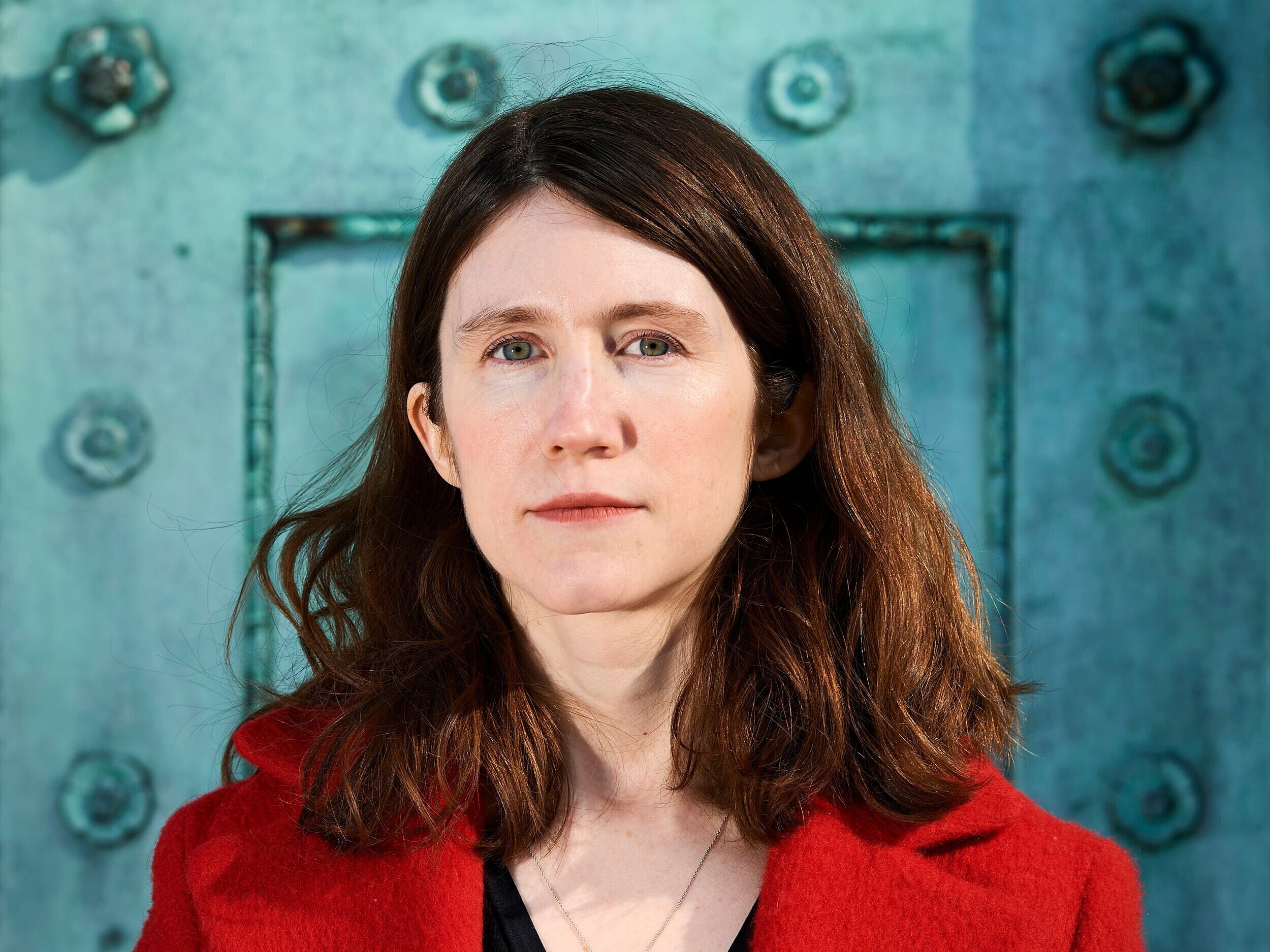
Anna North
American writer and editor
9
APPEARANCES
7
PODCASTS
Jul 23, 2026

Anna NorthGUEST
So in addition to, you know, just, like, kids enjoying to squish these and, like, they feel good, right, they also have become this thing where, like, there will be specific drops of different ones and then people will, like, you know, do a TikTok of it and, like, kids and adults will, like, swarm a toy store that has new drops.
Anna NorthGUEST
So that actually, that feature has, I think, little to do with the fidget aspect, little to do with any kind of, like, psychological or neurological benefits, and is just about, like, the way toys operate in our culture right now, which is that, like, as a toy company, you kind of want your toy to go viral.
Anna NorthGUEST
You kind of want your toy to be on TikTok, and then as soon as it does, then it becomes this thing in schools that's, like, really distracting, where kids are, like, comparing their NeeDohs with one another.
Anna NorthGUEST
So I think that these, uh, to the extent that they are, like, problematic in schools, a lot of that is coming from, like, virality and comparison.
Anna NorthGUEST
But I do think that, like, there's a school of thought that's like, you know, oh, the fidgeting is bad.


Anna NorthGUEST
So I will say that Neato, for example, which is the one that's like really hot right now, their website does not really use that language.
Anna NorthGUEST
I think what is interesting too is like, I think there is a general awareness among like Gen Z and Gen Alpha kids that like, a lot of folks might have some features of ADHD, some features of autism that a lot of folks might experience like focus issues or attention issues during a certain time, and that we all have sensory needs regardless of our neurotype.
Anna NorthGUEST
And so you will see like the word sensory used essentially attributed to like literally every toy that is basically sold now.


Anna NorthGUEST
And then we have funeral homes and, uh, you know, other types of arrangements when people have actually passed away, but there's this real gap when people are dying, and there's often not a lot of assistance in terms of help, for example, helping family members contact funeral homes, helping people make arrangements to deal with someone's body, helping a person maybe decide what do they wanna have happen with their remains or how do they want their life celebrated after they die, and then really providing companionship and care.
Anna NorthGUEST
So something that Nicole Kidman actually talked about is that she and her sister, um, both have families and careers.
Anna NorthGUEST
So, uh, you know, for example, we had a doula present for the birth of our first child, and part of her role was to know what did we want and how did we want that birth to go, and to kind of help advocate for us with the medical staff in case there was any question around how things were going.


Sean IllingHOST
That the, the younger people, particularly younger women who are migrating to this coalition, um, do you think that's has long-term political implications? How do you think that'll break down electorally?
Anna NorthGUEST
I, I spent a lot of time for this story trying to figure out how, like, how MAHA are teens.
Anna NorthGUEST
Like, how much is this content and this culture reaching young people? And it's a little hard to measure.
7 MINS LATER
Sean IllingHOST
Well, what's their answer? If it's not, "Hey, trust government again," what, what is their answer to, to dealing with this?
Anna NorthGUEST
Um, I, as, as you say, I thought it was a pretty big gap, especially given that the narrative that I think we had heard about young Gen Z people generally over the last couple years is, this is a generation that doesn't want kids, this generation doesn't wanna get married.
Anna NorthGUEST
This is a generation that's, like, really worried about the future and, like, feeling really alienated and doesn't sort of wanna take these steps toward conventional family.
Anna NorthGUEST
Um, and so I thought it was interesting that, uh, these high numbers of Gen Z men were saying, like, "No, actually, we do want kids." Um, if you dig back into the historical polling, um, it's a little wonky.
Anna NorthGUEST
Um, there's some evidence that women without children for a long time have been a little bit- uh, had a little bit more trepidation than men without children, and partly that's for reasons that make sense.
19 MINS LATER
Sean IllingHOST
[chuckles] You know, I don't-- If that's what's driving it, I, I don't think that will result in, in policies that will benefit everyone.

Anna NorthGUEST
Yeah, so I think that is a little bit part of a broader trend that I think I and others have been following a lot, is this sort of, this sort of sense of adults and parents managing their kids' lives, sort of the way that parental anxiety about childhood has led to this parent-driven childhood, where parents are stressed about, "Are you gonna get into the right college? You know, you better play sports and play really seriously.
Anna NorthGUEST
I'm gonna make sure you get into X team or that league or whatever," um, rather than an approach that's more like, "You know, maybe my kid asks if he can play baseball, my kid asks if she can play soccer." And I think some folks sort of see this as part of a larger drift where parents are really managing a lot of aspects of their kids' lives, in part because they're stressed.
Anna NorthGUEST
They feel that childhood is dangerous, or they feel that American life is very precarious.
Anna NorthGUEST
There's lots of reasons to be stressed, but I think the concern is that that results in kids' lives sort of being micromanaged.

Rob GuntherHOST
Is there, like, a professional idea of how sports should be, like, a platonic ideal of how youth sports should be for, for all kids?
Anna NorthGUEST
I think the takeaway that I got from folks I talked to is that youth sports can be really fun.

Anna NorthGUEST
Yeah, so I think that is a little bit part of a broader trend that I think I and others have been following a lot is this sort of sense of adults and parents managing their kids' lives.
Anna NorthGUEST
Sort of the way that parental anxiety about childhood has led to this parent-driven childhood where parents are stressed about, are you going to get into the right college? You know, you better...
Anna NorthGUEST
I'm going to make sure you get into X team or that league or whatever, rather than an approach that's more like, you know, maybe my kid asks if he can play baseball.
Anna NorthGUEST
And I think some folks sort of see this as part of a larger drift where parents are really managing a lot of aspects of their kids' lives and In part because they're stressed.
5 MINS LATER
Rob GuntherHOST
Is there like a professional idea of how sports should be like a platonic ideal of how youth sports should be for for all kids?

Anna NorthGUEST
Yeah, so I think that is a little bit part of a broader trend that I think I and others have been following a lot is this sort of sense of adults and parents managing their kids' lives.
Anna NorthGUEST
Sort of the way that parental anxiety about childhood has led to this parent-driven childhood where parents are stressed about, are you going to get into the right college? You know, you better...
Anna NorthGUEST
I'm going to make sure you get into X team or that league or whatever, rather than an approach that's more like, you know, maybe my kid asks if he can play baseball.
Anna NorthGUEST
And I think some folks sort of see this as part of a larger drift where parents are really managing a lot of aspects of their kids' lives and in part because they're stressed.
5 MINS LATER
Rob GuntherHOST
Is there like a professional idea of how sports should be like a platonic ideal of how youth sports should be for for all kids?
Jonquille HillHOST
Um, what are other ways for kids to spend their summer that you would recommend?
Anna NorthGUEST
Um, certainly, like, you know, here in New York, especially among kids, like, my kids' age, that's the most common option.
Anna NorthGUEST
Some camps have sliding scales, so, um, you know, depending on income, you might be able to pay less.
Jonquille HillHOST
I wonder, like, do kids n- like, is it okay for kids to get that unstructured time? 'Cause I know kids thrive on routine.