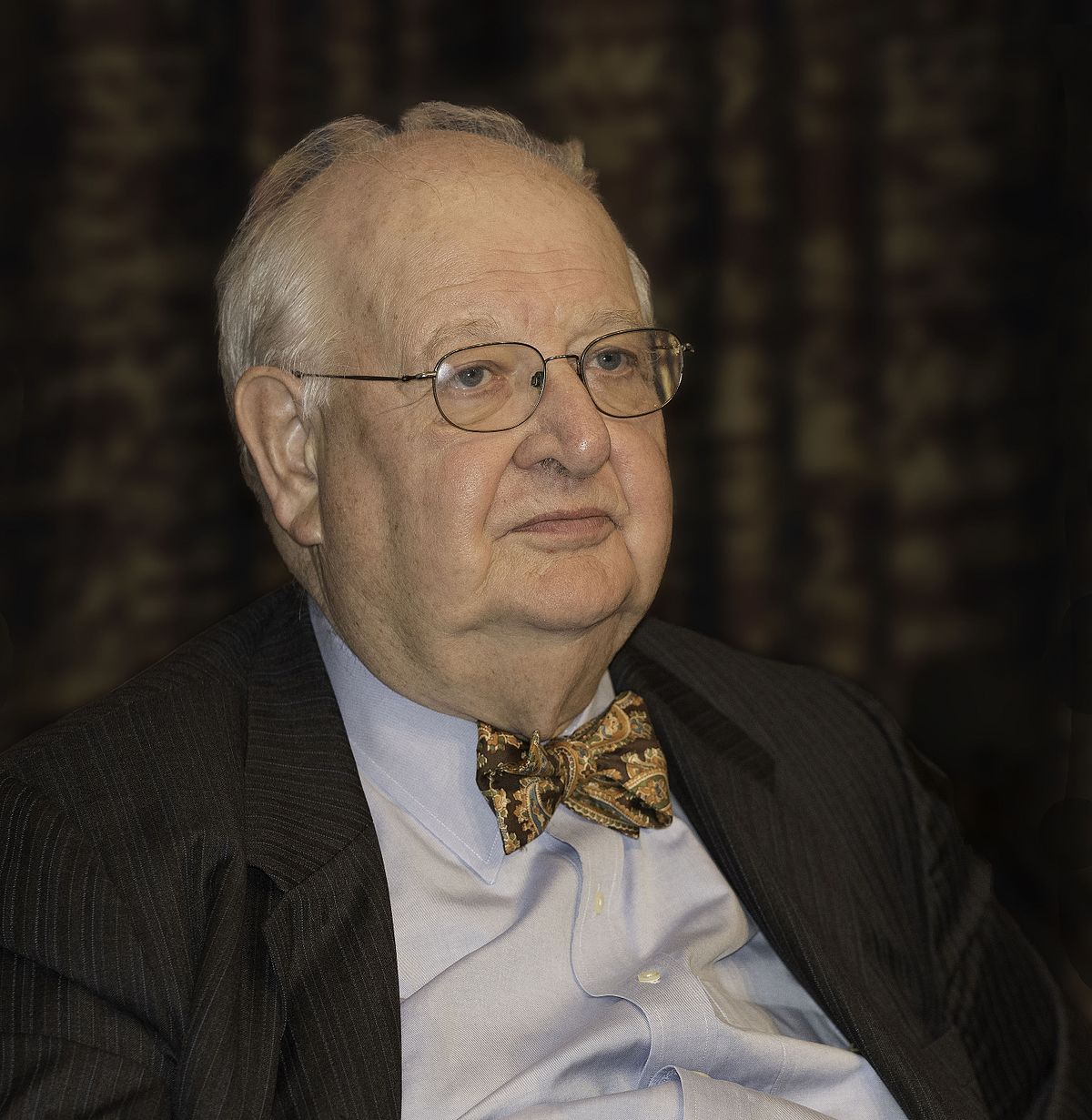
Angus Deaton
British-American economist and academicWikipedia
22
MENTIONS
20
EPISODES
20
PODCASTS
Search complete. 22 mentions across 20 episodes found for "Angus Deaton".
Nov 10, 2026

Daniel AltmanGUEST
One
Chuck JaffeHOST
of the tough decisions that we know frequently does not pay off involves education, right? And it's not so much the undergrad education, because there's plenty of research that shows, Nobel Prize winner Angus Deaton's research that says the greatest indicator of who falls below the poverty level is who does not have a college degree.
Chuck JaffeHOST
But master's degrees, the experience is widely different.
Chuck JaffeHOST
And one of your lifetime decisions is how much education does someone need?

Eboo PatelGUEST
The economists who've created the phrase deaths of despair are at Princeton.
Eboo PatelGUEST
Angus Deaton and Anne Case.
Eboo PatelGUEST
And a few months ago, a big piece comes out in the New York Times.
Eboo PatelGUEST
This is November of 2015.
David IngberHOST
okay?
Eboo PatelGUEST
And I'm like, do you have anything to say about this guy? Silence.
Eboo PatelGUEST
I'm like, do you know about the work of Angus Deaton and Anne Case? Silence.
Eboo PatelGUEST
Nobody in the room at least admits to knowing about the work of two Nobel Prize winning economists on their campus by debts of despair.

SeanHOST
The contemporary behavioral economics research on this question is genuinely useful alongside the philosophical tradition.
SeanHOST
The most widely cited work from the psychologists Daniel Kahneman and Angus Deaton found that day-to-day emotional well-being rises with income up to a certain point.
SeanHOST
After which, additional income produces diminishing and eventually negligible improvements in daily emotional experience, even though people's global life satisfaction, their evaluation of how their life is going overall, continues to rise somewhat with income well beyond that point.
SeanHOST
Later research, including work by Matthew Killingsworth, has complicated the precise shape of this curve, suggesting the plateau may be less sharp than the original study found.

speaker_5NARRATOR
This is supported by most other reputable studies too, so the evidence is pretty clear on this one.
speaker_5NARRATOR
So much so that economists like William Easterly, Danby Samoyo, Haijun Chang, Angus Deaton and many others have made bold critiques of foreign aid which has forced the issue into mainstream discussion.
speaker_5NARRATOR
The findings feel counterintuitive and blows the previously discussed theory right out of the water.
speaker_5NARRATOR
How can giving a country money to invest in expanding its production, healthcare and education not help its economy grow? Well, there are a number of reasons.

AksharaHOST
In 1979, a planning commission task force tied the line to food, whatever it cost to buy 2,400 calories a day in villages and 2,100 in cities.
AksharaHOST
That held until Angus Deaton and Jean Drez showed that Indians were eating fewer calories even as their real incomes rose, possibly because their work had become less physically demanding.
AksharaHOST
So calories stopped telling you who was poor.
AksharaHOST
So in 2009, the Tendulkar Committee dropped calories altogether and built its line around a broader basket of spending.

John LloydGUEST
So I kind of quit after the pilot.
John LloydGUEST
And I have to say, Angus Deaton was a lot better at it than I was.
John LloydGUEST
He was brilliant.
John LloydGUEST
He was very good, wasn't he?

David AnsellGUEST
They got exacerbated.
David AnsellGUEST
But the biggest thing that happened is what the economists, Angus Deaton, one of your landsmen, and Anne Case called diseases of despair.
David AnsellGUEST
Yes.
David AnsellGUEST
And when it happened to black people in this country, people said, well, they don't take care of themselves.

Rory StewartHOST
It's a much smaller minority ethnic community.
Rory StewartHOST
But secondly, because unlike in England and Wales, there has been a massive explosion in what Angus Deaton calls deaths of despair.
Rory StewartHOST
The number of white men particularly, but white people in general without degrees, dying prematurely tripled.
Rory StewartHOST
This is drugs, this is alcoholism, this is suicide.

Colin CamererGUEST
And then there was another starter conference at Princeton, which I missed.
Colin CamererGUEST
And Angus Deaton was there, a later Nobel laureate.
Colin CamererGUEST
And Angus, again, is very far from a neuroscientist.
Colin CamererGUEST
He's interested in demand systems.

Tom KeeneHOST
I dearly miss him every day.
Tom KeeneHOST
Angus Deaton says, a vitally important book.
Tom KeeneHOST
My childhood is in your book.
Tom KeeneHOST
I went to camp.
10 more episodes mention Angus Deaton.
Create an account to see the whole feed, search across every transcript, and follow the entities you care about.