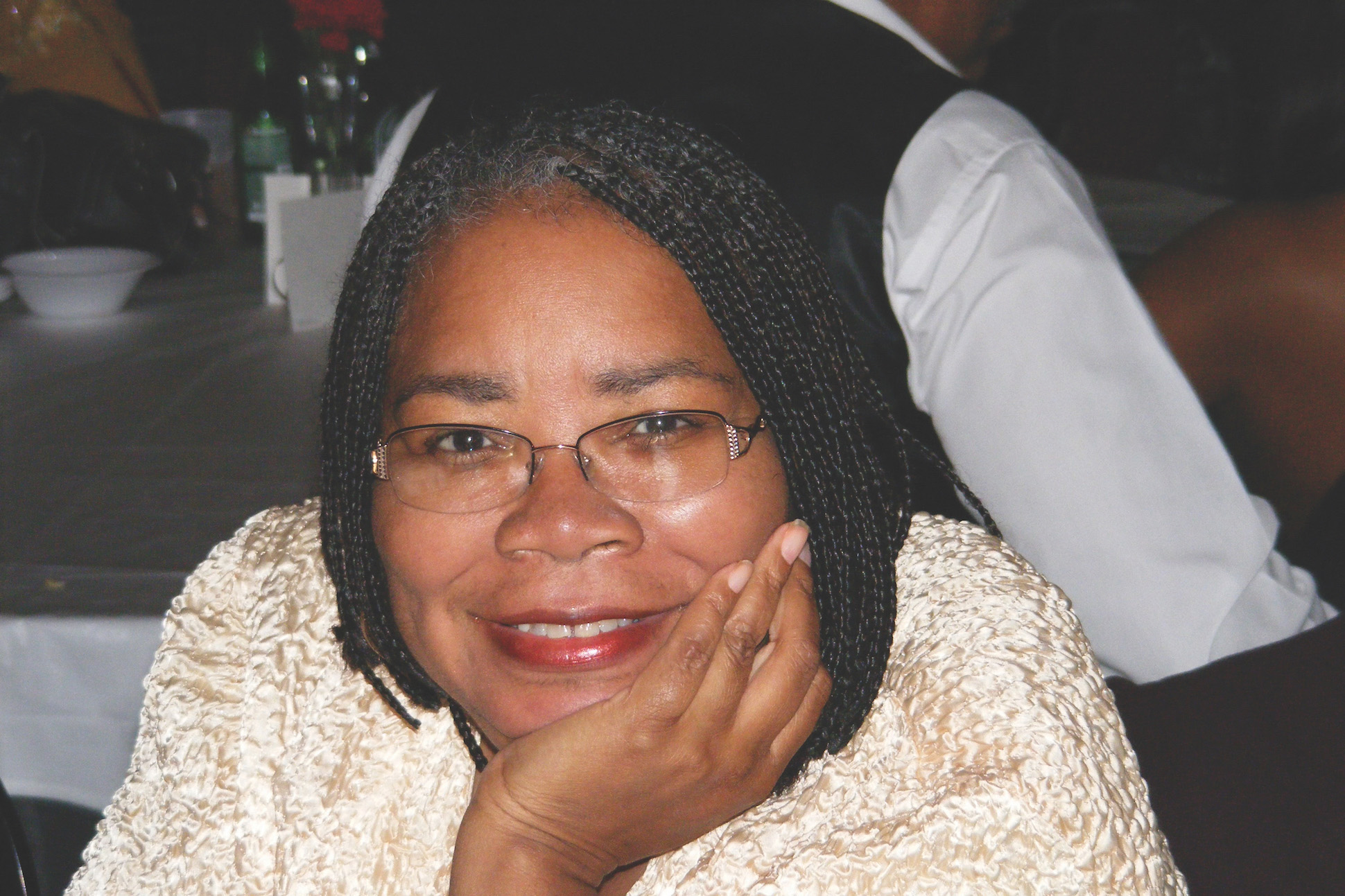
Angela Jackson
American poet and playwright
10
APPEARANCES
10
PODCASTS
Oct 22, 2026


Jeffrey HayzlettHOST
Are too many companies just looking at AI as the primary cost cutting rather than growth? What's got to be done to switch that around, to say, hey, no, it's going to be a growth tool and it's going to be a creative to adding more people?

Angela JacksonGUEST
Well, there's two things that we've seen just in our research and with companies that we're watching, those who are actually measuring it.
Angela JacksonGUEST
And It's going to become costly for people just to think about AI and not really following up on the efficiency.
Angela JacksonGUEST
What are we using this AI for? To what end? And when we start getting smart about that and asking those questions, you're going to see that people are pushing more to revenue.
12 MINS LATER


Richard AedyHOST
Let's talk about some of them, 'cause going through the report, there are a couple of really weird outcomes.
Angela JacksonGUEST
A hundred million dollars extra, uh, uh, expenses associated with this bushfire.
Angela JacksonGUEST
I'm sure New South Wales is going, "We wish that was all it would cost," but say it's a hundred million to make it easy.

10:43
Remind us, what exactly was the Productivity Commission tasked to do in preparing this report?
Angela JacksonGUEST
Uh, we were tasked through the 2018, uh, legislation which introduced the reforms to undertake a review of those reforms by the end of this year to look at whether or not they were meeting their intent, intent, whether or not they were working efficiently or effectively.
Angela JacksonGUEST
Now, these reforms fundamentally changed the way in which the Commonwealth Government distributes GST revenue to the states and territories, uh, introduced a floor in tho- those arrangements to guarantee, or that all states would receive at least zero point seven five, uh, relativity compared to other states, uh, introduced a standard state benchmark so that no state could fall below the share received by the fiscally stronger of New South Wales or Victoria, um, and also topped up the pool of GST distributed to the states to ensure or to try to ensure, didn't quite succeed, that no state would be worse off as a result of these reforms.
Angela JacksonGUEST
Now, we found that, in fact, uh, the only state that is better off from these reforms has been Western Australia to the tune of around twenty-three billion dollars in the first six years of operation, and that other states would've in fact, been worse off had it not been for the No Worse Off guarantee, which is currently costing the Commonwealth Government and Commonwealth Government taxpayers, uh, uh, around six to seven billion dollars a year.
Angela JacksonGUEST
Look, um, I'm not gonna go into the sort of discussions that we have, um, or not.
Angela JacksonGUEST
I mean, the, the other things that obviously have occurred this week also include that we have felt the need to, to clarify is that the Prime Minister has made comments, uh, in Western Australia around, you know, the government's intent or otherwise w-with respect to the recommendations in the report.

Angela JacksonGUEST
And with that, the children arrive quite often telling me that they've got a broken back.
Angela JacksonGUEST
And I reassure them that having looked at their scans, their little tiny hairline crack, is no longer than my little fingernail.
18 MINS LATER

Ben WhybrowHOST
That might be your example, but is there... a hardest conversation you've had? Is it the rugby one or is there a different one?

Leila McKinnonMODERATOR
So, you know, is it, how is AI helping women and does it go beyond the cognitive load?
Angela JacksonGUEST
Like, I'm just [laughs] like this, this trip to Sydney has been worth it just, just to hear about that.
Angela JacksonGUEST
I know the cognitive load of what's for dinner, if I can get rid of that, my life just looks a lot easier.
Angela JacksonGUEST
I think for women more generally, like at a macro level, AI presents opportunities obviously, but also risks.
Angela JacksonGUEST
If we think around the jobs that are gonna be impacted through AI, they are, generally speaking, I think in female-dominated industries, twice as likely to be impacted, uh, than male-dominated industries.
20 MINS LATER
Leila McKinnonMODERATOR
[laughs] Is there anything you'd, um, add?

John MarshallHOST
But before we dive into number one, I'd love you to just list off the nine for the listeners and also speak to if there's any relevance to the order.
Angela JacksonGUEST
Of all the pillars, that is the one foundational one that we saw with all of the companies.
Angela JacksonGUEST
And the reason why was that once you're listening to employees and what matters most to them, and that's how we defined centering voice.
Angela JacksonGUEST
The question's really around what do we need to know about how you experience this job, this role that could help us remove barriers, that could help you do a better job in service of us having a more profitable business.
27 MINS LATER
John MarshallHOST
But I'm curious how that overlaps with hiring stars versus prioritizing credentials.

5:13

But we were jokingly on a situation where we were really tired, one of them mentioned this joke that she saw on social media that asked, "What's the worst thing that you have done for money?" And it said, "Going to work." [laughs]
Angela JacksonGUEST
I was talking to a friend who's a psychologist, and he said something that I went on to research.
Angela JacksonGUEST
He goes, "You know, Angela, I'm so happy that you published this book because when I see my clients for the last 30 years, the number one or number two challenge that they're always talking about is related to workAnd so I, I say that to say a lot of times people will come in, and because of the old norms of work, you know, we are not taught to talk about what are our barriers to work.
9:34
What are you seeing that it brings you hope about concrete practices that can be translated into action?

Angela JacksonGUEST
And so we kept hearing these anecdotal stories or another company that provided, you know, down payment assistance for your apartment, not just house, but just for an apartment security deposit.
Angela JacksonGUEST
And so what we begin to do is to see a pattern of certain types of benefits and policies that we just called enablers.
Angela JacksonGUEST
And years ago I wrote, I created a framework that's called the social determinants of work, very similar to the social terms of health.
11 MINS LATER
19:27
So can you say more about what that looks like and how we can share ownership and kind of start to break down some of those hierarchies, even if we work in a very hierarchical system?


Kara SundlunHOST
What are some of the benefits you think are going to become more commonplace that we could maybe look forward to that might help us feel better at work.
Angela JacksonGUEST
We're seeing the most innovative companies know that childcare is a struggle.
Angela JacksonGUEST
And so some of the most innovative companies are building childcare centers onsite.
Angela JacksonGUEST
they were able to retain 95% of their women executives and workers versus everyone else was bleeding women because women carrying some of the child caring responsibilities, that was hard to juggle when the school system and schedules were a bit uneven.
9 MINS LATER
Kara SundlunHOST
yeah I think people are afraid though right I mean is that legitimate too that people are afraid to say anything um that might make them appear less of a worker if uh oh I have all these problems going on at home right now and then it's like oh well then they're just going to give the project to that person or I mean, everyone in this climate of being laid off or fearing for their financial security, is it justified then? Is that the wrong approach, that people are feeling fearful to share things that might not make them seem like totally competent 24 hours a day if they're having an issue?


Angela JacksonGUEST
When we think about our social contract for many years with the world of work, it was employer, we're paying you a salary, an hourly wage for you to do a job.
Angela JacksonGUEST
What we're seeing with another generation of workforce who are fast becoming the majority of our workforce is that that paycheck exchange they're saying is not enough.
8 MINS LATER