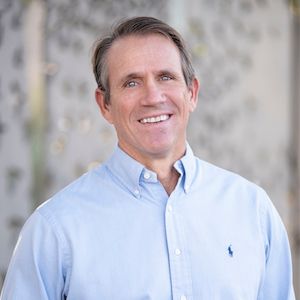
Andy Hetzel
59
APPEARANCES
3
PODCASTS
Oct 15, 2026
141:30

And Andy Hetzel has talked to us about biosimilars and how they can bring down the cost of your prescription drugs.

Andy HetzelGUEST
The top five brand name specialty drugs, they accounted for more than 90 billion in US sales in 2024.
Andy HetzelGUEST
And with those price tags, you can get an understanding of just the cost pressures that those kind of drugs coming to market put on downstream health insurance costs.
Andy HetzelGUEST
And so at Blue Cross, we're taking a strategic approach to making sure that these drugs are available for our members who need them to manage these very severe health conditions, but that also we try our best to manage the cost of these drugs as they hit the market.
22:11
And one of the less expensive ways to go about it is through biosimilars.
Andy HetzelGUEST
The top five brand name specialty drugs, they accounted for more than 90 billion in US sales in 2024.
Andy HetzelGUEST
And with those price tags, you can get an understanding of just the cost pressures that those kind of drugs coming to market put on downstream health insurance costs.
Andy HetzelGUEST
And so at Blue Cross, we're taking a strategic approach to making sure that these drugs are available for our members who need them to manage these very severe health conditions.
Andy HetzelGUEST
But that also, we try our best to manage the cost of these drugs as they hit the market.
136:13
And, uh, one of the ways that he says we can do that is when it comes to the price of drugs by using biosimilars.
Andy HetzelGUEST
The top five brand name specialty drugs, they accounted for more than 90 billion in US sales in 2024.
Andy HetzelGUEST
And with those price tags, you can get an understanding of just the cost pressures that those kind of drugs coming to market put on downstream health insurance costs.
Andy HetzelGUEST
And so at Blue Cross, we're taking a strategic approach to making sure that these drugs are available for our members who need them to manage these very severe health conditions, but that also we try our best to manage the cost of these drugs as they hit the market.


Stephan CurrieHOST
Yeah, so when you're talking about those healthcare cr- costs inc- increasing, how much of those are, are, are, are hospital prices contributing to that?
Andy HetzelGUEST
Well, again, hospital prices are a significant part of that health insurance premium dollar, and so the solution to that isn't to stop paying hospitals, and it certainly isn't for the hospitals to stop paying their staff.
Andy HetzelGUEST
Um, they have issues like labor costs to deal with, technology costs to deal with, the cost of electricity to run their buildings.
Andy HetzelGUEST
So every time that Blue Cross goes to negotiate a new payment contract with a health system, we start there.
Stephan CurrieHOST
so getting back to a little bit on the, the costs of insurance, can you touch a little bit on prescription and how that is impacting the increases folks are seeing?

Andy HetzelGUEST
At Blue Cross, we've always believed that good health should be a fundamental part of everyone's life.
Andy HetzelGUEST
So we've started something new that gives people access to trusted information, practical resources, motivation, inspiration.
Andy HetzelGUEST
Good information and great support lead to better choices, and better choices lead to healthier lives.

Lucy Ann LanceHOST
Blue Cross is there for all of us, and I do mean all of us because this is designed for people of all ages, right, Andy?
2:35
Well, if, uh, one of our listeners happens to see you or recognize your voice maybe, can they come over and say hi? Can they get a selfie or an autograph? Is that okay?
Andy HetzelGUEST
But, uh, really, the superstars at Blue Cross aren't the people that appear on your radio program.
Andy HetzelGUEST
It's the 7,500 or so employees that come into work every day on behalf of our members.
Andy HetzelGUEST
And this year, Blue Cross is extremely proud that for the third year in a row, we have been selected by J.D. Power as the number one health plan in Michigan for customer satisfaction, and that is a reflection of how we serve our members.
Andy HetzelGUEST
And this year, we not only finished first, we finished first by over 50 points over our next, uh, competitor here in Michigan, and we finished first in all eight dimensions of that survey.
4:55
But once you learn to navigate it, it's tough to live without, especially if it's done well.
Mark MayfieldCORRESPONDENT
Well, if, uh, one of our listeners happens to see you or recognize your voice maybe, can they come over and say hi? Can they get a selfie or an autograph? Is that okay?
Andy HetzelGUEST
But, uh, really, the superstars at Blue Cross aren't the people that appear on your radio program.
Andy HetzelGUEST
It's the 7,500 or so employees that come into work every day on behalf of our members.
Andy HetzelGUEST
And this year, Blue Cross is extremely proud that for the third year in a row, we have been selected by J.D. Power as the number one health plan in Michigan for customer satisfaction, and that is a reflection of how we serve our members.
91:53
But once you learn to navigate it, it's tough to live without, especially if it's done well.
Lucy Ann LanceHOST
In fact, I saw on your site, mibluedaily.com/affordability, that cost concerns are reaching critical mass for Michigan's small businesses right now.
Andy HetzelGUEST
And we're continuing that challenging conversation about healthcare affordability.
Andy HetzelGUEST
But a recent survey, Lucian, finds that fifty-one percent of Michigan small businesses have already reduced or eliminated benefits because of rising healthcare costs.
Andy HetzelGUEST
And more than seventy-five percent said healthcare costs are affecting their ability to hire new employees.
Andy HetzelGUEST
So we continue to be very concerned about the impact of rising healthcare costs on our customers.
Lucy Ann LanceHOST
Andy, you were telling me that when employers choose these products, it lowers their costs by eight percent, ten percent, even as much as fifteen percent, depending on which one they select.
2:47
How would you draw, if I gave you all of those items, the chalk and everything, affordability?
Andy HetzelGUEST
Well, I think that if you're a small business owner in Michigan, you'd probably draw some dark clouds with all that chalk because the Small Business Association in Michigan has recently conducted a survey that finds what we at Blue Cross know full well, that small businesses are under a lot of cost pressure right now.
Andy HetzelGUEST
51% of small businesses are telling SBAM that they've already reduced or eliminated benefits because of rising costs, and more than 75% said healthcare costs are affecting their ability to hire new employees.
Andy HetzelGUEST
And if you put just a period right there and you pause for a second, what that means is that healthcare costs in Michigan are having a stranglehold effect on our economy's ability to grow.
Andy HetzelGUEST
because small businesses hire people and they employ people in communities large and small all across our state.
Andy HetzelGUEST
So at Blue Cross, we are very committed to making sure that we're providing the right types of products for small business owners that really give them choice, the ability to manage their benefit costs, while also providing that access to care that is so important to their employees.
3:57
Those lower costs that you're offering as a solution are meaningful, significant, and you're delivering that?
Andy HetzelGUEST
Yes, we are trying to work into our product suite for small employers a few different opportunities.
89:30
How would you draw, if I gave you all of those items, the chalk and everything, affordability?
Andy HetzelGUEST
Well, I think that if you're a small business owner in Michigan, you'd probably draw some dark clouds with all that chalk because the Small Business Association in Michigan has recently conducted a survey that finds what we at Blue Cross know full well, that small businesses are under a lot of cost pressure right now.
Andy HetzelGUEST
51% of small businesses are telling SBAM that they've already reduced or eliminated benefits because of rising costs, and more than 75% said healthcare costs are affecting their ability to hire new employees.
Andy HetzelGUEST
And if you put just a period right there and you pause for a second, what that means is that healthcare costs in Michigan are having a stranglehold effect on our economy's ability to grow.
Andy HetzelGUEST
because small businesses hire people and they employ people in communities large and small all across our state.
Andy HetzelGUEST
So at Blue Cross, we are very committed to making sure that we're providing the right types of products for small business owners that really give them choice, the ability to manage their benefit costs, while also providing that access to care that is so important to their employees.
90:40
Those lower costs that you're offering as a solution are meaningful, significant, and you're delivering that?
Andy HetzelGUEST
Yes, we are trying to work into our product suite for small employers a few different opportunities.

4:16
And we know that in the mission of Blue Cross, Andy Hutzel, part of that is a charitable effort to reach people who maybe even aren't even Blue Cross cardholders.
Andy HetzelGUEST
And Tiffany and her team do tremendous work in engaging at the community level to provide some of the resources that are necessary to help people, you know, get that leg up to better health through better nutrition.
Andy HetzelGUEST
And at Blue Cross, we've been long committed to improving the health of all the people of the state of Michigan, regardless of whether or not they're health insurance members of our company.
Andy HetzelGUEST
And At the campaign, you talk about power and powerlessness, but information is power.
Andy HetzelGUEST
It's engaging people across the state, providing information, ideas, and resources through the website that Tiffany and her team have launched at MIBlueDaily.com. slash Power Your Health.
6:14
You would like us to think of Blue Cross in a different way and more often.
Andy HetzelGUEST
It's a holistic approach that we at Blue Cross work every day with our members, with our group customers to talk about, to engage them in strategies to develop.
Andy HetzelGUEST
I think all of us would recognize that the healthier we are, the less we use the health care system for illness, we're happier, we can lead better lives.
Andy HetzelGUEST
And so that's one of the things that we're recognizing through this campaign is that everybody needs to have their own approach, what's right for them.
3:23
Andy, do you ever go shopping and you see a label and it says reduced calories or lower sugar? First of all, it's a packaged food, so we're probably trying to avoid that in the general sense anyway.
Andy HetzelGUEST
I try to eat more whole foods, more whole grains, fruits and vegetables, vegetables.
Andy HetzelGUEST
One of my favorite snacks at home, my wife makes these, it's a, it's a, um, little ball with a whole oats rolled with peanut butter and chocolate chips.

Suzanne Miller AllenGUEST
I'm not really known for my cooking, but I think one of the things I've found is when you make it easy for people and say here are something you can do with ingredients that you like and try it, they're more likely to try something healthy.
Andy HetzelGUEST
And those types of recipes are available through this campaign at MIBlueDaily.com slash Power Your Health.
Andy HetzelGUEST
We have a recipes section of that site, and it exists so people get ideas because people like different things, and sometimes they need a new idea to share with their family.
Andy HetzelGUEST
And so that's the type of resource that Suzanne and her team and my team on the communications side have put out there for everyone in Michigan.
87:28
Visit Detroit.com. And in Detroit, the headquarters of Blue Cross Blue Shield of Michigan, where Andy Hadsall, the vice president of corporate communication, says biosimilars can save us money on prescription drugs.
Andy HetzelGUEST
The top five brand name specialty drugs, they accounted for more than $90 billion in U.S. sales in 2024.
Andy HetzelGUEST
And with those price tags, you can get an understanding of just the cost pressures that those kind of drugs coming to market put on downstream health insurance costs.
Andy HetzelGUEST
And so at Blue Cross, we're taking a strategic approach to making sure that these drugs are available for our members who need them to manage these very severe health conditions, but that also we try our best to manage the cost of these drugs as they hit the markets.
1:44
And in fact, I just saw a report from the American Heart Association that illustrates just how big that love and just how big that heart at Blue Cross is and the technology, too, and the issue of the cost of health care, Andy.
Andy HetzelGUEST
Well, good morning, Michael Patrick, and I do have my cup of coffee in front of me this morning trying to wake up a little bit as the sun doesn't come up as early as it did just a few weeks ago, it seems like.
Andy HetzelGUEST
But no matter what time of the year we at Blue Cross are engaging our stakeholders in a concern that we all share, and that is the cost of health insurance.
Andy HetzelGUEST
But I want your listeners to understand where that cost increase comes from, because health insurance.
Andy HetzelGUEST
When you think about it, all but eight cents of a Blue Cross premium dollar is spent on medical care services in our health system, the cost of hospital care, the cost of prescription and specialty drugs.
4:05
So you can see, and I guess I understand now why the alarm is being sounded.
88:43
And, in fact, I just saw a report from the American Heart Association that illustrates just how big that love and just how big that heart at Blue Cross is and the technology, too, and the issue of the cost of health care, Andy.
Andy HetzelGUEST
Well, good morning, Michael Patrick, and I do have my cup of coffee in front of me this morning trying to wake up a little bit as the sun doesn't come up as early as it did just a few weeks ago, it seems like.
Andy HetzelGUEST
But no matter what time of the year we at Blue Cross are engaging our stakeholders in a concern that we all share, and that is the cost of health insurance.
Andy HetzelGUEST
But I want your listeners to understand where that cost increase comes from, because health insurance is.
Andy HetzelGUEST
When you think about it, all but eight cents of a Blue Cross premium dollar is spent on medical care services in our health system, the cost of hospital care, the cost of prescription and specialty drugs.
91:04
So you can see, and I guess I understand now why the alarm is being sounded.
Andy HetzelGUEST
In all of those conditions, what happens if you have a behavioral health issue and you don't get it addressed professionally, perhaps you stop taking your regular medication as prescribed by your doctor to manage that chronic illness.
Andy HetzelGUEST
Perhaps you gain a lot of weight because of your behavioral health concern that isn't being addressed and that causes you to have physical health problems going forward.
Andy HetzelGUEST
And if you are managing a health condition, it perhaps stands in the way of your recovery plan, your ability to recover from that.
Andy HetzelGUEST
And so that is how the mind and the body are connected in a very real and meaningful way.
Andy HetzelGUEST
And one of the things that you and I talk about often is the expense of our healthcare system and some of the cost concerns that people have about their healthcare.
4:32
I'm guessing you have research that has results and data about that topic?
Andy HetzelGUEST
In all of those conditions, what happens if you have a behavioral health issue and you don't get it addressed professionally, perhaps you stop taking your regular medication as prescribed by your doctor to manage that chronic illness.
Andy HetzelGUEST
Perhaps you gain a lot of weight because of your behavioral health concern that isn't being addressed and that causes you to have physical health problems going forward.
Andy HetzelGUEST
And if you are managing a health condition, it perhaps stands in the way of your recovery plan, your ability to recover from that.
Andy HetzelGUEST
And so that is how the mind and the body are connected in a very real and meaningful way.
Andy HetzelGUEST
And one of the things that you and I talk about often is the expense of our healthcare system and some of the cost concerns that people have about their healthcare.
91:20
I'm guessing you have research that has results and data about that topic?
speaker_0NARRATOR
Now in the shadow of the Capitol Dome in Lansing, he's heard from the beaches of Lake Michigan to the halls of power and behind closed doors, here's Michigan's Michael Patrick Shields.
22 MINS LATER
Andy HetzelGUEST
five brand name specialty drugs, they accounted for more than $90 billion in U.S. sales in 2024.
Andy HetzelGUEST
And with those price tags, you can get an understanding of just the cost pressures that that those kind of drugs coming to market put on downstream health insurance costs.
Andy HetzelGUEST
And so at Blue Cross, we're taking a strategic approach to making sure that these drugs are available for our members who need them to manage these very severe health conditions, but that also we try our best to manage the cost of these drugs as they hit the market.
Andy HetzelGUEST
Well, the commitment is really one of the Michigan Health and Hospital Association that long ago back in 2003, that's when our relationship with the Keystone Center for Patient Safety and Quality began.
Andy HetzelGUEST
The Michigan Health and Hospital Association has done groundbreaking work bringing together all of Michigan's hospitals, the large centers like Michigan Medicine and the small community-based hospitals all across our state that serve local areas, in a way that allows them to share best practices in patient safety and quality.
Andy HetzelGUEST
And when you think about it from Blue Cross Blue Shield of Michigan's perspective, Remember that 47 cents of every health insurance premium dollar is spent in our hospitals.
Andy HetzelGUEST
That's billions and billions of dollars per year that Blue Cross pays for the care of our members in hospitals.
Andy HetzelGUEST
And so that $21 million spread over two decades, that's a drop in the bucket when it comes to the overall payments that we make.
81:05
One of the ways we do that, as he explains to us, is through biosimilars.
Andy HetzelGUEST
The top five brand name specialty drugs, they accounted for more than $90 billion in U.S. sales in 2024.
Andy HetzelGUEST
And with those price tags, you can get an understanding of just the cost pressures that those kind of drugs coming to market put on downstream health insurance costs.
Andy HetzelGUEST
And so at Blue Cross, we're taking a strategic approach to making sure that these drugs are available for our members who need them to manage these very severe health conditions, but that also we try our best to manage the cost of these drugs as they hit the market.
141:43
Andy Hutsell at Blue Cross Blue Shield of Michigan likes to talk about the attempt to keep drug prices down, and biosimilars is one of the ways to do it.
Andy HetzelGUEST
The top five brand name specialty drugs, they accounted for more than ninety billion in US sales in twenty twenty-four.
Andy HetzelGUEST
And with those price tags, you can get an understanding of just the cost pressures that those kind of drugs coming to market put on downstream health insurance costs.
Andy HetzelGUEST
And so at Blue Cross, we're taking a strategic approach to making sure that these drugs are available for our members who need them to manage these very severe health conditions, but that also we try our best to manage the cost of these drugs as they hit the market.
3:15
But you'll have to put it down for just a second so we can talk more about the work Blue Cross does with doctors and hospitals to improve quality and affordability.
Andy HetzelGUEST
You and I have had many conversations over the past year and a half about the affordability or lack thereof of health care.
Andy HetzelGUEST
And at Blue Cross, we're really concerned about just how expensive our healthcare system has become and the pressure that that expense puts on ordinary families and small business owners all across Michigan.
Andy HetzelGUEST
In fact, between 2005 and 2024, so roughly over the last 20 years, the prices for medical care have nearly tripled for a family of four.
Andy HetzelGUEST
They've increased about 41% faster than the prices of all of the other things that we're concerned about right
89:57
But, uh, you'll have to put it down for just a second so we can talk more about the work Blue Cross does with doctors and hospitals to improve quality and affordability.
Andy HetzelGUEST
You and I have had many conversations over the past year and a half about the affordability or lack thereof of healthcare.
Andy HetzelGUEST
And at Blue Cross, we're really concerned about just how expensive our healthcare system has become, and the pressure that that expense puts on ordinary families and small business owners all across Michigan.
Andy HetzelGUEST
It, in fact, between 20, um, 05 and 2024, so roughly over the last 20 years, the prices for medical care have nearly tripled for a family of four.
Andy HetzelGUEST
They've increased about 41% faster than the prices of all of the other things that we're concerned about right now, gas prices and grocery prices and housing costs.
Andy HetzelGUEST
Medical care prices have grown so much faster than the prices for other commodity goods that we pay for every day.
92:52
I'm going to speculate that, uh, the over 65 crowd in age account for a huge percentage maybe of those back, knee, and shoulder injuries and pain.
Scroll for more appearances