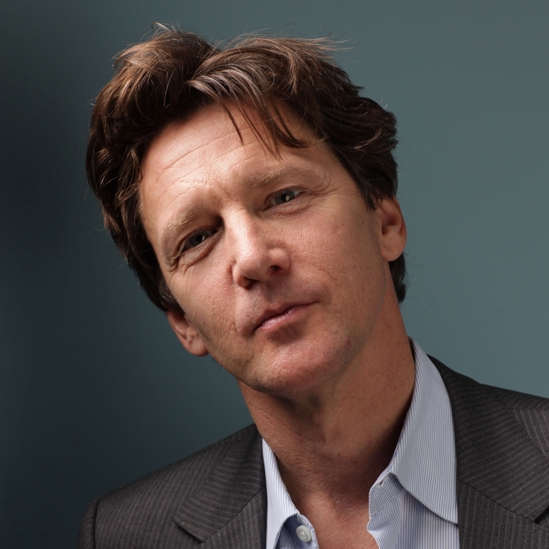
Andrew McCarthy
Andrew C. McCarthy is a contributing editor at National Review, senior fellow at National Review Institute, and a Fox News contributor — a former Chief Assistant US Attorney for the Southern District of New York best known for prosecuting the 1993 World Trade Center bombing terrorists.
17
APPEARANCES
9
PODCASTS
Sep 11, 2026


Brian KilmeadeHOST
And now they're saying in 2028 when we go to try him, we have to throw it out.

Andrew McCarthyGUEST
First, I think that Winston Churchill was right about Nuremberg when he in- when he initially was against the idea of having trials of the Nazis.
Andrew McCarthyGUEST
Uh, the idea that we had to give them a due process trial proceeding before the, y- y- before you could put to death, uh, people who were war criminals and deserved to be put to death.
Andrew McCarthyGUEST
I've never believed that that was, uh, sensible, and there are many people, I can t- attest to this from having been a prosecutor, there are many people who absolutely must be neutralized but w- who we could never try in court.
Andrew McCarthyGUEST
We can't try them in court because it would require, under the due process rules, giving up too much intelligence and the sources of intelligence.
8 MINS LATER
Brian KilmeadeHOST
And then when 9/11 happens, you're one of the few people who would say, "I knew these guys were capable of this." What's it like for you today?
Brian KilmeadeHOST
And now they're saying in 2028 when we go to try him, we have to throw it out.
Andrew McCarthyGUEST
First, I think that Winston Churchill was right about Nuremberg when he in- when he initially was against the idea of having trials of the Nazis.
Andrew McCarthyGUEST
Uh, the idea that we had to give them a due process trial proceeding before the, y- y- before you could put to death, uh, people who were war criminals and deserved to be put to death.
Andrew McCarthyGUEST
I've never believed that that was, uh, sensible, and there are many people, I can t- attest to this from having been a prosecutor, there are many people who absolutely must be neutralized but w- who we could never try in court.
Andrew McCarthyGUEST
We can't try them in court because it would require, under the due process rules, giving up too much intelligence and the sources of intelligence.
8 MINS LATER
Brian KilmeadeHOST
And then when 9/11 happens, you're one of the few people who would say, "I knew these guys were capable of this." What's it like for you today?

Andrew McCarthyGUEST
Yeah, Larry, it's amazing that 9-11 is out of the experience or the remembered experience of many people who are coming of age today, some people who have important positions in government.
Andrew McCarthyGUEST
So even less is their awareness of what went on in the eight and more years before then.
Andrew McCarthyGUEST
Not only what happened on 9-11, but the transformation of counterterrorism after 9-11.

Larry O'ConnorHOST
How does one know from the outside looking in who the bad guys are who were part of this network? Was there a way to know just from the outside, just from the surface? Or in retrospect, should it be educational for us to know if the mayor is associating with people who made excuses for, if not defended, those terrorists themselves?
speaker_5ANNOUNCER
Andrew McCarthy.
Andrew McCarthyGUEST
Because that's a violation of a criminal law that's known as the Neutrality Act, which means that when the United States is not at war with a country, as we were not at war with either Russia or Afghanistan, Americans are not supposed to participate in warfare activities, because obviously that can have the effect of drawing the United States into a conflict.
Andrew McCarthyGUEST
So the you know, there was a lot of there was a lot of acting at cross purposes, I think, between our different agencies.
Andrew McCarthyGUEST
And it starts out very early on in the 1980s with the fact that the CIA is promoting the jihad and the FBI is investigating it.
8 MINS LATER
Andrew McCarthyGUEST
And when the Russians withdrew, they announced basically in 1989 that they were pulling out.
Andrew McCarthyGUEST
And it was clear that the Mujahideen, very much helped by an international group, group of nations that included the United States and Saudi Arabia, which did a lot together not only to coordinate but to fund the Mujahideen.
Andrew McCarthyGUEST
When the Soviets said that they were leaving, The question was for these Arab Afghans in particular, what do we do now?

speaker_13SOUNDBITE_SPEAKER
Immigration officials say Yousef was caught entering the United States illegally, but was released because he requested asylum and there was a lack of detention space.
Andrew McCarthyGUEST
He was believed to have come from a kind of a no man's land in the in the regions between Afghanistan and Pakistan, a lot of which are ungovernable areas.
Andrew McCarthyGUEST
Well, it was actually 1992 into 1993 bombing plot took on a new momentum when he got here and a very unfortunate.
Andrew McCarthyGUEST
aspect of that is that the FBI had an informant into the cell whose name was Imad Salem, who turned out to be the main informant witness in my prosecution of the blind Sheikh.

Ali SoufanGUEST
They were planning to blow up tunnels, bridges, 26 Federal Plaza in New York, which is a federal building where the FBI offices are, and also the UN.
speaker_13SOUNDBITE_SPEAKER
Immigration officials say Yousef was caught entering the United States illegally, but was released because he requested asylum and there was a lack of detention space.
Andrew McCarthyGUEST
He was believed to have come from a kind of a no man's land in the in the regions between Afghanistan and Pakistan, a lot of which are ungovernable areas.
Andrew McCarthyGUEST
The 1993, well, it was actually 1992 into 1993 bombing plot took on a new momentum when he got here and a very unfortunate aspect of that is that the fbi had an informant into the cell whose name was imad salem who turned out to be the main uh informant witness in my prosecution of the blind sheikh salem was in the fbi had successfully infiltrated him into the cell during noser's trial for killing kahani which began in 1991 And as a result, Salem was able to find out that there were these fledgling bombing plots and that they were talking about doing major terrorist operations in the United States.
Andrew McCarthyGUEST
But there was a dispute between Salem and the FBI, which resulted in the FBI booting Salem out of the investigation.
Ali SoufanGUEST
they were planning to blow up tunnels bridges 26 federal plaza in new york which is a federal building where the fbi offices are and also the u.n

Bret BaierSOUNDBITE_SPEAKER
And it was a battle that Al Qaeda and the Taliban was used to fighting in those nooks and crannies of the mountains.
Andrew McCarthyGUEST
I think at Tora Bora, the U.S. was closer to bin Laden than it would have been for years, and it was for years.
Andrew McCarthyGUEST
But I think the key was that D.C., Washington relied too heavily on Afghan militias, and they didn't close the Pakistani border.
Andrew McCarthyGUEST
And because of that, bin Laden slipped through the mountains, he got into Pakistan, and he disappeared for
speaker_31UNKNOWN
We now have 18 agencies in the U.S. intelligence community, and while there is still an urgent need for reform and continued improvement, their coordination and collaboration is much better today than it was on September 10th.
Andrew McCarthyGUEST
You know, it remains true as it's always been true that people who don't care what happens to themselves can do a lot of damage.
Andrew McCarthyGUEST
And no matter what maximal precautions you put on it, you can thwart people who have to do a lot of logistical planning in order to carry out a big, spectacular attack.
speaker_32UNKNOWN
Andrew McCarthy.
Andrew McCarthyGUEST
So in that sense, I think we're a lot safer from that kind of attack than we were in the 1990s, our communication and cooperation and intelligence sharing between all the different arms of our intelligence community and between local police and the FBI.
Andrew McCarthyGUEST
And local police are the biggest force multiplier in counterterrorism because there's more of them than they have the best sources on the ground.
Andrew McCarthyGUEST
So I think In terms of how we're structured, the information flow is night and day better today than it was in the early 1990s between police organizations feeding information to the FBI and the FBI sharing information with the other intelligence agencies that handle international intelligence and the CIA reciprocally making sure the FBI is aware of developments outside the United States.


Andrew McCarthyGUEST
Well, you know, there's a lot that Mike said that I agree with in terms of what we would expect out of a good Justice Department.
Andrew McCarthyGUEST
When I was a prosecutor, uh, first in the early nineteen eighties, one of the, uh, important things that Rudy Giuliani brought to, uh, the Southern District of New York, uh, very much encouraged by the Reagan administration, was to prioritize what the, uh, federal government could bring to bear on what was the most important problem in New York, and actually na-nationally, what was, uh, at the time, the most important problem, which was violent crime.
Andrew McCarthyGUEST
Uh, I think Mike is completely right about the need to prioritize immigration enforcement, and I applaud, uh, the Justice Department for doing that.
Andrew McCarthyGUEST
I applaud a number of things that they've done to the extent that it would be what one would expect from a normal Republican-led Justice Department.
31 MINS LATER


Andrew McCarthyGUEST
Well, you know, there's a lot that Mike said that I agree with in terms of what we would expect out of a good Justice Department.
Andrew McCarthyGUEST
When I was a prosecutor, First, in the early 1980s, one of the important things that Rudy Giuliani brought to the Southern District of New York, very much encouraged by the Reagan administration, was to prioritize what the federal government could bring to bear on what was the most important problem in new york and actually nationally what was at the time the most important problem which was violent crime i think mike is completely right about the need to prioritize immigration enforcement and i applaud the Justice Department for doing that.
Andrew McCarthyGUEST
I applaud a number of things that they've done to the extent that it would be what one would expect from a normal Republican-led Justice Department.
Andrew McCarthyGUEST
One, I think Mike's percentages of the good versus the bad are a little bit skewed.
31 MINS LATER
Brian KilmeadeHOST
But he also volunteered in Gaza at a hospital that had underneath it some of the tunnels that Hamas used to attack Israel.
Andrew McCarthyGUEST
I'm talking about people who are adherent to the ideology which causes terrorism because terrorism, Islamic, when it's in the realm of Islamic terrorism, It's always about Sharia, which is Islamic law.


Andrew McCarthyGUEST
First of all, it's impossible that he didn't know who the blind sheikh was when he agreed to testify on his behalf.
Andrew McCarthyGUEST
But when the blind sheikh came here, when he relocated to the United States because our lunatic immigration service first gave him a tourist visa and then gave him a green card as a religious worker in 1992, At the time he came here, he was already notorious for having issued the fatwa or the Sharia religious edict approving the murder of Anwar Sadat, the president of Egypt, in 1981, which was a fairly famous homicide of the later part of the 20th century.
Andrew McCarthyGUEST
So he was already known to be a very influential figure in jihadist circles when he got here, before he did anything when he was here
34:42

And we have this new SAFE Act, this big opposition from the Democratic Party.
Andrew McCarthyGUEST
I think, like most Americans do, that it's absolutely essential that we try to protect our election system by making sure that only Americans can vote.
Andrew McCarthyGUEST
A lot of people say that, well, if it's state elections, it should be up to the state to decide who gets to vote.
Andrew McCarthyGUEST
I think, you know, there's lots of law for the proposition that if you let people who are illegally in the country vote, whether it's in a state election or a local election, it dilutes the vote of the people who are legitimately American citizens living here and entitled to vote.
37:26
But I don't understand how Democratic leadership is not following what their people are wanting.

0:47
Meanwhile, this big opposition from the Democratic Party, you want to get it off your chest this Sunday morning?
Andrew McCarthyGUEST
I think, like most Americans do, that it's absolutely essential that we try to protect our election system by making sure that only Americans can vote, whether it's in state elections or federal elections.
Andrew McCarthyGUEST
A lot of people say that, well, if it's state elections, it should be up to the state to decide who gets to vote.
Andrew McCarthyGUEST
I think there's lots of law to the proposition that if you let people who are illegally in the country vote, whether it's in a state election or a local election, it dilutes the vote of the people who are legitimately American citizens living here and entitled to vote.
3:59
Understood, but I don't understand how the Democratic leadership is not following what their people are wanting.

Andrew McCarthyGUEST
to deport Abrego Garcia from the beginning of the Trump administration because they allege, although they haven't proved it, that he's a member of MS-13, the international – it basically originated in Salvadoran Christianity.
Andrew McCarthyGUEST
criminal gang, which the Trump administration has designated as a terrorist organization.

John BatchelorHOST
So, Andy, where's the controversy here? It all straightforward deporting people for threatening the national security of the United States and its citizens.
Andrew McCarthyGUEST
Yeah, I think my experience with this sort of thing, John, and this goes back to when I was a terrorism prosecutor back in the 90s, is that we debate these issues in the frame of the debate of these issues is these very lofty.
Andrew McCarthyGUEST
constitutional principles about free speech and free association and sometimes religious convictions as well.
Andrew McCarthyGUEST
But when you get down to evidence, when you get down to where the rubber meets the road, it is almost never about purely free speech or free association, etc.
Andrew McCarthyGUEST
And the law is that under the First Amendment, Congress can't criminalize the mere utterance of words.

Andrew McCarthyGUEST
Well, it's a very confusing litigation because what he said at the beginning was that the Trump attempt to do a blanket pause on all foreign aid was unlawful.
Andrew McCarthyGUEST
He thought it was a final agency action under the Administrative Procedure Act and therefore that he could undo it as arbitrary and capricious.
Andrew McCarthyGUEST
The reason it gets confusing, John, is that the Trump administration did not challenge it.
Andrew McCarthyGUEST
But it said that it would follow Judge Ali's opinion, and it did so to the letter but not in the spirit.
Andrew McCarthyGUEST
And what I mean by that is – What the administration says it did was it abandoned the blanket stopping of foreign aid payments, but then it reverted to a one by one analysis of all the contracts.
5 MINS LATER