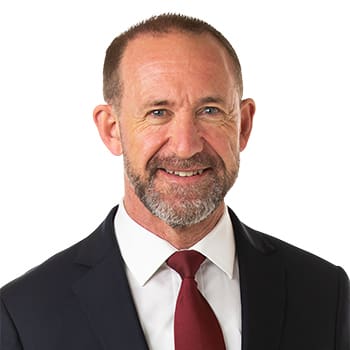
Andrew Little
Mayor of Wellington
44
APPEARANCES
12
PODCASTS
Oct 5, 2026

Andrew LittleGUEST
No, no, no, 'cause I, I think, I think the government was doing the right thing, I think.
Andrew LittleGUEST
Um, and you know, and I think I know Chris Bishop reasonably well, and, and Simon Watts.
Andrew LittleGUEST
They wanted s- some consolidation because there's some produc- productivity benefits for the country and all that when it comes to local government.

Nick MillsHOST
Could this actually proceed while the amalgamation talks are still on? And where, where, where are we at with that?

Andrew LittleGUEST
Now that the lawyers of all sides will have to go through what can be proven or what they think we can prove or not prove.
Andrew LittleGUEST
And I think if anything goes before a judge, then there'll be a bit of teasing out about... where responsibility actually lies, because I think that's still a bit of an open question when it comes to actual compensation.

Mike HoskingHOST
I mean, you can't ping a single person or a time or a place or anything, can you?
Mike HoskingHOST
I mean, you can't ping a single person or a time or a place or anything, can you?
Andrew LittleGUEST
Yeah, no, that's, and that, one of the critical issues in this will be causation.
Andrew LittleGUEST
What was the actual cause that, [clears throat] that led to the discharges that were against the consent, and so bit of a convoluted process to go through.
Andrew LittleGUEST
And the, and the fact that, um, Veolia doesn't seem to be in charge so far, so my experience in matters like this when you're defending a d- a, a defend- appearing for a defendant is judges think, um, a party is worth convicting, but there are others who are responsible but haven't been appeared in court, then that is a fact the judge-
Mike HoskingHOST
How, in your experience, how long do you reckon this will run, and how big is the lawyer's bill?
Andrew LittleGUEST
[inhales] Um, yeah, um, the lawyer's bill will relate to how long the thing runs for, and if it, you know, if it goes to a defended hearing, then that could be very lengthy.
Andrew LittleGUEST
Uh, look, I, I don't know what the waiting times in Wellington District Court are at the moment.


Hannah McKinneyHOST
Well, just starting at the top, can we kind of go over what the initial project was that the NWTF funded and how did the NWTF funding help grow the project to answer more research questions?
Andrew LittleGUEST
I'm an associate professor at the School of Natural Resources at the University of Nebraska-Lincoln.
Andrew LittleGUEST
So the project really was a part of a larger wild turkey project here in the state of Nebraska.
Andrew LittleGUEST
And I'll just briefly highlight that because that kind of sets the stage for some of the subsequent questions we can get into.
Andrew LittleGUEST
This project started a few years back, basically because of declines in turkey populations here in Nebraska.
40 MINS LATER
JadeGUEST
Oh, you're,


Serge Van DamHOST
Uh, what can the city do for that to be true or to maximize the chances of that happening?
Andrew LittleGUEST
I think, I, I think we can, knowing the needs of the sector is, is making Wellington attractive for the... you know, making it more affordable, making it so it's easy for folks, particularly, you know, young and mid-career folks to come here and live here.
Andrew LittleGUEST
Um, it's not just be about affordability, it's to make, making the city attractive and, and fun and that sort of stuff.
Andrew LittleGUEST
So, you know, working with the creative sector and others to make our, um, our, our arts offerings, our, the amazing- Landscape that we've got allows us to do things, you know, have amazing trails, mountain bike trails, and running trails, and, um, good sort of sporting opportunities, and making all sh- sure that all those things are available and accessible.
Andrew LittleGUEST
And we're a city that's built around this incredible harbor, um, and making that a kind of a centerpiece of attractiveness.
Andrew LittleGUEST
I think, look, we, you know, our bigger region, we're made up of at least sort of four cities, or four city councils.
Andrew LittleGUEST
We're in discussions at the moment about sort of coming together, and I think that gives us an opportunity to think about the, the region as a place to, um, to lo- to, to, to grow, to live, to, to nurture a business.
6 MINS LATER
Andrew LittleGUEST
I think because you get used to receiving reports to say this is wrong and that's wrong and nothing gets done about it.
Andrew LittleGUEST
And you turn up the next year, you get the same report, nothing gets done about it and you just accept it.
Andrew LittleGUEST
And I think that's what has happened at the officer level and at the elected representative level.
Andrew LittleGUEST
I suspect that that's around the country and that's what has to change in local government.
Mike HoskingHOST
Is that the mechanism that breaks the mould and changes things materially or not?
Andrew LittleGUEST
I think because you get used to receiving reports to say, this is wrong and that's wrong, and nothing gets done about it, and you turn up the next year, you get the same reports, nothing gets done about it, and you just accept it.
Andrew LittleGUEST
And I think that's what has happened at the officer level and at the elected representative level.
Andrew LittleGUEST
I suspect that that's around the country, and that's what has to change in local government.
Mike HoskingHOST
Is that the mechanism that breaks the mould and changes things materially or not?

Andrew LittleGUEST
Actually, let me finish, because this is a really important point, because there's a whole lot of people running around saying, oh, Wellington City Council could have delayed this for a year.
Andrew LittleGUEST
So the decisions were made by our previous council and all the previous councils in Fahat City, Upper Hutt, Porirua.
18 MINS LATER


Ryan BridgeHOST
Do you, I mean, do you listening to what the minister says, is it, is it pie in the sky or is this totally achievable? And if they, if they cut the amount that you have to do and just make you focus on doing normal stuff, then we should be fine.
Andrew LittleGUEST
Well, he's it, uh, Simon's totally right to focus on the fact that rates increases in the last few years have, have gone ridiculously high, and we've seen that here in Wellington too.
Andrew LittleGUEST
Um, uh, Simon says that they want to define, you know, the, the, the b- the core, uh, costs that council should incur, the core functions they should do.
Andrew LittleGUEST
But the nice to haves now includes or will include under that regime things, money that we spend on, for example, dealing with the homeless and the rough sleepers in Wellington City.
Ryan BridgeHOST
So are you charging basically what it costs you for these at the moment, or are rates subsidizing some of these things, like dog registration or, uh, going to the swimming pool?

Ryan BridgeHOST
Do we have any idea what kind of increase we would see to fees and charges as, as a result of something like this?
Andrew LittleGUEST
Um, look, really hard to say 'cause, uh, look, fees and charges are, are, are a big component of, um, council review.
Andrew LittleGUEST
It could be your parking charges, could be, uh, your library book charges, all that sort of stuff.
Andrew LittleGUEST
But the really hard bit is gonna be things like for a city like Wellington where we have a big program to make ourselves climate resilience because, uh, resilient because we have a whole heap of slips and stuff or, um, potential slips that we have to shore up against.
Andrew LittleGUEST
Uh, the spending on that potentially falls, um, and that goes against, uh, an instruction we got from the government recently, which is, you know, make sure that you're climate resilient.
Ryan BridgeHOST
You're talking about juggling, you're talking about reprioritization, which I, I think is probably what the government wants, too.
Ryan BridgeHOST
now the government says this will mean fewer services council is able to provide and also it'll mean that your fees and your charges will go up do we have any idea what kind of increase we would see to fees and charges as a result of something like this
Andrew LittleGUEST
um really hard to say because uh like fees and charges are a component of um council review but um it's spread across a whole bunch of different things it could be your parking charges could be You know, every book charges, all that sort of stuff.
Andrew LittleGUEST
But the really hard bit is going to be things like for a city like Wellington, where we have a big programme to make ourselves climate resilient because we have a whole heap of slips and stuff, potential slips that we have to shore up against.
Andrew LittleGUEST
and that goes against an instruction we got from the government recently, which is make sure that you're climate resilient.
Ryan BridgeHOST
You're talking about juggling, you're talking about reprioritisation, which I think is probably what the government wants too.
Nick MillsHOST
But if Upper Hutt go with Kapiti, I mean, could that be a possibility? I mean, where are we with that?
Andrew LittleGUEST
You couldn't have individual sort of unitary authorities of individual councils.
Andrew LittleGUEST
I think that's what Kapiti wanted that, but it didn't meet the criteria, and no other council in the Wellington region was prepared to support it.
Andrew LittleGUEST
Upper Hutt's position was just to say, we just don't want to be part of any of this, so leave us out of it.
Andrew LittleGUEST
But that doesn't stop other councils putting together a proposal that included them, and that's what happened in the end.
Nick MillsHOST
I mean, when I first heard by text last night, I was upset that I, I mean, imagine how you guys are

Andrew LittleGUEST
The, the Wellington Council, um, expressed a preference for a, a Wellington metro, but also supported a, a region-wide au- unitary authority.
Andrew LittleGUEST
My view is it makes sense for a whole bunch of reasons, efficiency reasons, coordinating transport, environmental management, that it is region-wide.
Andrew LittleGUEST
Um, but look, two of the three Wairarapa councils were pretty supportive of just a Wairarapa unitary authority.
Andrew LittleGUEST
It actually meets the government's criteria, their, their guidelines, so it actually makes sense for both proposals to go forward.
Andrew LittleGUEST
Yeah, so one of the things the ministers have said is we want to know what effective representation would look like by the bigger unitary authority.
Andrew LittleGUEST
And so we've looked at, we sort of operated on this principle of decisions that are region-wide being taken at that region-wide level.
Andrew LittleGUEST
So your big planning decisions and the common services and functions that councils have, like issuing your dog licences, your alcohol licence, all that sort of stuff, that can all be kind of centralised and systematised and what have you.
Andrew LittleGUEST
Then a different level for the more community-focused things like your community facilities, your swimming pools, even your streets, your local streets and roads, to have a level where decisions get made on those sorts of things by representatives who are close to those communities.
Nick MillsHOST
Could you see a system like that working or would the numbers of the population of each base have to determine how many people you'd have around the table?
Andrew LittleGUEST
Yeah, so one of the things the ministers have said is we want to know what effective representation would look like by the bigger unitary authority.
Andrew LittleGUEST
And so we've looked at, we sort of operated on this principle of decisions that are region-wide being taken at that region-wide level.
Andrew LittleGUEST
So your big planning decisions and the common services and functions that councils have, like issuing your dog licences, your alcohol licence, all that sort of stuff, that can all be kind of centralised and systematised and what have you.
Andrew LittleGUEST
Then a different level for the more community-focused things like your community facilities, your swimming pools, even your streets, your local streets and roads, to have a level where decisions get made on those sorts of things by representatives who are close to those communities.
Nick MillsHOST
Could you see a system like that working or would the numbers of the population of each base have to determine how many people you'd have around the table?


Kathryn RyanHOST
... and communications teams, they start saying, "Should my bill even be this high?"
Andrew LittleGUEST
I think there's an int-interesting question 'cause we've certainly got the comments about the advertising spend, and yet efforts to communicate the existence of Te Ākiwai at separate billing clearly, um, haven't hit home.
Andrew LittleGUEST
Uh, so the way T-- Well, Te Ākiwai was set up because, um, this government, like the previous government, was very concerned about water infrastructure.
Andrew LittleGUEST
We, we had the events in Havelock North however many years ago they were, 10 odd years ago.
Andrew LittleGUEST
Um, that was a bit of a wake-up call to water infrastructure and the quality of, of water supply, so things had to change.
Andrew LittleGUEST
It works with the likes of Downtown City Ministry and the Wellington City Mission because a lot of these people, there's a reason why they're there.
21 MINS LATER
PeterAUDIENCE
So my question there is why is it being turned over? Second question is with all the council rates and the water rates, what happens to the people who cannot afford?

Andrew LittleGUEST
Uh, well, there's a lot to do, and if you look at what's happened to Wellington over the last few years, we've had pretty much zero economic growth for, well, five or six years now, zero population growth for a slightly longer period.
Andrew LittleGUEST
You know, beyond being a public service city, we do have some other strengths, and it's about drawing on those things and the people who've got experience and expertise in those areas to help us plan out some initiatives that we can take that'll start to make a difference.
Andrew LittleGUEST
That's why we set up a group and, you know, I gave Karl Tiefenthaler, um, local businessman, the, the job of chairing the economic development group.

Andrew LittleGUEST
Well, there's a lot to do, and if you look at what's happened to Wellington over the last few years, we've had pretty much zero economic growth for, well, five or six years now, zero population growth for a slightly longer period.
Andrew LittleGUEST
We do have some strength, and beyond being a public service city, we do have some other strengths, and it's about drawing on those things and the people who've got experience and expertise in those areas to help us plan out some initiatives that we can take that'll start to make a difference.
1:28
But is your problem not actually quite simple, which is that Wellington has become far too expensive a place for people to live, and it has become far too yuck in the central city for people to want to go out at night?
Andrew LittleGUEST
Uh, well, there's a lot to do, and if you look at what's happened to Wellington over the last few years, we've had pretty much zero economic growth for, well, five or six years now, zero population growth for a slightly longer period.
Andrew LittleGUEST
Now, beyond being a public service city, we do have some other strengths, and it's about drawing on those things and the people who've got experience and expertise in those areas to help us plan out some initiatives that we can take that'll start to make a difference.
Andrew LittleGUEST
That's why we set up a group and, you know, I gave Karl Tiefenbacher, um, local businessman, the, the job of chairing the economic development group.
Andrew LittleGUEST
I think everybody genuinely had the same idea that the original proposal, as it was, just wasn't feasible anymore.
Andrew LittleGUEST
And that was really what I've been focused on, is what is the next thing? Because it's not about doing nothing.
Andrew LittleGUEST
We still have to do stuff and we still need a roadway that means buses can move through efficiently and all that sort of stuff.
Andrew LittleGUEST
But most importantly, we need city streets, those critical areas, that entertainment district, which is what Courtney Place is, It really needs an uplift, and so we still need to focus on that.
Andrew LittleGUEST
And I want us to work with the people who live there and work there and have their businesses there to make sure we do that.
Nick MillsHOST
Was there any part of you that thought when you sat down and had a cup of tea afterwards on your own in your own office with no views, said to yourself, that was quite a major loss for our city long term?
Andrew LittleGUEST
Well, when we got the information at the end of last year that it was going to cost $60 million more and that would fall entirely on the council because the $139 million was part funded by central government, part funded by us.
Andrew LittleGUEST
That told me, you know, for a council that desperately needs to get its spending under control, we had to look at it.
Andrew LittleGUEST
um but we we actually just can't afford another 60 million dollars and so i i am in support of us just um going back seeing what we can do and trying to get some savings at the same time we know we need to frankly, tart things up in a lot of Wellington streets, particularly Courtney Place.
0:27
Okay, what made you ch- what, what, what made the decision for you that you would not support it?
Andrew LittleGUEST
Uh, well, when we got the information at the end of last year that it was gonna cost $60 million more, and that would fall entirely on the, the council, because the 139 was part funded by central government, part funded by us.
Andrew LittleGUEST
That told me, you know, for a council that desperately needs to get its spending under control, um, we had to look at it.
Andrew LittleGUEST
And so I, I, I am in support of us just, um, going back, seeing what we can do, and trying to get some savings at the same time.

Andrew LittleGUEST
The point is about, you know, on Monday afternoon, I started getting the information that there was this system, the sea state that was heading towards, you know, the Cook Strait and to Wellington.
Andrew LittleGUEST
And by mid to late afternoon, the advice was that this was the swells were so great, it was bigger than what happened in 2020. and explicitly the estimate was that the damage, the potential damage that could be caused would be worse than in 2020.
Andrew LittleGUEST
So I had to weigh those things up and work out what is the appropriate course of action to take.
5 MINS LATER

John CampbellHOST
We're making this up as we go along, right? What do you know now, which would mean next time you might do something differently?
Andrew LittleGUEST
The point is about, you know, on Monday afternoon, I started getting the information that there was this system, the sea state that was heading towards, you know, the Cook Strait and to Wellington.
Andrew LittleGUEST
And by mid to late afternoon, the advice was that this was the swells were so great, it was bigger than what happened in 2020. and explicitly the estimate was that the damage, the potential damage that could be caused would be worse than in 2020.
Andrew LittleGUEST
So I had to weigh those things up and work out what is the appropriate course of action to take.
5 MINS LATER
John CampbellHOST
We're making this up as we go along, right? What do you know now, which would mean next time you might do something differently?
Scroll for more appearances