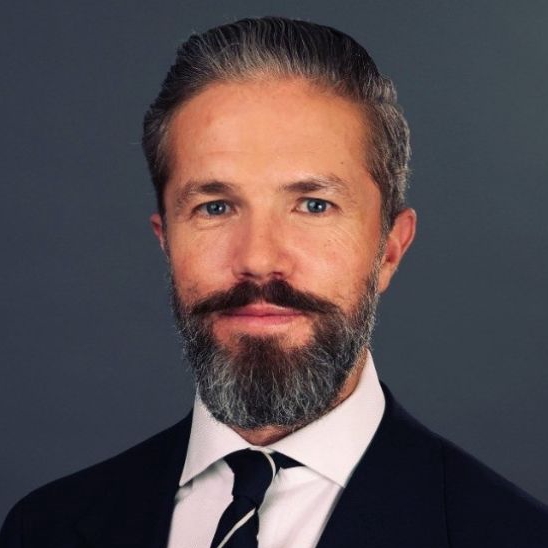
Andrew Cramer
Principal and founder of Bridgeview Asset Management, investing in manufactured housing communities across the Pacific Northwest
6
APPEARANCES
6
PODCASTS
Oct 20, 2026


John CasmonHOST
It may not be as direct, but it absolutely helps to drive that community in the long run.

Andrew CramerGUEST
I would say I would add to that, not only, yes, on all fronts, but also the You're actually investing, forget all of the sort of ethical standards, which are important, but just set those aside for the moment.
Andrew CramerGUEST
And as you mentioned, sort of looking at that classy apartment building, if our business plan is to go in there and crank up rents to the max day one, and then what we're going to see, what you're going to counter from that is a bunch of resistance, right? Because you have tenants being like, you didn't do anything.
15 MINS LATER


Dave DuBoisHOST
What do you invest in? Where do you invest? What does the portfolio currently consist of?
Andrew CramerGUEST
Um, and we're a value add company, so we're buying the stuff no one else wants, and we're, and we're making a variety of upgrades to either add density, uh, improve the quality of the park, and really improve the community.
Andrew CramerGUEST
If you add units, you're gonna get rewarded financially, and you're gonna add more affordable housing.

Andrew CramerGUEST
The, the, the, uh, we, we talked about the stigma early on, and that, that's, that's, that exists at every level.
Andrew CramerGUEST
And I think one of the, the biggest tragedy to me about that stigma is a young person or someone who's, you know, making, not making, not a huge salary looking for an affordable rental, they're not gonna look at manufactured housing because of that stigma, and that really hurts that person.
Andrew CramerGUEST
Because someone who might be paying, you know, $1,500 a month for a two-bedroom apartment and they lived there for five years, they're gonna get nothing at the end of that.
Andrew CramerGUEST
Versus if they were to buy a manufactured home in a manufactured home park, particularly in a place like the nor- in the, the Northwest or the greater West Coast where there is pretty strict rent control about how much that rent can go up each month.
7 MINS LATER

Steven WeinstockHOST
At that point, how do you bridge the gap? Are you coming in with extra funds? Who lends, who lends you the money? Wh-whose money are you using in that period? And, you know, how, how are you leveraging this when sometimes it's not, you know, the Fannie, the Freddie, the agency debt is not available?


Andrew CramerGUEST
And then my, my wife, who was my girlfriend then, was in medical school in Pennsylvania, so I moved out there.
Andrew CramerGUEST
And then just kinda by happenstance, there was a-- she had a family connection to a vacant medical office building that I ended up turning into an urgent care center.
Andrew CramerGUEST
Uh, and then from there, we moved to the Pacific Northwest, which is where I grew up, but my wife did a residency there and then.
10 MINS LATER


Scott PercyHOST
Where do you see the greatest untapped opportunity for new manufactured housing technologies to slash development costs and accelerate affordable housing over the next three to five years?
Andrew CramerGUEST
The general rule to bring a new manufactured home onto a site is that there's going to be substantial cost savings.
Andrew CramerGUEST
So there's the property that might be 50 units, and then we find old utility connections.
Andrew CramerGUEST
So the technological side of that is oftentimes those spaces are, as you can imagine, sort of weird.
Scott PercyHOST
Looking at all these industry dynamics, what fundamental pivot must real estate operators make today to successfully capitalize on technology driven manufactured housing in your view, Andrew?


Ryan GlickHOST
And is it, uh, I think you said this in the beginning as well, but are you exclusively doing manufactured home communities? Is that kind of the business model for you guys?
Andrew CramerGUEST
Um, and I would say within that, we do a lot more kinda development type work.
Andrew CramerGUEST
Like we have a project in Eastern Washington that's a 65-unit park that we bought as a 25 u- you know, 25 lots.
12 MINS LATER