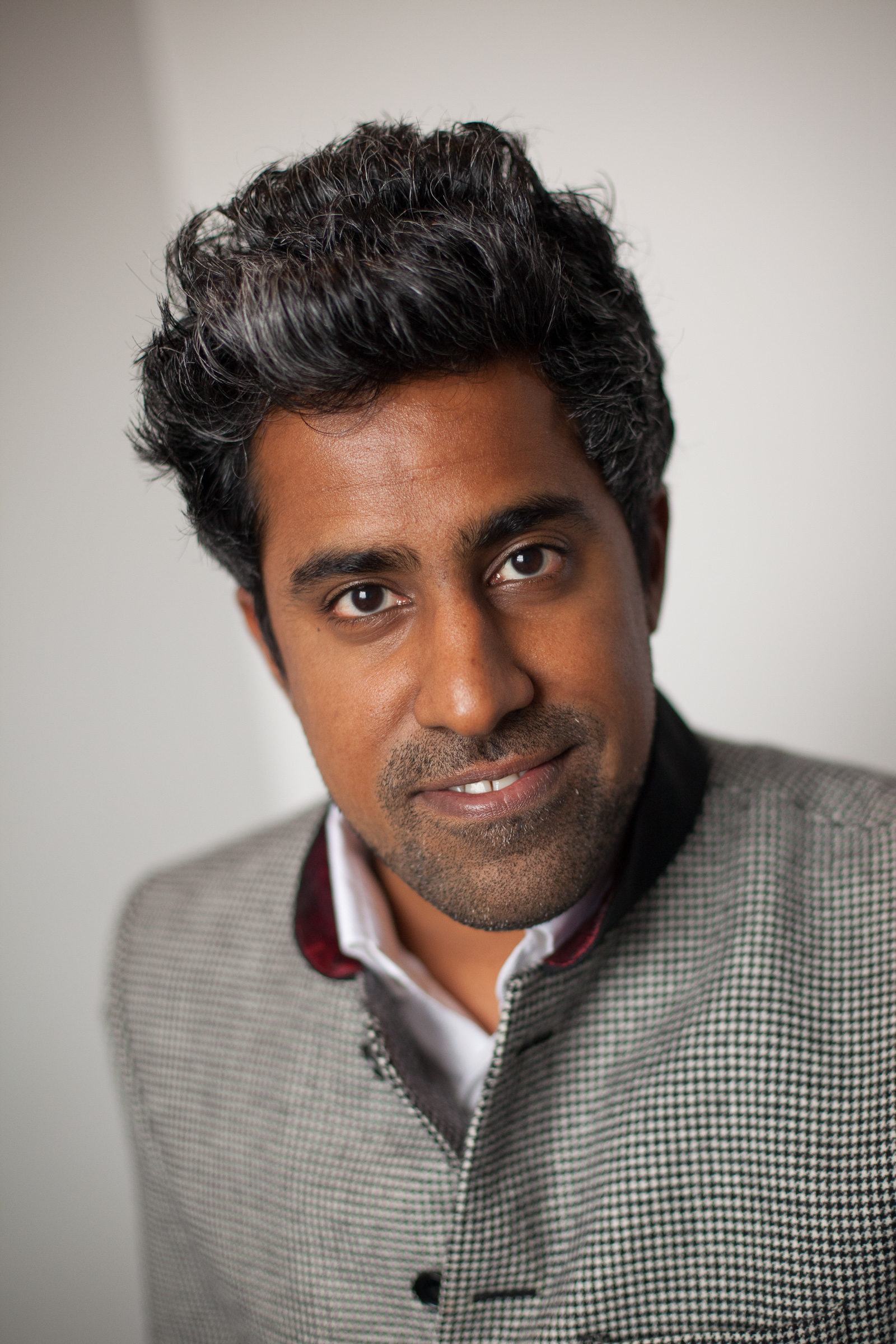
Anand Giridharadas
American journalist
50
APPEARANCES
35
PODCASTS
Oct 16, 2026


Anand GiridharadasGUEST
They were basically saying, "When the system fails all of us, when people feel abandoned, when there's no one there, don't judge the watch.
Anand GiridharadasGUEST
Don't judge the person who steps into the void." Right? It's that line from A Few Good Men, "Who's gonna do it? You?" Right? And there's a weird way in which Luigi developed a fandom and Daniel Penny developed this fandom that would probably hate each other if they met in a bar, but actually felt and said the same thing.
Anand GiridharadasGUEST
And then when Penny was acquitted a couple days later, outside the courthouse, um, Neely's family and activists and others allied with them gave a press conference.
Anand GiridharadasGUEST
At the press conference, one of the activists, Hawk-- I mean, several of them spoke about you can't trust the system, system doesn't work anymore.
Anand GiridharadasGUEST
One of the activists, Hawk Newsome, who's one of my minor characters in the beginning of the book, Hawk says, "If they're gonna have vigilantes, we need Black vigilantes.
11 MINS LATER

speaker_1AUDIENCE
[laughs]
Anand GiridharadasGUEST
I wanted to read you a scene from the book that has nothing to do with the case of Jordan Neely and Daniel Penny.
Anand GiridharadasGUEST
Um, because most of this book is not about this really dark moment in a subway car.
Anand GiridharadasGUEST
Um, but the only way to sort of explain the book quickly is to say that it's a story of a thing that happened in a subway car.
36 MINS LATER
Terry MoranMODERATOR
Uh, and in, and in fact, you have the line, "What would the city have to build for both Jordan Neely to be alive and for Daniel Penny to choose otherwise?" That w- what systemic lessons are there?


Anand GiridharadasGUEST
Right, exactly, and people are, you know, people are trying to get to work.
Anand GiridharadasGUEST
And then there's another version of this question that happens within families, right? We're, we're talking about folks who are sort of adrift on the street or in transit, but there's another even perhaps larger version of this is unfolding within families in this country.
Anand GiridharadasGUEST
There are people who we love in our families who mental illness comes for, and if you have adult children or adult siblings or parents who this happens to, in this country, it is very difficult to get care for them if they don't want care.
Anand GiridharadasGUEST
So in a city like Boston, which has, you know, a certain amount of right to shelter, the same way New York does, a certain number of the folks you're seeing on the street, same way in many of our families, actually do not want the care that is being offered.
14 MINS LATER

speaker_2NARRATOR
the
Anand GiridharadasGUEST
which I think in some ways, in my experience of the reporting, come out as some of the worst villains in this whole thing.
Anand GiridharadasGUEST
Hospitals, I mean, you and I have been to hospitals where maybe you've gotten great care, but maybe you feel a little bit not fully seen as a human being.
Anand GiridharadasGUEST
You can only imagine what Jordan Neely's experience of our healthcare system was.
Anand GiridharadasGUEST
Discharged almost as soon as he is brought in And with sometimes with instructions to like work on his coping skills or, you know, on his social interaction skill.
28 MINS LATER


Anand GiridharadasGUEST
... danger to society, menace to society, was rightfully put down, or he was purely a victim of systemic injustices and American cruelty and, you know, white supremacist vigilantism.
Anand GiridharadasGUEST
So I tried to spend time, among other things, you know, recovering some of that actual life.
Anand GiridharadasGUEST
So this is someone who, you know, grew up between Uptown Manhattan, the Bronx a little bit, and Bayonne, New Jersey, uh, mostly.
38 MINS LATER


John HeilemannHOST
Um, I mean, you kind of touched on this a second ago, but why do you think it is that people can't embrace the and both in this case, rather than having to be either or? I
Anand GiridharadasGUEST
You know, the other day I did an event in Washington where my parents still live and afterwards had some drinks with my parents' friends.
Anand GiridharadasGUEST
And one of their friends, this lovely woman, self-identified auntie, said to me, She said, you know, when you wrote your book criticizing billionaires, I thought you were brave.
Anand GiridharadasGUEST
But now I know you're really, really brave because you've written a book of a kind nobody wants, which is to say complexity, which is to say holding multiple truths about people.
Anand GiridharadasGUEST
And I am very purposefully running against the grain of the culture here because I think it's important and necessary.
58 MINS LATER


Jacob SoboroffHOST
What, what, what does that do to a society when all sides feel this sense of abandonment and isolation and, and alienation?
Anand GiridharadasGUEST
You know, Jacob, when I, when I s- set out to write the book, I think I had two goals that were a little bit in tension with each other.
Anand GiridharadasGUEST
One is I, I, I understand people are busy and fragmented and stressed out by this era we're living in, and I wanted to write a, a gripping human story that would actually hold them.
Anand GiridharadasGUEST
But I also wanted to take people to the very burning heart of this country and allow them to see the country and maybe even see themselves in a way that they, that they can't when they're just in the daily crush of every little news alert, one after another.
Anand GiridharadasGUEST
And the passage you just read is, I think, the landing place of that journey to the heart of America, where, you know, if you're, if you're just tuning in today and you're hearing a story about a homeless guy on the s- on the subway and a death, it may sound exotic or alien from your life.
Anand GiridharadasGUEST
What I found is that what pervaded that subway car that day, what actually everybody in that subway car had in common, uh, including Jordan Neely and Daniel Penny and the passengers, is a sense of abandonment that I think is pervasive up above in the country over that subway system.
Anand GiridharadasGUEST
Um, it is a sense that, that, you know, policymakers don't hear you and see you.


Steven BeschlossHOST
But in your own mind, when you were starting out the process, did you say, here's a theme that I'm really going after, or at least I anticipate being central?
Anand GiridharadasGUEST
I would say there was one more than theme approach that was very central, which is an approach of moral complexity.
Anand GiridharadasGUEST
And that really was from the beginning, which is to say, as I even went to my characters from Man in the Mirror, who I knew from the beginning had to and were going to represent a pretty broad swath of how Americans look at the world, I said to them, As part of a conversation about I'd love to, you know, the kind of work I do, I'm not just asking you to sign up for an interview or five interviews.
Anand GiridharadasGUEST
I'm asking you to sign up for like, can I be a major part of your life for two and a half years, right? It's a very intense request to ask people to sign up for the kind of books I'm making, right? I mean, I've done the other thing.
Anand GiridharadasGUEST
I've interviewed people for the New York Times and that's a 10 minute phone call, right? This is a two and a half year thing you're signing up for.
Anand GiridharadasGUEST
And you're going to be sort of indelibly put in this thing that's going to be in libraries forever.
26 MINS LATER
Steven BeschlossHOST
why did why did the victims i'm going to say the victims i mean jordan neely's why did his it sounds like his humanity got lost i mean sort of vanished in the process why

Anand GiridharadasGUEST
One of the people I follow in the book, I call them characters, but this is obviously a nonfiction book.
Anand GiridharadasGUEST
He was the health commissioner of New York City under the previous mayor, meaning chief doctor of New York City.
Anand GiridharadasGUEST
He was the first mental health expert to get that job, right? So if you think of public health, you think polio, measles, COVID, shots, sanitation drives, these kinds of things, right? His appointment was an important signal that mental health might be considered sort of public health in a more meaningful way than the past, right? Because we don't normally think about it like that.
13 MINS LATER

Scott GallowayHOST
Didn't the, didn't basically the court or the jurors, it's-- They didn't have a difficult time with this decision, as far as I can tell.

Anand GiridharadasGUEST
One of the people I follow in the book, I call them characters, but this is obviously a non-fiction book.
Anand GiridharadasGUEST
He was the health commissioner of New York City under the previous mayor, meaning chief doctor of New York City.
Anand GiridharadasGUEST
He was the first mental health expert to get that job, right? So if you think of public health, you think polio, measles, COVID, shots, sanitation drives, these kinds of things, right? His appointment was an important signal that mental health might be considered sort of public health in a more meaningful way than the past, right? Because we don't normally think about it like that.
13 MINS LATER
Scott GallowayHOST
Didn't the, didn't basically the court or the jurors, it's They didn't have a difficult time with this decision, as far as I can tell.


Anand GiridharadasGUEST
And I'm gonna say, if you followed the, the, you know, the social media videos from inside that plane, um, it, you saw a lot of dads and moms comforting their little children in, during a nosedive of a plane, right? You think about what it would be like to give that talk to your child.
Anand GiridharadasGUEST
And contrary to the Macklemore thing, it actually reminded me of a lot of videos I've seen from Gaza in the past few years.
Anand GiridharadasGUEST
There is a universal and vast overwhelming number of people who that's all they want, right?
6 MINS LATER
Anand GiridharadasGUEST
in, at a level one, a level two, a level three, and then it ends in a level 10.

speaker_3UNKNOWN
Mm-hmm.
Anand GiridharadasGUEST
10 minutes from his house was a fully Korean strip mall where I could barely order anything because like it was all in Korean.
Anand GiridharadasGUEST
And so we are trying to do a really hard thing, which is untested, [laughs] which is can a bunch of people who don't share all the things our ancestors needed to share to be able to live together, language, religion, shared history, shared books, shared hymns, shared stories.
Anand GiridharadasGUEST
Our ancestors had all of these forms of glue working for them when they wanted to solve problems together, build a bridge together, you know, build a road, choose a leader.
Anand GiridharadasGUEST
We're basically now in modern American life saying, "Can we achieve some of the, the same common prosperity and other things, uh, that our ancestors would have tried to realize without shared myths, without shared language always, without shared history, shared religion?" And I think we have actually made so many advances to being able to do that, that it's dazzling.
Anand GiridharadasGUEST
I feel sort of caught between, personally with this orientation of mine, I feel caught between people who don't want that to be our story because they don't want that kind of America, and between more progressive-minded people who are too upset about what's happening to acknowledge that really amazing things preceded it.
Anand GiridharadasGUEST
And I say, no, we are in a very dangerous moment of backlash because of the front lash of progress, and because now we are in the work, and the Persuaders book was very much about this.
47 MINS LATER


Anand GiridharadasGUEST
I was moved by the way you you set it up with that personal connection, because I think this is this is both a question of how do we care for people who we may not know on the edge of the edge of the edge of the American dream.

Antonia HyltonHOST
But the fact that that even made its way sort of into the mainstream shocked me in the moment, but maybe it didn't shock others.

Anand GiridharadasGUEST
You know, I... was convinced that this case was an incident that America reduced to clickbait and refused to understand.

Al SharptonHOST
Can you talk about how these two people's lives intersected in that moment and how the public perception of them has played out ever since?
12:13

What is the basis of the issue that took place on the New York subway that made you want to write about it?
Anand GiridharadasGUEST
To me, this was a small story that illuminated and explained and got to the heart of what was happening in a big country.
Anand GiridharadasGUEST
Three years ago, in Manhattan, New York, on an uptown F train on the subway, a black mentally ill homeless man named Jordan Neely, who was once a beloved Michael Jackson impersonator in New York City streets, known to tourists in Times Square and in the subway system, and who had since fallen in harder times and active psychiatric crisis.
Anand GiridharadasGUEST
He began screaming at people, saying he was hungry, ready to go back to prison, ready to die.
Anand GiridharadasGUEST
And a white former Marine named Daniel Penny came up behind him, put him in a chokehold, dropped him to the ground, held him for six minutes, most of which took place after the train got to the next station and many people left, and ultimately killed Jordan Neely.

Anand GiridharadasGUEST
You know, I did spend a lot of time riding the trains and understanding what happened in that train car.
Anand GiridharadasGUEST
You have covered these issues in so many different places, and we're speaking to people in so many different places.
Anand GiridharadasGUEST
But I think one of the things we have in common around the world right now is this sense of abandonment.
Anand GiridharadasGUEST
And if you look inside that subway car, just starting in that subway car that day, This was an experience that everybody in that subway car had in common, despite all the differences.
8 MINS LATER


Preet BhararaHOST
How did Jordan Neely get to the position that he, that he was in when he's on the subway?
Anand GiridharadasGUEST
So Jordan Neely, um, grew up, uh, in and around kind of uptown Manhattan, Bayonne, New Jersey.
Anand GiridharadasGUEST
His mom was in and out of shelters, in, in and out of women's shelters for women who were experiencing abuse, um, domestic abuse.
Anand GiridharadasGUEST
And, uh, when he was just a, you know, young, early adolescent, um, had a, had a, you know, life-altering trauma.
18 MINS LATER
Preet BhararaHOST
You know, whether or not you think accountability was had here or shouldn't have been had here, like, how many steps of the way towards solving the problem and, and preventing a thing like this from happening in the future did we get? Not very far.


Anand GiridharadasGUEST
There's this, there's this, you know, I'm just watching this situation and, and, you know, the platform.
Anand GiridharadasGUEST
Um, and this is the moment where, uh, a man comes and walks towards the trash can.
Anand GiridharadasGUEST
"Soon, a man draped in a giant white Red Cross blanket walked up to the garbage can behind Lizette," one of the outreach workers, "and began to dig through it.
Anand GiridharadasGUEST
After a few seconds of careful rummaging, he fished out a white fast food bag of promising nutritional weight.
7 MINS LATER


Willie GeistHOST
So, Anand, after three days of, of really important conversations, uh, sparked by this, uh, important book, um, what do you hope someone who does pick this up, who, who picks it up and reads it, what do you hope they take from it?
Anand GiridharadasGUEST
You know, we're talking a- in a way about a very specific set of issues, but actually, to me, this is about what do we, how do we respond as a society when people fall? How do we catch people? Today when we've been talking about mental illness, the situation, five minutes ago we were talking about ICE agents, but it's all the same conversation in a way, right? When...
Anand GiridharadasGUEST
Do we just let people drop? Um, you know, Joe, you talked about the conservative view that I think a lot of the folks we're talking about here are caught between conservatives who say, "I don't wanna see this," but won't fund any of the-
Anand GiridharadasGUEST
And neither of it is dealing, neither of it is actually seeing those people, which is interesting.
Anand GiridharadasGUEST
And I think everybody watching this walks down streets, sees these folks, and I think, you know, humanizing people begets humanizing people.

Anand GiridharadasGUEST
You know, we are creatures of story, right? It's hard to absorb the world as a whole, and sometimes a story comes along that I think contains the world and makes it small for people and understandable.
Anand GiridharadasGUEST
Um, this was a story that was, you know, i- in some ways very easy to understand and, and, and easy to reduce.
Anand GiridharadasGUEST
Black, mentally ill homeless man, as you said, white former Marine from the suburbs.
Anand GiridharadasGUEST
Um, and people very quickly went into their corners, right? Daniel Penny either a hero or a vigilante.
Anand GiridharadasGUEST
Jordan Neely is either, you know, a criminal, uh, that was put down or a victim of systemic oppression.
Anand GiridharadasGUEST
And I spent three years inside the case because I think the reality was actually much more complicated.


Anand GiridharadasGUEST
sort of happy that I'm being accused by various people of excessive humanization of all kinds of people.
10 MINS LATER

Anand GiridharadasGUEST
You go to Peter Luger Steak House on a anniversary, but there's a lot of, "The city's unsafe.
Anand GiridharadasGUEST
The city's dangerous." These are largely white suburbs that have a, a kind of contempt for the city that their parents and grandparents had to leave.
8 MINS LATER


:max_bytes(150000):strip_icc():focal(939x12:941x14)/Glennon-Doyle-2223d886845745aa8192f5cf9e684fca.jpg)
Anand GiridharadasGUEST
Jordan Neely, before he was in the worst and, and dark period of his life and, and worst moment of his life on that train, he was once a beloved Michael Jackson impersonator on the streets of New York and under the streets in the subway system.
Anand GiridharadasGUEST
He grew up in and around New York City, Bayonne, New Jersey, uptown in New York, and had a very awful tragedy strike when he was barely a teenager.
Anand GiridharadasGUEST
His mother, everyone described as sort of his best friend in the world, they were like pals, you know, that kind of mother-son relationship where they're like pals in addition to being mother and son.
Anand GiridharadasGUEST
She was brutally murdered by her, you know, boyfriend, partner at the time.
Anand GiridharadasGUEST
So Jordan Neely, who was not, by all accounts, not particularly close to his father, loses his mother, his best friend, in this unspeakable tragedy.
Anand GiridharadasGUEST
Remarkably, and this is one of the things we found out when we dug into the case, his mother's cause of death was also choke hold, compression of the neck, right? To, to, to think that the New York City medical examiner would rule her death compression of the neck and then a couple decades later would rule her son's death compression of the neck, it's just mind-bending.
35 MINS LATER

Jonathan LemireHOST
what we thought we knew about the case versus what you report and tell us about.
Anand GiridharadasGUEST
You know, sometimes you have to zoom all the way in to individual human lives to kind of see the truth of the country.
Anand GiridharadasGUEST
And so the story of Jordan Neely and Daniel Penny, the brief refresher is three years ago, a subway car in New York, a black mentally ill homeless man enters a subway car, throws his jacket down, starts screaming, asking for food, for water, saying he's hungry, thirsty, ready to go to jail, ready to die.
Anand GiridharadasGUEST
A white former Marine comes up behind him, puts him in a chokehold, drops him to the ground.
7 MINS LATER

Joe ScarboroughHOST
What did you find in his background? What did you find with his Marine buddies? What did you find like that in sort of the mindset that had developed with him that that led maybe not to the five minutes, but led to him being in that position?


Anand GiridharadasGUEST
And so, as I began to follow the case, it started to wind its way towards a, a trial, and the district attorney's office in Manhattan decided to bring a case again.
Anand GiridharadasGUEST
They decided in the end to bring a case that was a complicated case to bring for a whole lot of reasons, right? There are certain cases that a DA's office is, like, raring to go.
Anand GiridharadasGUEST
This was a harder case, uh, not least because a lot of the public was on Daniel Penny's side, um, and it was a kind of lightning rod, and they don't generally wanna bring cases that they're not sure they're gonna win.
Anand GiridharadasGUEST
Um, so they bring this case, and a year and a half later, it goes to trial.
Anand GiridharadasGUEST
And in the trial, um, the government decides to s-- to bring a case centered on the following idea, which I think relates to so many of the things you and I are often talking about on television or on Morning Joe or wherever else together, which is the government says Daniel Penny did the right thing.
8 MINS LATER
Scroll for more appearances