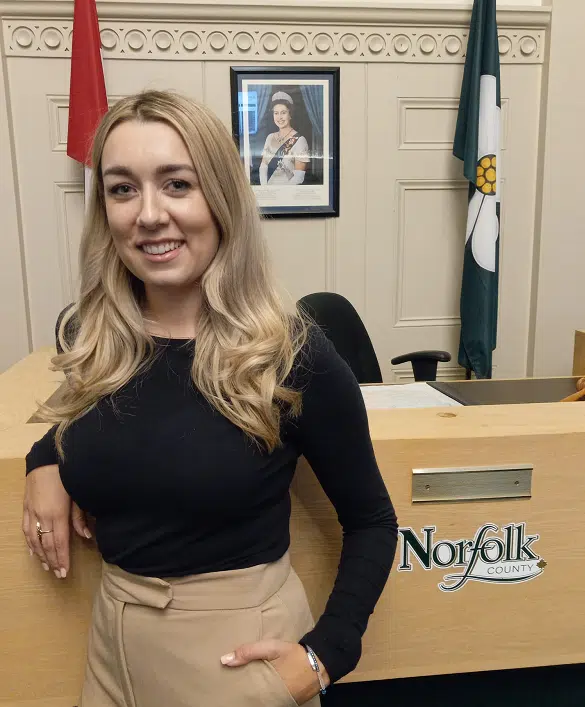
Amy Martin
Mayor of Norfolk County
6
APPEARANCES
6
PODCASTS
Sep 1, 2026

Jason EarleHOST
And I'm like wondering how you got to the place where you began to work on that or were you working on it the whole time?
Amy MartinGUEST
And I think you kind of hear a little bit of this in songs like writer's block where that is ultimately like my, you know, do, am I just doing this thing because I've always done it for music? Um, is it me or is it, is it the world? Like, cause I've changed and I'm not feeling it and I'm kind of depressed and shit's bleak and people are out celebrating and doing these things and, and, and, And that's really me digging into that unresolved grief of like, life goes on.
Amy MartinGUEST
And when you have these, for me, I tend to... jump to resilience because that's where I can feel my power and feel better again.
11 MINS LATER


Sinead HubbellHOST
So what barriers still remain to getting women into the workforce in construction?
Amy MartinGUEST
You know, we, um, in, in Sisk, we did a couple of focus groups last summer to try and understand what the, the lived experience is of women in our business, and the find, the findings from that is aligned with research that's been done in the UK and research that's been done across the world.
Amy MartinGUEST
A couple of, um, kind of key barriers that stood out to us was there's definitely a lack of role models, there's a lack of networks, there's a lack of mentoring.
Amy MartinGUEST
You know, if you're the only woman on a construction site, um, which often women are in Ireland, considering they only make up about 1% of site-based roles, you don't have a network, you don't have a community.
Amy MartinGUEST
That can be extremely isolating, extremely daunting, and sometimes can make women not want to stay within the industry.


Amy MartinGUEST
It's really rewarding work, um, but it's also really challenging and a bit isolating at times.
Amy MartinGUEST
Um, most of the people who work in, in equality, diversity, and inclusion roles, they're often the only person in their whole company in that role, which means that you don't always have people to bounce things off, share ideas with, talk through the challenges with.
Amy MartinGUEST
Um, and a lot of this work is done by volunteers as well, so people who have very, very busy day jobs and who do this work on a voluntary basis in addition to that.
3:01
But is there something else? Because I think it's important, all right, to call out the obvious, but I'd r- I'd rather ask you, maybe is there anything hidden or less obvious that's driving that?

Liz DanielsHOST
And to be quite honest, the real difficulties that some ladies have had to face throughout their entire kind of you know teenage and and adult lives as well and so then my kind of question is how do people so once you recognize okay so i'm in you know this autumnal phase which is typically the the most challenging phase and that has impacts not just on you as as a person but also on your family your friends your work colleagues your horse you you know your pets What do we do about that? Once we've recognised what that looks like for us as individuals, what can we do to help navigate through those autumn times?
Amy MartinGUEST
Yeah, it's a great question and I think, yes, it can be challenging, but once we recognise it, we can turn that power around to be something positive.
Amy MartinGUEST
I think what's really important is When I was doing this research, Liz, I really didn't want to take us back to women are hysterical and, you know, people, uterus owners, they can't be trusted because they're just not, you know, like nobody knows what's going to happen from one moment to the next.
Amy MartinGUEST
You know, like the first wave feminists did a lot to kind of dispel those myths that we are, you know, we are.
Amy MartinGUEST
that we are competent and we're, you know, professional and we're able to be in the workplace.
9 MINS LATER
Liz DanielsHOST
And why do you think we are in this era where we have to be so good at everything and the thought of going for a nap is like, ooh, that's a bit

Amy MartinGUEST
It feels very, you go into another world and the rest of the city, the urbanness, even just modern life goes away.
Amy MartinGUEST
You know, when you go into nature, nature doesn't want to sell you anything, convert you, make you vote for a particular political candidate.
Amy MartinGUEST
And when you get into nature, I recommend that people kind of walk in until they get to feeling kind of private and then just literally shake off the rest of the world and then go forth and take it slow and take it easy.
Amy MartinGUEST
So the quickest way to get into what I call deep nature is the Ned and Jeanne Fritz Texas Buckeye Trail.

Miranda SuarezHOST
Do you have a particular favorite? Do you have one that surprised you more than the others?

Shelby StangerHOST
So what was the most fascinating thing you uncovered while making this whole show? Was there anything that just completely surprised you? Oh, so many
Amy MartinGUEST
Plants can hear and they are actually using what they hear to help shape their lives.
Amy MartinGUEST
And it feels like Dangerous ground because it feels like it can very quickly stray into the woo-woo.
Amy MartinGUEST
But there's actual science that has been done and is emerging that is just utterly fascinating to me.
Amy MartinGUEST
You have this beautiful, bright thing produced by the plant, and it smells good because it's trying to attract pollinators, right? But what some scientists I talked to have discovered is they're not only using those colors to attract pollinators, that flower is also an ear and it is listening for the pollinators in some cases.