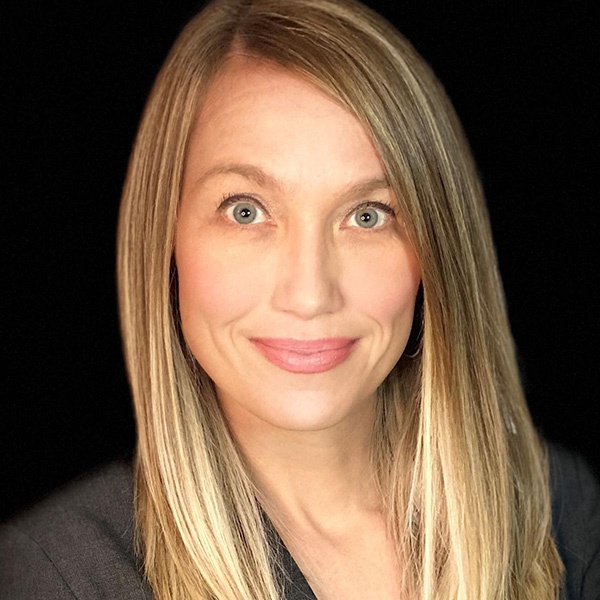
Amber Wutich
American anthropologist
1
APPEARANCES
1
PODCASTS
Aug 12, 2026


Paul RyerHOST
But Amber, if I might start with you, I wonder if you would start us by describing your recent work in Apache Junction, and particularly what the acronym MAD, which you use in this work, stands for and what it might suggest for us.

Amber WutichGUEST
Well, it's such a pleasure to be here, and especially with Dr. Kaplan, whose amazing paper on Fiji Water was published when I was just becoming a postdoc and was such an inspiration.
Amber WutichGUEST
I think it helps to go back to that time when I was just starting to do my work in Bolivia, because in the nineteen-nineties there was an understanding that a hundred percent of the world was going to get piped safe water supply.
Amber WutichGUEST
There was a lot of hope, a lot of optimism, and I started working in informal settlements who I came to believe in conversation with them and using community-based approaches, were frankly never going to get water.
Amber WutichGUEST
And these kind of on-the-ground self-made solutions that they were having to use to survive were not only going to have to endure forever, but were probably going to expand.
17 MINS LATER
Paul RyerHOST
I guess that would be maybe more connected to your work in Bolivia than your work in Arizona.