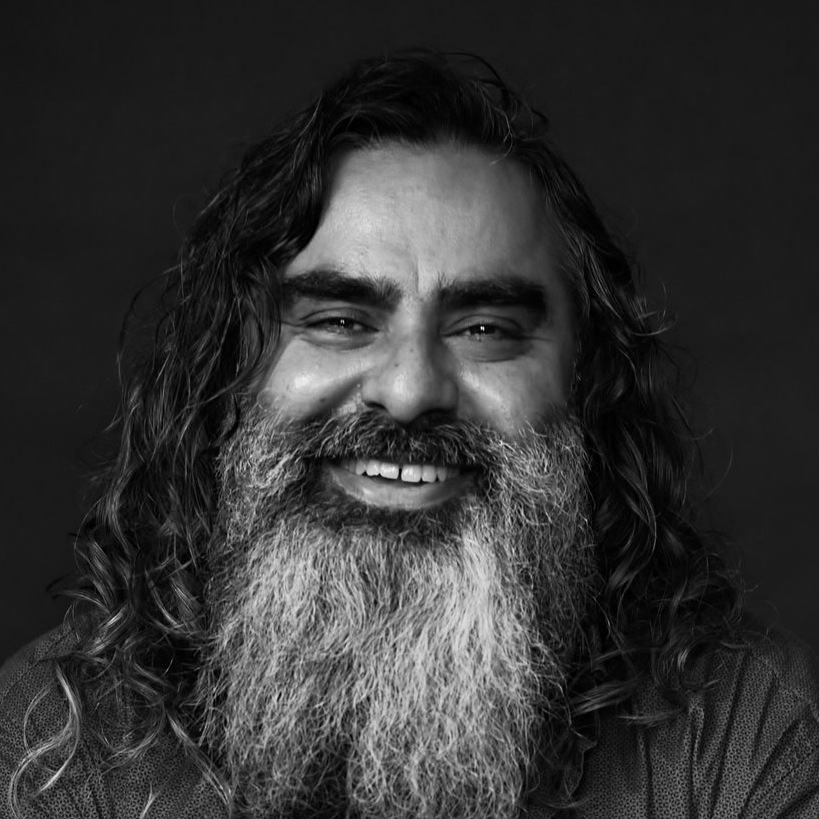
Amar Dhall
Australian psychotherapist, leadership researcher and former law academic; founder of Neuro-Somatic Leadership, managing partner of Primal Intelligence, and Director of the Canberra Trauma and Well-Being Centre.
3
APPEARANCES
3
PODCASTS
Nov 9, 2026


Autumn CarterHOST
How can a leader recognize when their own perception may be the thing that's distorted? And then how does that go with the capabilities versus capacity?

Amar DhallGUEST
And I think what makes that interesting is there has to be a default setting towards self-responsibility and curiosity in order for this to work.
Amar DhallGUEST
And the reason I say this is because, again, when the pressure is on, and it's not just pressure, it's such a cliche when we're talking about leadership.
Amar DhallGUEST
And so someone is there and they're able to cut through it all and pick the right path.
7 MINS LATER
Autumn CarterHOST
So since we're already starting to hit on your six, which one do you feel like is maybe the most overlooked by people?


Andy GoramHOST
where to go I mean when we feel power what psychologically happens to us is there a dopamine effect is it a gratification thing is it a helpfulness thing I mean I'm sure there's a load of different emotions and feelings that we get out of power I'm interested in psychologically what it does to us and and maybe exploring where this tipping point comes from being really useful collaborative community-based behavior to help a group and it becomes isolated individualistic and perhaps less than good
Amar DhallGUEST
So if we were to look at this through the lens of Maslow's theory of motivation, I do like that.
Amar DhallGUEST
And the paradigm is humanistic psychology, and Maslow was one of the founders in that.
Amar DhallGUEST
So if we were to look at what he would say deficiency needs and being value, so he broke up the...
8 MINS LATER

Amar DhallGUEST
And the way, the way that I do leadership is, I would, I believe leadership is life.
Amar DhallGUEST
It's a, it's a dynamic organizing principle of a complex system, whether that's a group of humans or a group of animals or our own body and mind.
Amar DhallGUEST
Right? There's a complex system which, which will form some type of an, or it's going to be moving towards an equilibrium.
Amar DhallGUEST
So for me, leadership is a word that I use to describe that process of organization, which means, you know, because for me, a leader isn't always the one out the front, right? They might be, but then a good leader will know when to step back, when to empower, when to hold a boundary.

Myriam HadnesHOST
And I think that might be the entry point to remind leaders or anyone who doesn't have time that they actually have a body that they can listen to.