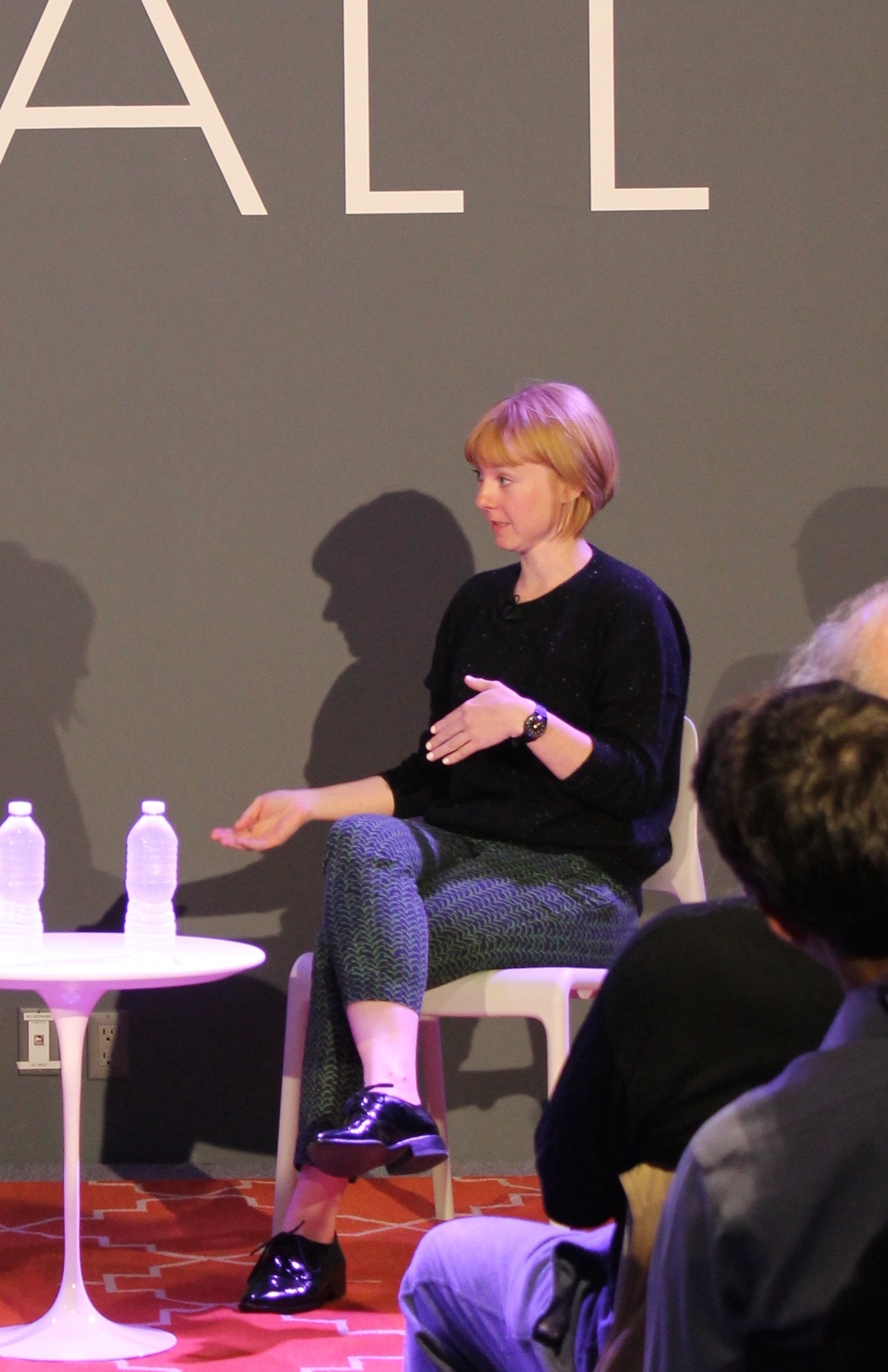
Amanda Hess
American journalist
11
APPEARANCES
9
PODCASTS
Jun 25, 2026


Amanda HessGUEST
I mean, yeah, it was so it was so awful, but it really felt like it was like the only thing I could control was information.
Amanda HessGUEST
And if I somehow figured it out, like through, you know, medical Googling, then at least like.
Amanda HessGUEST
I had this, it felt awful for the doctors to always seem to know more than I did when they were like looking inside of my body.
Amanda HessGUEST
And then also, you know, not knowing what this was and having a really wide range of theories.
6 MINS LATER

Claire ZulkeyHOST
But having gone through that, what do you think? Would you do that again the same way that you did?


Amanda HessGUEST
... and the kind of stuff I liked and what I might be looking for in a partner.
Amanda HessGUEST
Because most of my photos are of my two beautiful children, it surmised that I was a parent.
Amanda HessGUEST
It matched me with a lot of Jewish people, I think possibly because my husband is Jewish.
5 MINS LATER
Amanda HessGUEST
Like, what if we could get to the twenty-fifth man in your queue faster, and then you could sort of, like, assess him and figure out whether it makes sense to go on a date or whatever? And so, given that we're already, like, in this kind of technological hell, I think that's like, uh, you know, it's a potentially promising [laughing] promise.
Amanda HessGUEST
Um, but I'd also say that when I was at Love Symposium, like, I talked to a lot of people who live in San Francisco, like young people who are dating, who are really skeptical of AI.

speaker_7UNKNOWN
What are some of the other ways that you felt pregnancy technology was priming you to see surveillance as something normal? And what do you think are the consequences of that?
Amanda HessGUEST
I mean, I think the first real pregnancy tech that I was spending time with was Flo, my period tracker, which, when I was using it as a period tracker, I loved it.
Amanda HessGUEST
I'm just such a forgetful person that, like, uh, I would just have no idea when my period was coming, and so having this alert in my phone that was like, "Just so you know, if you feel...... uncomfortable and sad (laughs) and angry, and the next day, maybe it's because of this.
Amanda HessGUEST
But then as I started to think about getting pregnant, I realized that it was also telling me when it thought that I was at my most fertile.
Amanda HessGUEST
And so, it became this kind of, like, biological clock very quickly for me, something that I have always thought of as, like, this sexist and corny idea that there's, like, this ticking clock in the back of women's minds.
12 MINS LATER
speaker_7UNKNOWN
(laughs)


Molly RosenCORRESPONDENT
And you embarked on a journey where you tried out some of the baby products on the market to optimize sleep.
Amanda HessGUEST
Before my son was born, my husband and I learned about the SNOO, which is this robotic bassinet that, like, sways back and forth and emits a whooshing sound that mimics the womb.
Amanda HessGUEST
And the SNOO promises that SNOO babies, it says on average, sleep one to two hours more than babies who do not go to sleep in the SNOO.
Amanda HessGUEST
I didn't buy it from the company, I bought it secondhand, and so I didn't have any of its, like, troubleshooting access, and so it meant that I was also then going online to S- new online communities of parents, being like, "How do I get this thing to work like it says (laughs) to, like, actually make my child sleep more?" Because he was not a great or easy sleeper.
Amanda HessGUEST
And the thing that I really took away from that experience was this device, which not only promised to, like, improve my baby's sleep, but also promised to improve my understanding of my baby's sleep in that it also, like, spat out this data and insights into when he had woken up, when he was fussing, when he was going back to sleep, the cumulative hours he had slept, had actually gotten in the way of me really understanding him and what he needed for sleep.
Amanda HessGUEST
And so after I used that, I became curious about all of these other products that are on the market, smart baby cameras, the Owlet, which is a quasi-medical sock that you put around your child's ankle that gives you insight into your child's pulse and oxygen saturation and stuff like that.
Amanda HessGUEST
And I really came to understand, because I was using a real medical device, I wanted only to get rid of this device.

Amanda HessGUEST
You know, I have been writing about the internet for such a long time, and I have this relationship with it where I have a critical distance to the things that I'm investigating, and it's very routine for me to look into something that's happening on the internet and maybe, like, join into a community for a little bit and then leave and leave it behind emotionally too.
Amanda HessGUEST
And it was immediately when I got pregnant that I realized that that was not going to happen this time.
Amanda HessGUEST
And I just had a, a very different relationship, um, where the critical distance was, like, completely gone.
Amanda HessGUEST
Just because I'm so used to it, I started taking screenshots and notes of things that I was seeing related to pregnancy online from the very beginning.
Amanda HessGUEST
And then when I was seven months pregnant and I had an abnormal ultrasound and I realized that my pregnancy was less than normal, I had this feeling, this intense, superstitious feeling, that by taking notes on my experience and, like, writing little jokes to myself [laughs] about how funny maternity wear advertising is, that I had doomed my pregnancy in some way.
11 MINS LATER
Amanda HessGUEST
I had a fetal MRI, he took a closer look at the brain and said that it was completely normal, which made me feel great obviously, but later as I was reflecting back on this, I was thinking about just this experience of the false positive, or the false indication that something is wrong, and then the release that comes at the revelation that, in fact, the baby is normal, or in this case, that my baby's brain was normal.
Amanda HessGUEST
And I felt like it's such an odd journey to go on with your child before they're even born, and I was wondering about how that changed parents' relationship with disability, just this increasingly common experience of being made to fear it and then being absolved of that possibility, and it's something that comes up very frequently now with people who take NIPT tests early in pregnancy.
Amanda HessGUEST
What an NIPT does is it takes, just based on blood draw, so it takes the pregnant person's blood and tests it for......bits of fetal DNA, and it's able, through the analysis of those bits, to guess whether a child may have some kind of chromosomal condition.
Amanda HessGUEST
But it's not, it's not very accurate, or it's not very precise, and so if your blood is flagged as high risk of having a chromosomal condition, you're then usually counseled to get an amniocentesis that actually tests the baby's own cells directly.
Amanda HessGUEST
And so there are many people who've had this experience of getting a high risk result for something like Turner syndrome, then having an amniocentesis that shows that their baby does not have Turner syndrome.
Amanda HessGUEST
And I felt even though all of my NIPTs were normal, I felt, on the one hand, a real kinship with these people who had had this experience 'cause my experience, my false positive experience, was so traumatic.
6 MINS LATER


PJ VogtHOST
We've had some rudimentary genetic testing since the 1950s, but the idea that it's something that many expectant parents routinely do, that's something that changed in the past decade, as our ability to test for and sometimes treat genetic disorders has rapidly expanded.
Amanda HessGUEST
There's an amazing book about this called Testing the Woman, Testing the Fetus: The Social Impact of Amniocentesis in America.
Amanda HessGUEST
A sociologist named Rayna Rapp wrote the book, and she started thinking about it in 1983 when she had an amniocentesis and tested positive for Down syndrome.
Amanda HessGUEST
She had an abortion, and she started thinking about the effects of this process and this choice on herself, on her peers, and just on pregnancy in general, and she spent 15 years studying people who, um, undergo amniocentesis with, like, a variety of results, and she asked them w- why they had decided to take it or why they had decided not to take it, their reactions to the results, and then how they made a decision about what to do.
Amanda HessGUEST
And one of the main themes of her book is that these (sighs) medical technologies are being offered to the general public much earlier and at a much more advanced rate than, like, our actual public conversation about, like, the impacts of these choices, that these choices will even be offered to you, that it will be something that you'll, like, need to decide.
Amanda HessGUEST
And the thing that struck me when a similar sort of thing happened in my pregnancy was, like, I'm being asked to make this private decision.It's gonna affect, uh, one potential person, uh, like my son.
Amanda HessGUEST
Um, but it also has these, like, really wide-ranging social effects and I have never had a conversation with any person about this experience.
6 MINS LATER


Jon FavreauHOST
In what ways did that make you feel better, and in what ways did it make you feel worse?
Amanda HessGUEST
Um, so when this happened, you know, I, I thought I was going in for a routine ultrasound that was just gonna be very quick and that I would leave and then go on with my life and, like, you know, continue to p- plan my birth or whatever, and it lasted a really long time.
Amanda HessGUEST
And so even when I was there, like, sitting on the table with the technician, who doesn't-- If anyone has been in this experience, like, the technician won't tell you anything, any actual information.
Amanda HessGUEST
So I knew that something was different or wrong, and, um, I, like, had this feeling.
Amanda HessGUEST
This was also when, you know, my husband wasn't in the room with me because you didn't have any support people there in 2020, and I, my first thought was not, "I wish my husband were here with me." It was, "I wish I had my phone here on the table so I could just, like, furtively Google the parts of my [laughs] baby's face that this woman is mapping so that I can, like, assume some kind of informational control over this situation that even though it is unfolding inside of my body, I have, like, no control over and I have no insight into." Um, and I think, you know, everything that happened from there, it, it helped me in this way.
Amanda HessGUEST
Like, I hadn't realized in the seven months leading up to that, that all of the pregnancy content that Flo had been giving me, that I had been get- getting from other, like, digital pregnancy resources or pregnancy books or whatever, is so focused on the typical pregnancy.
36 MINS LATER
Amanda HessGUEST
I drank a glass and a half of wine on Mark's birthday, before I knew I was pregnant.
6 MINS LATER


Lizzie O'LearyHOST
And I'm curious whether it was easier for you to talk about BWS on the internet, to relative strangers, or to friends or, like, how did, how did that land for you?
Amanda HessGUEST
Yeah, I mean, I think I went through a period of not knowing what to say, um, for so many reasons, um, because, you know, I had this cute, adorable, wonderful baby who was, um, you know, largely healthy, um, and so it wasn't something that I think was completely overwhelming his experience of life.
Amanda HessGUEST
Um, but also when I would bring him around, he would prompt sort of questions because he has, he, you know, he's since had a tongue-reduction surgery, which has made his tongue smaller, but he was born with a very, very, very large tongue.
Amanda HessGUEST
So I was just kind of trying to navigate this in-person information transfer where I was like, "Do I have to present some kind of affirmative defense of my son?" Where I'm like, "Maybe you're noticing that he has a very large tongue.
Amanda HessGUEST
Like, this is why." Um, or do I, you know, not really have to say anything? Um, and I think definitely it became easier for me to start to articulate o- our experience online, especially in more sort of semi-private spaces.
Amanda HessGUEST
There are so many groups online dedicated to people with rare illnesses, uh, and their families, and I was able to find a few of those support groups, um, that were really helpful to be able to start, you know, I was posting images of my son that I wouldn't post, like, on the wide-open internet of us, like, having a good time in the children's hospital or whatever.
Amanda HessGUEST
Um, I do feel like the fact of having spoken about this and revealed his diagnosis is, like, was...
9 MINS LATER


Tonya MosleyHOST
Can you describe this part of the internet that you felt relegated to once you received your son's diagnosis?
Amanda HessGUEST
Um, you know, I spent, uh, the beginning part of my pregnancy using an app called Flo, and Flo presents you with this CGI kind of fetus poppet and it looks like a, a very cute (laughs) pre-baby and it is floating around in this, like, ethereal mist.
Amanda HessGUEST
Um, and again, it sounds so ludicrous, but when I was holding that in my hand, it felt on some emotional level like I was looking at my baby.
Amanda HessGUEST
And then, um, you know, once doctors began to find some abnormalities on the actual medical portal (laughs) to my body in the ultrasound, I realized that, of course, this image that Flo had promoted to me was a lie.
Amanda HessGUEST
It has no special insight into the baby inside of me, obviously! Um, and I also came to understand that it promotes this idea to all of the hundreds of millions of people who use it during pregnancy that that is what their baby ought to look like.
Tonya MosleyHOST
Did you ever wonder, if you had known, say, like, at 10 weeks or earlier, might you have felt the pressure to make a different choice of not to move forward with your pregnancy?