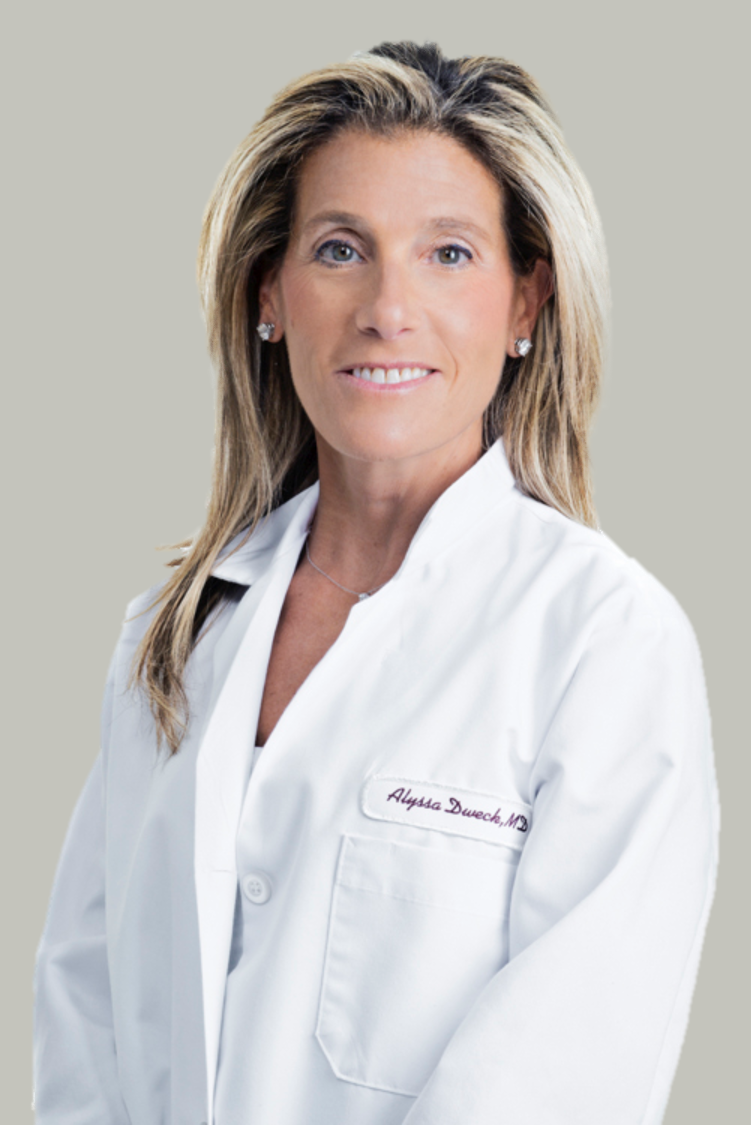
Alyssa Dweck
Gynecologist
3
APPEARANCES
3
PODCASTS
Oct 14, 2026


Alyssa DweckGUEST
You know, menopause is that day and time when you look back and realize it's been 12 consecutive months without menstruation.
Alyssa DweckGUEST
But the years, sometimes 2 or 4 to 10 years leading up to menopause, is called perimenopause, and this is really when hormones like estrogen and progesterone start to change, and they can be incredibly volatile.
Alyssa DweckGUEST
And this causes symptoms that are sometimes not easily recognized as hormonal symptoms.
Alyssa DweckGUEST
So our Bonafide sixth annual State of Menopause survey, we- which- where we looked at 2,000 wo- women's responses, revealed that the cognitive and emotional symptoms during this perimenopausal transition were the most disruptive symptoms at all and really disconcerting.
Alyssa DweckGUEST
They act throughout the body, and changes in these hormones not only result in physical discomfort like hot flashes or musculoskeletal joint pain, but they interrupt sleep.

Alyssa DweckGUEST
So I think it's no surprise that the Mediterranean style diet is really recommended during this stage of life and truly as a lifestyle, not as a diet for two weeks or three weeks.
Alyssa DweckGUEST
It focuses on higher fiber foods, whole grains, minimal sugar, minimal salt with spices used instead.
Alyssa DweckGUEST
And the original purpose of the Mediterranean diet was really to be a heart-healthy diet and to help control things like hypertension and lower risk of cardiovascular disease.
9 MINS LATER

Kristen CohenHOST
So what are your thoughts? What are the tips on what we should be thinking about during perimenopause? Yeah.


Selene YeagerHOST
So how are we thinking about these women now when it comes to that kind of treatment?
Alyssa DweckGUEST
Well, I think the first thing to realize is that perimenopause lasts for a long time.
Alyssa DweckGUEST
And oftentimes, symptoms are not even recognized or thought about by a healthcare practitioner or a person until periods become a little bit irregular.
29 MINS LATER
Selene YeagerHOST
So let's talk a little bit about, and some maybe non-pharmaceutical ones, but like other treatments that women can turn to.