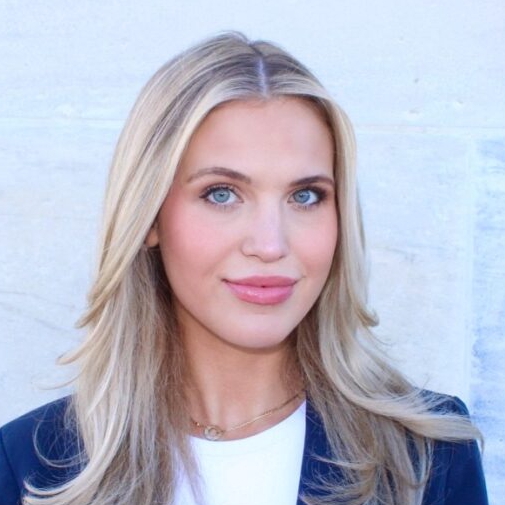
Allison Howell
CEO of Hogan Assessments, the global personality assessment and leadership development firm, appointed January 2026.
5
APPEARANCES
3
PODCASTS
Oct 13, 2026


Allison HowellGUEST
Well, I, I don't, I don't mean to take us off topic too much, but everything you're saying is absolutely true, that the, there is a lot of things around magic that is truly just science we don't fully understand, uh, at any point in time.
Allison HowellGUEST
A silly example is you go back to when, like, the Harry Potter movies came out, and they had, like, the moving pictures and, uh, you know, various things that now are just very normal with, with the way that technology and our cell phones have evolved, that, i- moving, moving pictures is not magic.
Allison HowellGUEST
And so back at that point in time when the understanding of science was so low, it was really easy to just try to find ways to explain the phenomenon that's going on.
34 MINS LATER


Nirit CohenHOST
... have an intuition about the fact that there's gotta be a human element there.
Allison HowellGUEST
Uh, there's a lot I could say on that topic because, uh, um, you know, just, just in looking at judgment and decision-making, I think it's, it's always dangerous to say it's good or bad, right? You have good judgment or you have bad judgment, right? Because judgment is so context-specific in many ways, and, and depending on your experience, your background, you're gonna approach things in a different way.
Allison HowellGUEST
But what's really interesting right now, and I, I get really excited to talk with people about it, is the way that AI is impacting decision-making because, uh, the, the way that information is presented with AI now is requiring such a, a cognitive shift in terms of evaluating information that is fed to you, rather than generating the information yourself.
Allison HowellGUEST
So when, you know, decisions are made within an organization, um, before AI, I mean, and, uh, of course the, the internet and, you know, Google and things like that do provide some information, but it did require a lot more independent, autonomous thinking to arrive at a certain decision.
Nirit CohenHOST
So if you, if you take us kind of a few years down the road, if we have this conversation in a few years, what do you think we'll understand about, um, human leadership in, in, as opposed to kind of all the processes that are gonna get built around that, that we can't quite name today?

Allison HowellGUEST
Actually, you're, you're making me think of something that I hadn't considered before.
Allison HowellGUEST
I wanna be really careful in, in, in talking about generational differences because I don't want to imply that there's ageism there, but I think culturally, generations experience very different things.
Allison HowellGUEST
And as people who are, you know, older in the working environment, there's been, I mentioned this on the la- the last podcast we did together, that there's sort of this expectation of an employer that, you know, I think of my, my mom and her attitude towards work, and you, you sort of expect that your employer is going to be a benevolent person that's going to look out for you, and as long as you're showing up as a good worker, they're g- they're gonna have your back.
13 MINS LATER

Hebba YoussefHOST
Um, so as we're talking about this gender disparity, like for anyone who's listening and may, might be skeptical, what's the strongest evidence that the gap is about flawed criteria and not about real differences in capability?
Allison HowellGUEST
when people, people went home, people were working from their office and, and I mean, millions of people were dying.
Allison HowellGUEST
It really puts things into this l- harsh light of what is important to me and what isn't.
Allison HowellGUEST
And work is just much lower down on the list than it used to be, and employers and leadership haven't quite gotten that message.
Allison HowellGUEST
And so it's more than just being skeptical, it's be- it's more than just being, you know, having, like, divided political views or, or values and things like that.
Allison HowellGUEST
It is a, an active process where people are retreating and, um, harming their relationships.
Allison HowellGUEST
But what is really interesting about it is that when they, when they look at trust from kind of the broad lens, people are distrustful of their employers, they're distrustful of NGOs, they're distrustful of governments, increasingly so, they're, uh, distrustful of NGOs.
6 MINS LATER
Allison HowellGUEST
Uh, well, that's a really good question, and I think, you know, similar to developing strategic self-awareness, you can't solve a problem unless you're aware that there's a problem.
Allison HowellGUEST
And you can't really fix the problem even with awareness unless you're like really l- willing to pay attention and listen to some of the hard things.