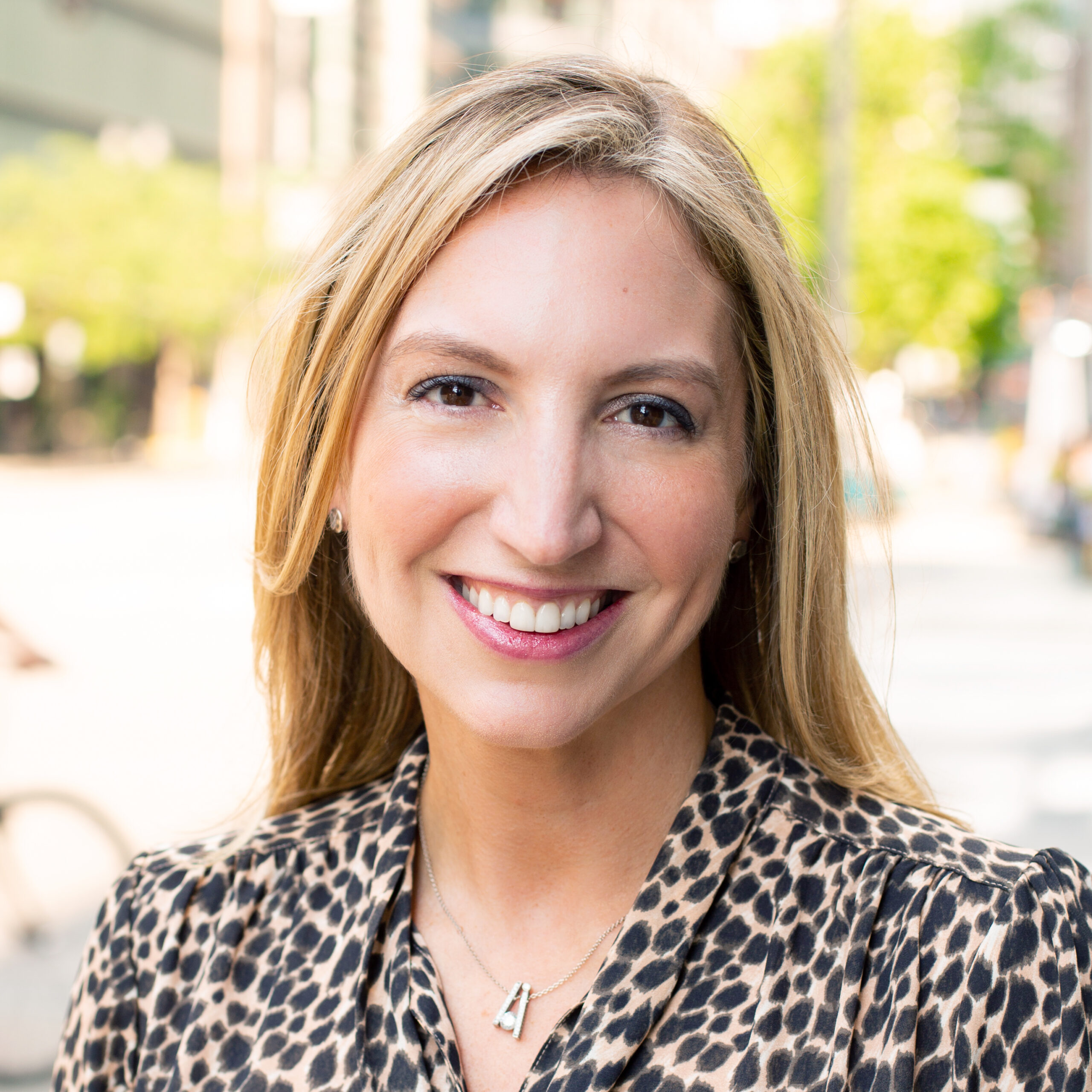
Alison R. Fragale
Author
10
APPEARANCES
10
PODCASTS
Oct 20, 2026

Alexis ContosHOST
Was it status in the workplace? Talk to me a little bit about what she was studying and how you became interested in this idea of status and power.

Alison FragaleGUEST
She's not really studying in the workplace specifically, but she was just studying the relationship between emotions and status and how our feelings of status can affect how we feel and how expressions of emotions can actually affect what people think of us.
Alison FragaleGUEST
So before I ever came along, she did a really cool study back in the days when Bill Clinton was the Bill Clinton Monica Lewinsky.
Alison FragaleGUEST
And she clipped two different clips of Bill Clinton talking about the allegations against him.
6 MINS LATER

Alison FragaleGUEST
set the stage on what my life is like, I do have a husband, my husband and I both travel a ton for work.
Alison FragaleGUEST
Um, and then I have, you know, other writing and all these other kind of things I like to be involved in.
15 MINS LATER


Alison FragaleGUEST
So sometimes women miss the mark, but sometimes we are disadvantaged from the very outset of a relationship, even when we have done nothing wrong.
Alison FragaleGUEST
we um gender is what we call and i'll get very psychological i'll break it all down is it what we call an ascribed status characteristic it means that your gender impacts all other things being equal how much a person might respect you from the very beginning and it's ascribed it has nothing to do with how capable or caring you are but we think it does That disadvantages women because male is awarded more status than female in most contexts.
Alison FragaleGUEST
There are status characteristics that are based on all kinds of things, race, age, sexual orientation, but gender is one.
Alison FragaleGUEST
And I've done a lot of work on status and power and how people are perceived.
6 MINS LATER

30:28

So can you talk a little bit about your template, about how this came to you, that this is one of your big status plays?
17 MINS LATER


Alison FragaleGUEST
So, right? People who are in the beauty world, in the style world, like, all the messaging you get is like, "Hey, ladies, you don't have to fight so hard to, like, look good or to, to have the great outfit.
Alison FragaleGUEST
I'm gonna give you the formula for, like, getting dressed or having great skin." And we always gravitate to that because we're like, "Yeah, I don't want it to be hard anymore." That's what I'm trying to do for people in this, uh, in, in the idea of reputation building, is if you don't have good science and you're not doing it authentically, it can feel really hard, but there is a formula to it.
Alison FragaleGUEST
And so the idea is, the formula is, like, when I'm in human interactions, I think, "What are the things I can do- To show up in this interaction to convey that I really care about this person and that I know what I'm talking about.
Amy ChangHOST
What are the three either behaviors, you know, speech patterns, those small mannerisms that you see women doing wrong that help, that erode their status?

30 MINS LATER


Katie ArmentroutHOST
Some of your advice in the book is about like, how do we talk about ourselves? Like in your first story, when you shared, like, how do you talk about yourself without being arrogant or without feeling like that with confidence versus arrogant? Can you share with us what's the secret to that? What are ways to do it?
Alison FragaleGUEST
So, I mean, I think that's the lesson that I learned from that terrible boss way back when at McKinsey.
Alison FragaleGUEST
And now there was the problem that I'm not sure any of it was true, but that's not going to be us.
Alison FragaleGUEST
And so what I always say to people is you're the most informed, motivated communication channel about yourself.
15 MINS LATER

Alison FragaleGUEST
As soon as we figure out that your intentions are good, the second thing we wanna figure out is, can I rely on you? Are you capable? Are you good at what you do? And so if, if you're a cave person, I know, oh, hey, you're there.
Alison FragaleGUEST
Well, the next thing I need to figure out is, are you any good at hunting? 'Cause I'm not taking you with me if you, if you can't hunt.
Alison FragaleGUEST
So those two dimensions in, we'll call them, like, are you caring and are you capable, those two dimensions are the, the science of how a status judgment gets made.
Alison FragaleGUEST
So when you're perceiving another person and they're perceiving you, they're trying to figure out those same two things.
11 MINS LATER


Spencer LevyHOST
What's the science telling you today that's informing you about some of your opinions?
Alison FragaleGUEST
Psychology is really just the study of human beings and how people are similar and predictable.
Alison FragaleGUEST
So I'm looking at primarily adults, primarily functional adults, and primarily variables that are going to be interesting at work.
Alison FragaleGUEST
So a lot of these things matter just as much at home as they do at the office.

Jenny LunaHOST
So what are some tactics for speaking, and then even some non-verbal ways of communicating that you think we can use to be more likable and more badass?
Alison FragaleGUEST
So I'll take a step back and answer your question, which is, as I said, likable badass, catchy term, but it's referencing something specific.
Alison FragaleGUEST
It is referencing, where does status come from? And so the idea is that this is a communication process.
Alison FragaleGUEST
I show up in the world and I do something, and if it convinces you that you respect me, what convinces you that you should respect me? Two things.
Alison FragaleGUEST
One is, do you care about people other than yourself? So if I communicate to my audience that I care about them and at least care about somebody that's not just me, we respect that.
Alison FragaleGUEST
We don't want to interact with selfish people or competitive people who are gonna hurt us.
7 MINS LATER
Jenny LunaHOST
So I'm-- would love to hear some advice from you on do I revert and push that cultural way of getting to know people and trying to set relationships, or do I go more for the mimicry and meet people where they're at?