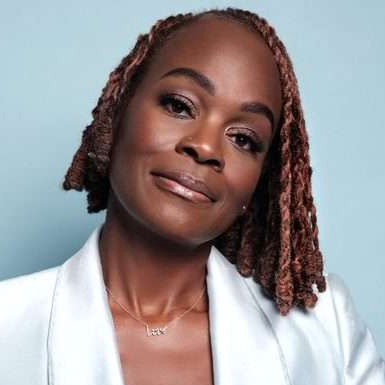
Alfiee Breland-Noble
Psychologist, founder of The AAKOMA Project nonprofit, mental health correspondent, and author of Rise and Thrive
5
APPEARANCES
4
PODCASTS
Sep 10, 2026

Richard RoperSOUNDBITE_SPEAKER
And I'll tell you some other things

Alfiee Breland-NobleGUEST
that I think about the loneliness epidemic as it relates to young people of color.
Alfiee Breland-NobleGUEST
For somebody like Dr. Murthy, he is attending to all different kinds of people when he talks about the loneliness epidemic.
Alfiee Breland-NobleGUEST
He's not looking at a sample and just saying, oh, well, it's only these people, right? It includes all of us.
Alfiee Breland-NobleGUEST
So as I say this, I acknowledge his efforts to always ensure that we're all included.
Alfiee Breland-NobleGUEST
When you get beyond him, I don't think too many people are talking about how the loneliness epidemic impacts people across different identities.
Alfiee Breland-NobleGUEST
So I think about queer people of all races, all racial groups, who are often so isolated because they're in communities in real life that don't value or accept them, right? So where do you find community? Social media, but that's online.
22 MINS LATER


Alfiee Breland-NobleGUEST
And, um, yeah, so I like that you cut it down to a chunk 'cause I-- we would be here the rest of this, me talking about everything I've attempted to do or actually done.
Alfiee Breland-NobleGUEST
And so [laughs] in the last couple of years, really what my work has focused on is generating data, putting research out there, uh, for everybody.
Alfiee Breland-NobleGUEST
So we work very hard to try to make sure, and when I say we, I'll clarify, I mean at The Akoma Project, which is a nonprofit that I founded, um, in 1999, and it used to be my research lab.
Alfiee Breland-NobleGUEST
So you and I have talked a little bit about our backgrounds when we met long time ago, and my background is I was a psychiatry professor for about 15 years.
23 MINS LATER


Carson DalyGUEST
As far as the youth, would you categorize it that we're in a mental health crisis?
Alfiee Breland-NobleGUEST
I would say we're in a crisis in the sense that there are a lot of kids out here struggling.
Alfiee Breland-NobleGUEST
And so at my nonprofit, you know, Carson, the Acoma Project, we did some studies.
Alfiee Breland-NobleGUEST
And what we find is 60 to 70 percent of these kids are talking about things like stress.


Alfiee Breland-NobleGUEST
We have to have people out here who are writing to their, you know, representatives at the local, regional state and federal level and saying, "We need you to invest in our young people, in older people, in our communities to support." And then the final thing is, you know, when I think about youth and adolescent mental health only about one and half to 2% of all funding that goes to everything in the nonprofit space goes to their mental health.
Alfiee Breland-NobleGUEST
Funding for mental health overall is a very small percentage of where money goes because of stigma.

Alfiee Breland-NobleGUEST
So I think part of it is with what we do at the Mental Wealth Alliance and, and similar organizations the goal is to help people understand.
Alfiee Breland-NobleGUEST
I heard somebody say the other day, If you break your leg, if you have diabetes, God forbid if you have, you know, hopefully it's a benign tumor.
Alfiee Breland-NobleGUEST
But I think the, the main thing I learned was that Black people actually do want healing, right? Mm-hmm.
Alfiee Breland-NobleGUEST
People act like we just out here wilding and like we don't care about our mental health and- Yeah ... we don't care to take care of ourselves, but we do.
Alfiee Breland-NobleGUEST
Like, you know, and everybody's not on this hustle, grind, push through, you know, at all costs type of culture.
Alfiee Breland-NobleGUEST
So what I feel like I saw in people- Mm-hmm ... was a real hunger and desire to get tools to help them with their mental health.
14 MINS LATER