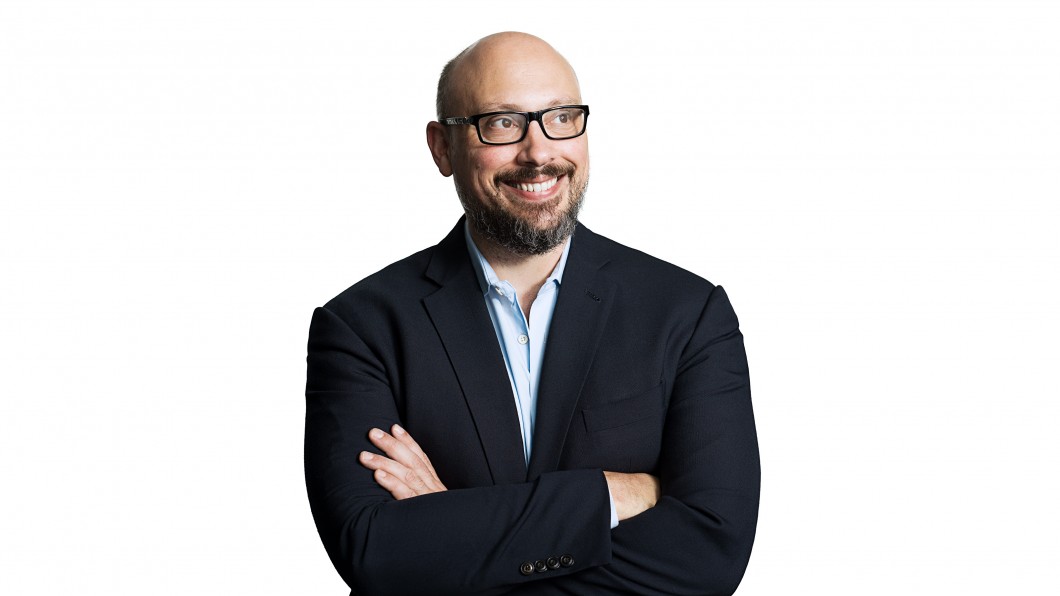
Alex Schultz
Former chief marketing officer of Meta
16
APPEARANCES
15
PODCASTS
Oct 20, 2026

speaker_9ADVERTISER
Bring it with SAP Grow, AI cloud ERP for any size business.

Alex SchultzGUEST
Does that make sense? Now, Naomi is amazing, and Naomi is someone people don't know that well out of Facebook, but she runs products and engineering for growth.
18 MINS LATER
speaker_12ADVERTISER
Discover Coffee Plus on nespresso.com.

Pariseet JainHOST
How did you combine both of this different world into one coherent vision for marketing effectiveness at Meta?
Alex SchultzGUEST
Yeah, I mean, one of the things I'm most proud of at Meta is if you go around the industry, so like the head of analytics for OpenAI is David Sasaki.
Camila EscochiHOST
If you were one of us today sitting here with an MBA and reentering the workforce right now, what are things that would do differently, especially considering the scenario that we have right now?

Alex SchultzGUEST
There's what? 40 million people in New York, or however many people are supposed to be in New York.
Alex SchultzGUEST
How many times have you seen, one time I was driving home from Chicago to Rhode Island, and I ran into Alex Luccherini.


Sam EwenHOST
How do you look at how you work with humans when you're also providing tools that are helping them augment with AI? Is there a balance that you think sort of society is going to come to where we're saying we're comfortable with AI as long as there's a human voice behind it, or we're comfortable on these scenarios focusing only on AI solutions like a chatbot?
Alex SchultzGUEST
Yeah, I'm gonna sound hopefully smart, but probably just, like, very obvious right now.
Alex SchultzGUEST
Uh, and I like advertising as a look, and I think Unilever is an amazing company to look at, at this.
Alex SchultzGUEST
But I think it actually reflects what's gonna happen in the world of creators, so I think it's interesting.
Alex SchultzGUEST
Look, if you're doing Persil, which is a European sort of Tide-type thing, and you are saying it will make your whites whiter, and then the white that you're using in the ad is AI-generated, you are gonna come across as a liar, and that's the same as to whether it was CGI or it was created by a human being drawing things.
Sam EwenHOST
So do you think that there is a moment when maybe the expected output of AI has to, in essence, have more error, become more human in its output?


Kaya YurieffHOST
So how do you think about that from a marketing perspective and kind of changing consumer sentiment around AI and the negative aspects?
Alex SchultzGUEST
And so it's important to explain in the communities where we are, what jobs we're bringing, what opportunities we're bringing.


Mike LintonHOST
If you're out there and you do not have a lot of AI usage or you need help with AI or a consultant, what advice would you give somebody to say, are these people or is this candidate good at AI or not? Yeah,
Alex SchultzGUEST
I mean, we're seeing for candidates versus an agency or whatever, for candidates, we're seeing a barbell distribution, basically.
Alex SchultzGUEST
So right now, people coming out of college who've used AI for the last three years, basically the people graduating now, chat GPT happened in their first year.
Alex SchultzGUEST
So the people coming out of college right now who have used it natively in any space the whole way through college, they're coming in with a totally different way of working, totally different expectations, and they are really doing amazingly.
Alex SchultzGUEST
I mean, people who came in mobile native, people who came in digital native at each generation, it's the same thing.
Alex SchultzGUEST
So first thing I'd say is if you're hiring people out of college, it's important to like get them to tell you what they did with AI and tell you in detail what they did with AI.
19 MINS LATER


John WallHOST
Is that kind of a rule of thumb for when you get to a certain size? Tell us more about your decision on do it in-house versus bring in specialized help.
Alex SchultzGUEST
I just think like there is expertise out there in almost any field where they will be able to do something better than you can.
Alex SchultzGUEST
And so you should be very, very clear in your mind why you're not using an agency for something where there's an obvious agency solution or why you're not using a piece of software where there's an obvious solution.
Alex SchultzGUEST
I go into this in a lot of depth in the book on making the decisions, how eBay and Amazon decided to do affiliates in-house versus using an agency.
Alex SchultzGUEST
And I run through examples of that so you can think through it in a lot more depth.
Alex SchultzGUEST
But fundamentally, my rule of thumb and the story I use for this is, when I joined Facebook what we do for tracking.


Jenny RooneyHOST
So what is your best advice in the book vis-a-vis that and how CMOs need to be leading, guiding and structuring the organization and teams effectively?
Alex SchultzGUEST
In a world of AI, at least in the next period of AI, AI isn't going to take your job.
Alex SchultzGUEST
And so I think the most important thing is to have teams that know how to use the tools, use the tools, actually experiment with the tools.
Alex SchultzGUEST
Automated ad campaigns, five, 10 years ago, I thought I would never spend money on automated ad campaigns.
Jenny RooneyHOST
The last question is, how do you want to disseminate this? Do you want this to be read in MBA classrooms at college campuses? You know, do you want to make sure that this gets into the hands of the next generation, even as current practitioners read it? What's your sort of perfect world scenario?


Garrett SloanHOST
How do these channels differ from each other? And since TikTok is new, have they brought something different to the game than Meta was already doing? Or what's evolving in social media as a channel?
Alex SchultzGUEST
Yeah, I mean, the first thing I'd say is what I try to do in the book is try and pull out more timeless principles that will work, you know, whether Facebook or Instagram or Snapchat or TikTok or LinkedIn or YouTube is the social media company you're looking at.
Garrett SloanHOST
But what is your is AEO a real thing? And should advertisers be starting to practice it?

11 MINS LATER

Ed LudlowHOST
What are the risks with that? You're clearly needing a lot of data about that person to make that audience of one relevant ad.
Alex SchultzGUEST
Yeah, I mean, from my perspective, there are clear, now we've reached the point where there are clear laws out there, there are clear platform policies out there about purpose, use, limitation of data, and so it's very clear what you can use the data for.
Alex SchultzGUEST
And people like personalized ads, so people have control over what data you can get, young people really understand how to manage their algorithm.
Alex SchultzGUEST
And they love the personalized ads they get where there's something relevant that's actually useful for them.
Alex SchultzGUEST
So I think the balance is actually in a way better place than it was, say, 10 years ago in terms of people's understanding of these things.
Ed LudlowHOST
Can you give us any sort of insight into how much more valuable an AI powered ad is, what the conversion on it is relative to traditional advertising, how it drives growth on the top line?

Alex SchultzGUEST
Like, the conversations I have is people are super stoked that we're spending all this money on data centers, but we're really trying to bring in the best talent to make the most of it.
Alex SchultzGUEST
So, so far on my team, there's a level of excitement around this that's really, really high.
Alex SchultzGUEST
And you know, these guys, Nat and Alex, I mean, I've known Alex since he was a teenager.

Benjamin ShapiroHOST
It's like a talent consolidation, but it also sort of celebritizes the people that are in the industry, which is kind of fun to watch.
Benjamin ShapiroHOST
You've always been a wonderful tactician, so how do you stay involved, not necessarily in the operations, but in the understanding of the practice of marketing while you are so busy managing such a large organization?
Alex SchultzGUEST
A big developing area is influencer marketing, right? It's gone zero to 100 in four years, I'd say.
Alex SchultzGUEST
So I spend a bunch of time at Cannes meeting with our clients, asking them what they wanted from us for influencer marketing.
Alex SchultzGUEST
We have these partnership ads, they're going really, really well, but what else do people need? And there was a lot of stuff they said about data, there was a lot of stuff they said about performance, results, measurement, all these things.
Alex SchultzGUEST
A- and data and measurement in order to select the right creators and influencers to work with.
11 MINS LATER
Benjamin ShapiroHOST
Do you get into the changes of the marketing landscape based on AI in the book? And if you do, how do you frame it?

16:43

I'm curious if you thought about how that plays out and how advertising kind of gloms onto AI.
Alex SchultzGUEST
They're very worried about the innovator's dilemma they find themselves in right now.
Alex SchultzGUEST
But if search ads goes to a paid model like ChatGPT and people start asking their questions in that way and they pay for it...
17 MINS LATER


Bob SafianHOST
Like, do you worry at all about what's been created through this incremental, you know, increased engagement and where we go from here? Yeah.
Alex SchultzGUEST
I think you're going to build new products and you're going to find unintended consequences.
Alex SchultzGUEST
And the question is, how do you respond to those? And I personally think we're responding.
Alex SchultzGUEST
Look at the tools we've released for people to control their children's use of social media.
Alex SchultzGUEST
There are huge numbers of them, from time limits to being able to see every message they send, control every person that they follow or get followed by, make sure the parent has full engagement.
Bob SafianHOST
And I'm curious, like, how do you draw that line? I mean, there are people who feel like meta, you know, prizes growth over everything.


38 MINS LATER