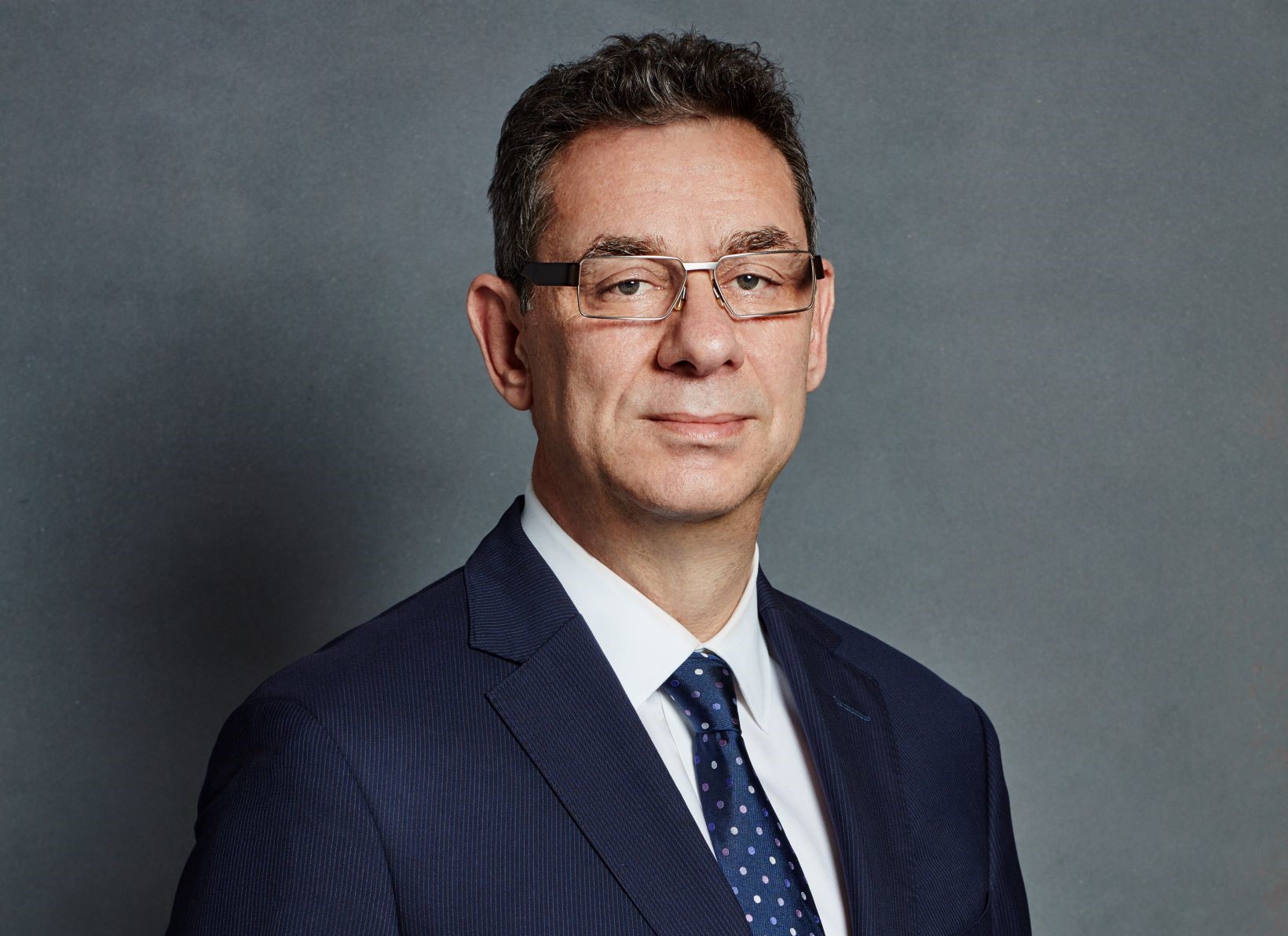
Albert Bourla
CEO of Pfizer
15
APPEARANCES
13
PODCASTS
Aug 18, 2026


Albert BourlaGUEST
With the GLP-1, it was the first time that we had a medical class, a medicine class, that could bring serious results.
15 MINS LATER

Nicolai TangenHOST
Why was that so important to buy? And you out, you outbid Novo Nordisk, uh, there.
Albert BourlaGUEST
W- we, we always, uh, believed that, uh, obesity's a, a very big area, and, uh, we always believe that Pfizer it is the company that, uh, can be very competitive over there.
Albert BourlaGUEST
Uh, so we enter into the obesity space way back in the day, and, um, if things wouldn't, uh, go wrong for us scientifically, because two major assets that we had in the clinic, uh, uh, they suddenly saw signs of liver toxicity, so we had to discontinue them, although they were very effective, right? Um, uh, but, uh, if that was not the case, we would be the first to launch an oral, uh, product right now in the market, and, uh, things will be very, very different for all of us.
Albert BourlaGUEST
So now we are having a development organization that knows how to do primary care of very big, complicated studies.
Albert BourlaGUEST
We have a commercial organization that it is a powerhouse and knows how to sell stuff, and, uh, we have a manufacturing network that can make those stuff better and faster and cheaper than anybody else.

Joshua MachtHOST
Would the vaccine be rolled out to certain parts of the community first, like high-risk areas? Would a vaccine be available internationally, and how would you retain IP on it? And then how would you be planning on helping poorer countries pay for it? So those questions are from Timothy in New Hampshire and from Vusi from Johannesburg.
Albert BourlaGUEST
A, a, a great questions, all of them, and I think these are very high in my mind.
Albert BourlaGUEST
For example, how the product will be used, I think it is coming more health authorities of each country and how they would recommend the product to be used.Rather than us to say use first in, uh, first responders or use secondly to, or to people that are working in the food industry or the people that are in hospitals.
Albert BourlaGUEST
So this is, uh, something that we still, though, start engaging into discussions with the CDC here, with other health authorities from other governments.
Albert BourlaGUEST
Because all the governments of the world are calling us right now to basically to procure the vaccine.
9 MINS LATER
Joshua MachtHOST
Th- this is Paul from Canada specifically is asking, "What are your plans regarding profit from this vaccine?"

Albert BourlaGUEST
So the Chinese, they are working with a five years plan, and, um, they have... 2025 was the 14th five-year plan from Mao Tse-tung's time, and this is where they first time spoke that they want to develop, by years 35 to 36, global players in pharmaceutical space.
Albert BourlaGUEST
And to do that, they said in the first years they need to develop a biotech and, uh, s- improve science, et cetera.
Albert BourlaGUEST
Right now, the, um, in the Nature Index, uh, of, uh, ha- of, uh, of, uh, ranking universities, uh, based on, uh, scientific output, uh, out of 10, the top 10 was always eight US, the usual suspects, MIT, Harvard, and...
19 MINS LATER


Michael FromanHOST
How does the current state of China-U.S. relations affect the manner in which Pfizer is developing drugs and thinking about innovation going forward?
Albert BourlaGUEST
First of all, I need to say that there is nothing more important right now that will save the biopharmaceutical industry other than AI and China.
Albert BourlaGUEST
And when I say about China, I'm talking about a meteoric rise of their scientific capabilities.
Albert BourlaGUEST
Right now, there is, for the first time in history or in the recent decades, that the US dominance in biotech technology is challenged by a competitor, and that's China.
Albert BourlaGUEST
It's challenged because they have done all the right things over decades in a long-term strategic plan.
29 MINS LATER
Hall WayneUNKNOWN
Is it a matter of issues with the scale, regulatory, lack of talent? or something more fundamental, but what's causing you to resort to Chinese innovation?


Alyson ShontellHOST
How are you thinking about building a stable foundation and kind of making up for the lost revenue of those two big money drivers and getting to revenue growth again? I think you said by 2030 or 2029, you expect to be really back there.
Albert BourlaGUEST
And we expect to be not only back in growth, but back in very strong exponential.
Albert BourlaGUEST
COVID was a great success for the company, skyrocketed at all times high, saved the world and gave us a lot of profits, but it was not a sustainable franchise at the level that we experienced it in the years that we had the COVID crisis.
17 MINS LATER
Alyson ShontellHOST
What do you think about those criticisms? And how do you start repairing the trust as a leader who can move the whole industry?


Andrew SorkinHOST
On the issue of drug prices themselves, though, if we were all sitting on this stage five years from now, Do you believe that European countries are going to pay double, triple what they pay today? And that US customers are going to be paying 50% or more less than they're paying today? In Europe, I have
Albert BourlaGUEST
seen a tremendous shift towards... understanding that they need to build innovation in Europe and they need to pay more for it.
Albert BourlaGUEST
The UK signed a deal with the US government that they will raise the commitment to spend from 0.28% of GDP in innovative medicines to 0.6% of GDP to innovative medicines, which is very close to the US level.
Albert BourlaGUEST
within 10 years, so in a transition period, with some commitments and milestones for the next two years.
19 MINS LATER
Andrew SorkinHOST
And I'm curious, as somebody who hires people in this business, what you think that does to the landscape.

Albert BourlaGUEST
And we hope to demonstrate how highly differentiated the ultra-long-acting GLP-1 is compared to the long-acting GLP-1s of the others.
Albert BourlaGUEST
So we are going to have data probably for at least four months of people being on monthly.


Katie GreifeldHOST
So how do you keep investors engaged and attract new investors during that period?
Albert BourlaGUEST
I think investors want to see catalysts and this is a year that is very rich in catalysts.
Albert BourlaGUEST
One it is the ultra-long 30 days data, so the monthly dosing data that will come in the first half of this year.
Albert BourlaGUEST
The other is the combination of GLP-1 and amylin that also will come this year.
Katie GreifeldHOST
What do you see as the key differentiating factor when it comes to what Metzera is developing?

Albert BourlaGUEST
And you think this is the once a month shot that people really want? I do think that this is the one-month shot that people want, and not only in GLP-1, but also in amylin, and even more important, the combination.


Angelica PeeblesCORRESPONDENT
So what are you planning on talking about with him? And are you going to address some of the cuts that they're making at NIH? And do you worry about those cuts to research?
Albert BourlaGUEST
Look, with President Trump, personally, I have a very long-lasting relationship because of the COVID times and the Operation War Speed, and that was amended at that time.
Albert BourlaGUEST
And so we will continue the dialogue that we had in all these recent meetings that we had.
Albert BourlaGUEST
Clearly, we speak about access of patients, and we speak about what conditions we can have in this country so that the innovation, the medical innovation, will flourish.
Albert BourlaGUEST
Clearly, it's something that could affect the overall ecosystem, but it is composed from the big pharma, the small biotechs, the medium-sized biotechs, academia, and venture capital and equity.

Jon ForttHOST
Is there a gap between that five-year challenge and the pipeline you're building now through R&D? And if so, do you need acquisitions to fill it?


David WestinHOST
In 2024, the United States hit a new milestone, estimated to pass 2 million newly diagnosed cases of cancer.
Albert BourlaGUEST
Right now we have 15 million approximately in the world people that are suffering from cancer every year.
Albert BourlaGUEST
And that is happening because first of all people live longer lives and that's the AIDS favors unfortunately cancer.
Albert BourlaGUEST
But also there are risk factors and we have better ways of detecting now cancer.
David WestinHOST
Pfizer hopes to keep this trend going through one particular oncology treatment turbocharged by its acquisition of C-Gen.
Albert BourlaGUEST
stock it is very cheap and it is a bargain with a dividend and there is a lot of upside for appreciation of the equity we have delivered very well right now our cash positions have improved dramatically in 2024 and we were able to have also cash conversion rates way more accelerated we achieved way higher of our expectations positions and uh right now we have paid almost eight billions of debt while investing $11 billion in R&D, while returning nine and a half to shareholders through dividend.

Jim CramerHOST
If he removes liability protection for these, I don't know how you can afford to keep making them.
Albert BourlaGUEST
Look, RFK had said several things in the past, and he tempered his positions, I think, during the Senate hearing.


Albert BourlaGUEST
I think in general, a better business climate and a better business atmosphere will create an environment that all businesses will thrive, including us.
Albert BourlaGUEST
The current administration has a very deep, the incoming, President Trump's administration, has a deep belief that strong business, strong private sector, strong entrepreneurship makes America great.
Albert BourlaGUEST
There are many members of the White House now in the Biden administration and in the cabinet that also believe the same.

Albert BourlaGUEST
Well, we have a lot of changes that we implemented in 2024, but when it comes to R&D, we have new leadership of R&D.
Albert BourlaGUEST
We have just reorganized our R&D organization into four end-to-end units, like the oncology unit that we had before.
Albert BourlaGUEST
unit of Pfizer in terms of R&D productivity, medicines that really make a difference in human lives.
Albert BourlaGUEST
Now we have organized like four biotechs, all the units in Pfizer, like that.

Brian SullivanHOST
How do we regain people's confidence in vaccines generally when, let's be honest, a lot of people know people that had COVID, got a vaccine, either still got sick or got injured?