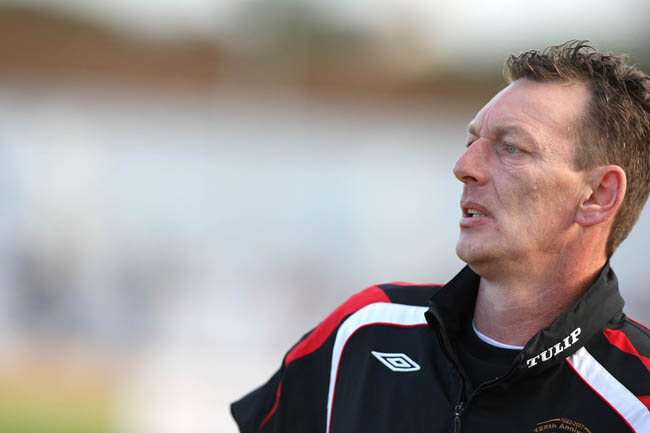
Alan McDonald
Northern Irish association football manager and former footballer
28
APPEARANCES
12
PODCASTS
Nov 9, 2026
Alan McDonaldGUEST
There does seem to be reasonably widespread agreement on on the infrastructure side of things.
Alan McDonaldGUEST
And he's been the one that's kind of reached across the house, if you like, and got that bit of stability and certainty around the infrastructure side of things.

Mike HoskingHOST
Look, I suppose if we're just sort of looking around some of the micro stuff like employment and trade training and skills and so on, how does the result actually map onto what's needed, what you guys are sort of advocating for?

Alan McDonaldGUEST
There does seem to be reasonably widespread agreement on on the infrastructure side of things.
Alan McDonaldGUEST
And he's been the one that's kind of reached across the house, if you like, and got that bit of stability and certainty around the infrastructure side of things.

Garth BrayHOST
Look, I suppose if we're just sort of looking around some of the micro stuff like employment and trade training and skills and so on, how does the result actually map onto what's needed, what you guys are sort of advocating for?

Mike HoskingHOST
Then we sort of bounced back and, and I'm seeing really, despite it all, a picture of some resilience, and that's reflected in this, isn't it?

Alan McDonaldGUEST
Um, those underlying numbers that I think we've both been talking about for a long time, they're, they're becoming more and more visible, and I think that's starting to give the business sector a bit more confidence in the, a longer term recovery.
Alan McDonaldGUEST
Uh, I think we'll get another little bump this afternoon with the inflation rate and a, a bit of a bump to the confidence again with the prices, fuel prices going up again.
Mike HoskingHOST
So whatever we've got has come from other aspects of the economy, and that's a good sign, isn't it?
Alan McDonaldGUEST
Yeah, I think, um, the, the residential construction sector's picking up a bit.
Alan McDonaldGUEST
Not so much the, the, you know, the horiz- the vertical construction and the big infrastructure projects yet.
Mike HoskingHOST
Tell you what I like about this country at the moment is we were going well at the beginning of the year, the war started, we got miserable, then we sort of bounced back, and I'm seeing really, despite it all, a picture of some resilience, and that's reflected in this, isn't it?
Alan McDonaldGUEST
Those underlying numbers that I think we've both been talking about for a long time, they're becoming more and more visible, and I think that's starting to give The business sector, a bit more confidence in a longer-term recovery.
Alan McDonaldGUEST
I think we'll get another little bump this afternoon with the inflation rate and a bit of a bump to the confidence again with the fuel prices going up again.
Alan McDonaldGUEST
think the hiring intentions, despite the investment intentions and the mood of the boardroom, were still fairly flat.
Alan McDonaldGUEST
And I think that's indicative of just the caution around the recovery that still exists.

Mike HoskingHOST
Tell you what I like about this country at the moment is we were going well at the beginning of the year, the war started, we got miserable, then we sort of bounced back, and I'm seeing really, despite it all, a picture of some resilience, and that's reflected in this, isn't it? Yeah,
Alan McDonaldGUEST
Those underlying numbers that I think we've both been talking about for a long time, they're becoming more and more visible, and I think that's starting to give The business sector, a bit more confidence in a longer-term recovery.
Alan McDonaldGUEST
I think we'll get another little bump this afternoon with the inflation rate and a bit of a bump to the confidence again with the fuel prices going up again.
Alan McDonaldGUEST
intentions, despite the investment intentions and the mood of the boardroom, were still fairly flat.
Alan McDonaldGUEST
And I think that's indicative of just the caution around the recovery that still exists.


Alan McDonaldGUEST
you look at what the current government's just done, so new RMA agreed to the Infrastructure Commission's pipeline, new health and safety laws, new employment laws, made significant tweaks and changes to the existing immigration system, are really working hard on the education system.
Alan McDonaldGUEST
So one of the biggest issues for employers is the lack of work readiness in our workplace.
Alan McDonaldGUEST
Now, education reforms, so what they're doing right back at primary school level, that's gonna take five to eight years, sort of minimum, before those primary school kids come into the workplace.
Alan McDonaldGUEST
So if you change the rules next year, if there's a change of government, you haven't really given those reforms time to work.
Alan McDonaldGUEST
If you're making big reforms, it doesn't kind of matter who does it, they need time to work.
Alan McDonaldGUEST
So you look at those sectors that are, are increasing: hospo, tourism, retail, and consumer products.
Alan McDonaldGUEST
That, that kind of kicks off at Labor weekend when we all take a collective breath and go, "Let's hit the beaches again." So that's great.
Alan McDonaldGUEST
The other big soaker, if you like, being construction, which is still wagging.
Mike HoskingHOST
Does it also drive to a degree this continuous migration? Because we will need more people, presumably.
Alan McDonaldGUEST
I think about that back to when the MSP term was kind of new to our industry.
Alan McDonaldGUEST
And many of us got together with our peers to determine the proactive tasks that we had to do to keep companies safe and up and running.
18 MINS LATER
BrianHOST
When you're the one running the MSP, what does empowering defenders with AI really look like? day-to-day and how's that different from what it looks like inside a company that might have a full security team down down the hall yeah man


Ryan BridgeHOST
birth rate stats our natural population that's birth minus death the growth rate the lowest since the 1940s that's when all the men were away fighting a world war so the replacement rate we need 2.1 we are at 1.5 and that's down from 1.7 alan mcdonald ema head of advocacy and strategy joins me this morning alan good morning why is this a problem for i mean not just for the country but for our workforce
Alan McDonaldGUEST
And obviously with that low birth rate, and it's been low, well below 2.1 for quite some time now, 15, 20 years down the track, where are all our workers? We won't need them because of AI, right? No, that's not true.
Alan McDonaldGUEST
If you go back to the steam engine and the Luddites, you know, who broke up machinery because they feared they would lose jobs.
Ryan BridgeHOST
Why is this a problem for, I mean, not just for the country, but for our workforce?
Alan McDonaldGUEST
And obviously with that low birth rate, and it's been low, well below 2.1 for quite some time now, 15, 20 years down the track, where are all our workers? We won't need them because of AI, right? No, that's not true.
Alan McDonaldGUEST
If you go back to the steam engine and the Luddites, you know, who broke up machinery because they feared they would lose jobs.

Andrew MorganHOST
One, can you talk about the importance of the PLCs and this focus of OT that you and the company focus on? um and you know with water being obviously one of the most critical of our critical infrastructure what you're thinking and how you're working with your customers right now yeah it's just
Alan McDonaldGUEST
the isolation of these networks is just so important and you know i think what what happens in every organization um definitely included and that is water and energy and others is the demand or the drive to provide remote access to critical employees and engineers that need to maintain and update that infrastructure.
Alan McDonaldGUEST
And as you have that drive to introduce remote operability, with that comes risk.
Alan McDonaldGUEST
And so how you develop the access control to such an important environment is absolutely crucial.
Alan McDonaldGUEST
And depending on the sophistication at some of these organizations, you can have gaps.
Alan McDonaldGUEST
So it's, you know, as I read through that article, too, in the Hacker News and the Associated FBI InfraGard articles, a lot of it comes back down to that.
Andrew MorganHOST
And, you know, this is not a good thing if you have a threat actor all of a sudden now, you know, saying, well, let's up that lye a little bit, right, into the water supplies.
Mike HoskingHOST
We've got to be close to a tipping point where the jobs actually soak up the demand.
Alan McDonaldGUEST
Yeah, I think there were a couple of other little encouraging indicators in there too.
Alan McDonaldGUEST
The number of new jobs created was 13,000 and we saw a slight dip in the NEETs, that's those 18 to 24 year olds not in employment or education.

speaker_0ANNOUNCER
... and it just stays
Alan McDonaldGUEST
the Polish, cops where you are, but the Polish kept taking it down or the authorities kept taking it down.

Alan McDonaldGUEST
there.We, we met a couple this morning in the hotel just getting off the lift and they said, "Ah, we've been to Scotland, it's lovely.

Mike HoskingHOST
Stability and certainty, you don't really have that, do you? Infrastructure and consenting, you'd be happy with that? Happy-ish with that?
Alan McDonaldGUEST
And I think both of the major parties are pretty agreed on the spatial planning piece of it.
Alan McDonaldGUEST
There's some noise around the environmental side and a couple of other bits and pieces.
Alan McDonaldGUEST
Everything I've heard from the Labour guys that I've talked to says they're OK with that.
Mike HoskingHOST
and and this in calling for what you want great idea nothing wrong with it until you get a centrist type government and a left-leaning version of the labour party as long as you've got that you've got trouble haven't you
Mike HoskingHOST
Oh, Alan, the renewables, the solar panels, the w- the, the turbines are spinning, the investment is all there, they tell us.
Alan McDonaldGUEST
Yeah, there's plenty of those, but we, y- you also need some thermal backup for that, and you also need to be able to get the energy from where it's generated to where it's needed.
Alan McDonaldGUEST
And there's some regulatory handbrakes in the way of that that make it difficult.
Alan McDonaldGUEST
Um, for example, you can't build ahead of the generation being built, which seems a bit counterintuitive.
Alan McDonaldGUEST
Look, I think as, if we can agree on the, the major guardrails, the major settings, if you like, y- you'll always get some noise around the edges.

Ryan BridgeHOST
So is this a, is this a confidence not matching reality story here, happening here?
Alan McDonaldGUEST
No, I do, I do think there's a bit of that because the, the underlying stuff that, um, underpinned those GDP numbers that, um, we saw last week with growth coming into particularly the export sector, and not just the primary part of the export sector, but all of it, um, those factors are still in play.
Alan McDonaldGUEST
But what you've seen is just a reflection of the, first of all, that international volatility, and probably a little bit of the domestic stuff as well, uh, which you always get in an election year.
Alan McDonaldGUEST
But also that impact on prices in the back pocket, uh, whether that's at the fuel pump or, uh, in the supermarkets and elsewhere.
Alan McDonaldGUEST
So I th- I think you just, it's just how, how brittle and how easy it is to break that confidence at the moment with just one bit of bad news.
Mike HoskingHOST
If you did a snapshot right here, right now, this morning, with some sun on the horizon, possibly a deal, oil going down, would it be materially different, or are we just in a funk?
Alan McDonaldGUEST
Well, it was up to the June quarter, but I, I do think, uh, what it shows is just how brittle confidence is, and this is household confidence, too, that we're talking about.
Alan McDonaldGUEST
It doesn't seem that long ago that we were talking about confidence on the way up.
Alan McDonaldGUEST
Well, I think it's, it's kind of been one battle after another, so it, it really [laughs] doesn't take much for the, the worldview to change or the New Zealand view to change.
Alan McDonaldGUEST
But then the underlying factors that, that underpin those, uh, GDP numbers back, uh, for the March quarter, which were strongly positive, they're all still there.
Alan McDonaldGUEST
But we've got this, um, this constant buffeting of, of world events and it, and it's just knocking people around.

Andrew DickensHOST
But the Employers and Manufacturers Association say it's no time right now to celebrate.
Alan McDonaldGUEST
The manufacturing index had seven months of positive, which sort of came to an end around May.

Alan McDonaldGUEST
Those underlying good factors that were evident in those numbers there at 0.8, they're still there, but some of the intentions to hire, invest, all that kind of thing, understandably, it's gone on hold.
1:48
What are employers out there in sectors like construction telling you guys? Still tough?

Alan McDonaldGUEST
And I think that's something that gets confused in all the red tape and stuff, is that the reporting is a good barometer and a... sometimes a predictor of a larger problem.
Alan McDonaldGUEST
So 65% of claims under ACC are for those smaller businesses, fewer than 20 employees.

Kevin ChambersHOST
Do we have a sense of whether that minister will, again, we don't know who it is, but do we have a sense that they would continue in the same direction or is there a chance that things could change?


Alan McDonaldGUEST
Yes, that's the best way to dismiss someone if they're in a high position like that because if you give a reason and the reason turns out to be an unlawful reason, then you're in trouble.
Alan McDonaldGUEST
But if you give no reason and, and Paul's saying, "Well, I'm qui-- I'm worried about what is the reason," well, if they're, if somebody's foolish enough to give a reason which is unlawful, then, uh, he's got a claim.
Alan McDonaldGUEST
But if no one gives a reason or they simply say, "Oh, well, he wasn't a good fit," which it seems to be what they're saying, then there's, uh, you know, mu- not much chance of him being able to claim it was unlawful or, uh, wrongful or something like that.

Russel HowcroftHOST
Does, does something like this have to be unanimous or, or is there a notion of, you know, the heavier weight of, you know, certain individuals?
Alan McDonaldGUEST
Now, what would normally happen is one or two people on that board would say, "We want to get rid of Paul." They'd, uh, go and get some HR advice.
Alan McDonaldGUEST
Yes, that's the best way to dismiss someone if they're in a high position like that.
Alan McDonaldGUEST
Because if you give a reason, and the reason turns out to be an unlawful reason, then you're in trouble.
Alan McDonaldGUEST
But if you give no reason and, and Paul's saying, "Well, I'm que- I'm worried about what is the reason?" Well, if they're, if somebody's foolish enough to give a reason which is unlawful, then, uh, he's got a claim.
Alan McDonaldGUEST
But if no one gives a reason or they simply say, "Oh, well, he wasn't a good fit," which it seems to be what they're saying, then there's, uh, you know, m- not much chance of him being able to claim it was unlawful or, uh, wrongful or something like that.
Russel HowcroftHOST
So does a board actually have, does, does something like this have to be unanimous or, or is there a notion of, you know, the heavier weight of, you know, certain individuals?
Alan McDonaldGUEST
Now, what would normally happen is one or two people on that board would say, "We wanna get rid of Paul." They'd, uh, go and get some HR advice.
Alan McDonaldGUEST
Well, I've only seen the press release, like you, and they cite inputs as one of the big causes of them making this very tough decision, which is very hard for those 350-odd people, first of all.
Alan McDonaldGUEST
And, you know, those inputs in that manufacturing, that'll be getting their raw materials delivered.
Alan McDonaldGUEST
And frozen foods, you need a lot of electricity and energy to first chill them and then store them.

Alan McDonaldGUEST
Well, I've only seen the press release, like you, and they cite inputs as one of the big causes of them making this very tough decision, which is very hard for those 350-odd people, first of all.
Alan McDonaldGUEST
And, you know, those inputs in that manufacturing, they'll be getting their raw materials, they'll be paying for their energy, and frozen foods, you need a lot of electricity and energy to first chill them and then store them.
Alan McDonaldGUEST
So it'll be some combination of maybe all of those or some of those that's led to them making this very tough decision.
Scroll for more appearances