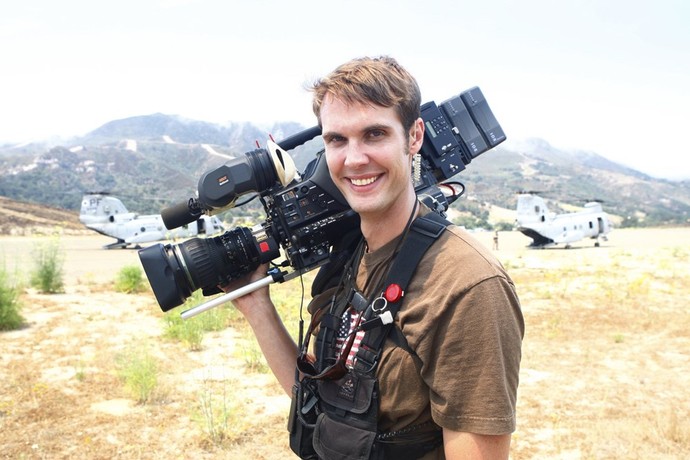
Alan Carter
American television director
12
APPEARANCES
6
PODCASTS
Oct 14, 2026

Paul HarrisHOST
As you get into commercial production, what does that do for your cashflow forecast vis-à-vis, um, the, the, what was stated in the economic study, which obviously at a, a much lower gold price than we're experiencing today?

Alan CarterGUEST
Well, um, obviously the, the cashflow is gonna be significantly higher than, than, uh, than, than, uh, the model from the PFS study.
Alan CarterGUEST
Well, that was done in July 2025, and the model that was done in July '25 as part of the Ausenco study assumed a gold price of $2,500 an ounce.
6 MINS LATER
Paul HarrisHOST
What comes next for the company beyond the phase one expansion, beyond the phase two expansion, the hard rock?


Michael McCraeHOST
What is the Tapajós Gold province in Brazil? Who's there, and how does Cabral fit in?
Alan CarterGUEST
Well, the Tapajós Gold province in northern Brazil, Michael, is the site of the world's largest ever gold rush anywhere, um, on this planet.
Alan CarterGUEST
So back in the 1980s, there were about a million people that rushed into this, uh, part of Brazil.
11 MINS LATER
Michael McCraeHOST
How are you looking right now in terms of, uh, fitting that in, uh, within, uh, your broader plans for expansion?

Alan CarterGUEST
I mean, a- as you know, our, uh, this mine that we built is a heap leach mine, so the all-in sustaining cost is expected to be around $1,200 an ounce-
Alan CarterGUEST
So I, I'm quite optimistic that several of those will grow into, into additional deposits as we do more drilling.
Matthew GordonHOST
But will those be against kind of sticking with the oxides for now, or will some of that work be about phase two hard rock opportunities further down the line? Well,
Alan CarterGUEST
this year, it's all about, the phase one however as you know we've got a big catalyst coming up here what we hope will be a potential catalyst and that is a a complete update on all of on the resource base for all the gold deposits in this district as you know matt we now have six gold deposits defined at Last time we did a global resource update here was four years ago, back in September 2022.
Alan CarterGUEST
So if there's significant growth in the resource space, and we certainly hope there will be, that will then... allow us to start thinking a lot harder about this phase two we already are thinking pretty hard about phase two but actually formalizing and launching a pa to start with on the much bigger price here which as you say is that is the phase two which is the hard rock material uh underneath the the the oxide material that we're currently mining and and the current resource back from 2022 that resource is 75% of the gold is in the hard rock.
87:40

Qu'est-ce que vous en pensez? J'imagine, est-ce que vous avez déjà testé ça à l'École de technologie supérieure?
Alan CarterGUEST
Il faut comprendre, en fait, ce qu'ils ont essayé, c'est d'utiliser des matériaux qui se comportent différemment au niveau isolation.
Alan CarterGUEST
Oui, parce que ce qu'on a besoin, c'est d'isoler la partie en dessous, le substrat où la chaussée est construite.
Alan CarterGUEST
Donc, si on les protège du gel, il n'y aura plus de montée et de descente de la chaussée avec le gel des gels.
89:06
d'affaire, en théorie, sur papier, ça a l'air bien beau, mais en pratique, il y a des risques.

1:17
Qu'est-ce que vous en pensez? J'imagine, est-ce que vous avez déjà testé ça à l'École de technologie supérieure?
Alan CarterGUEST
Il faut comprendre, en fait, ce qu'ils ont essayé, c'est d'utiliser des matériaux qui se comportent différemment au niveau isolation.
Alan CarterGUEST
Parce que ce qu'on a besoin, c'est d'isoler la partie en dessous, le substrat où la chaussée est construite.
2:42
d'affaire, en théorie, sur papier, ça a l'air bien beau, mais en pratique, il y a des risques.
Matthew GordonHOST
But ultimately, what's the plan? What's the timing on getting after the district and how you approach that? When do we get to understand your model? Good question.
Alan CarterGUEST
We've got six known gold deposits here, five of which we know have got weather caps to them, oxide caps.
Matthew GordonHOST
And how you doing on money in term- in terms of overalls, et cetera? I mean, where, is that all on, uh, where as expected, shall we say?
Alan CarterGUEST
We're still largely on budget in terms of the original, original scope of the PFS.
Alan CarterGUEST
Uh, we have identified some opportunities to upsize, uh, this initial phase one operation, uh, and we'll be giving some guidance on, on that, uh, in the future weeks and months.
Alan CarterGUEST
So, um, you know, as you, as you build things, you think, "Well, hey, th- this is low-hanging fruit.
Alan CarterGUEST
You know, this could potentially lead to, um, upsizing the production by X% if we do this now." So, uh, we've done some of that work, and as I said, uh, we'll give some guidance to the market on, on, on, on that in the coming weeks.
Alan CarterGUEST
Having such a massive mine being built very close to our project has definitely been beneficial, I think.
Alan CarterGUEST
The amount of revenue that's generating has not gone unnoticed amongst the provincial and federal authorities.
25 MINS LATER
Matthew GordonHOST
In terms of the types of conversations that you had around access to capital, the cost of that capital, the type of profile of that capital, can you talk about how those funders viewed the Brazil discount?
Matthew GordonHOST
And with regards to that kind of phase one, how much inventory do you, in terms of the run of mine, how much inventory do you intend to build up, either pre-commissioning or post-commissioning?
Alan CarterGUEST
So, you know, it's not like we've got a truck that's two or five kilometres or 10 kilometres or 20 kilometres.
Matthew GordonHOST
Can you talk about where you are in terms of costs or cost overruns? And then what's your intention with regards to repaying that gold loan before you move into phase


Ellie LeightonHOST
So, Alan, going back to your farm, talking the day-to-day reality, what does it look like? And can you describe the emotional and practical weight of living with TB controls?
Alan CarterGUEST
We had our first sort of major problem in 2008 and that was a jersey actually which was the first jersey I bought to start my herd which was an 11th birthday present so sort of the foundation cow.
Alan CarterGUEST
That was very difficult and it's something that I'm aware of when I'm writing in the Farmer's Guardian about TB that possibly I can come across perhaps a bit sort of um hardened to it a bit sort of blasé about it but i think we have become like that because i think if we was having this conversation 15 years ago i would probably be very different but because i think we've lost 150 animals in the past sort of uh past sort of 10 years most of them really good animals not through our own choice and we have become so used to it now you know when we have TB testers come in and we have a reactor they're very sympathetic very thoughtful towards us and we're possibly a bit like well Now, this is something that we sort of expected to happen.
Alan CarterGUEST
It's something that we have got so used to now that we try not to let it affect us too much, because I think after nearly 20 years of doing it, um it can be a real struggle if we just don't we always have to shut ourselves off to it a little bit and we have to accept that there will be animals every year that we will end up sending up the road that we didn't want to so It's very affecting.
Alan CarterGUEST
I would love to be able to exhibit at this show, especially I've got children of my own, for them to have the opportunities that I had.
12 MINS LATER


OwenHOST
So between, between Texas, and California, and- and Nebraska, um, how- how did you get into boating in, to begin?
Alan CarterGUEST
Uh, well, growing up i- in, uh, Elkhorn, it's right next to Waco, so, uh, Lake Waco was, uh, my second home.
Alan CarterGUEST
And although my mom was not wealthy enough to own any kind of boat, we never owned anything, but I'm skiing behind all ...
Alan CarterGUEST
So, [laughs] so, uh, always out on the boat, skiing and just racing it, and doing stupid things that you do when you're a teenager.
7 MINS LATER
OwenHOST
... into contact with them?