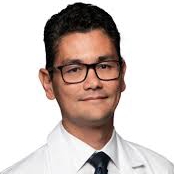
Alan Bryce
Alan H. Bryce, M.D., is Chief Clinical Officer at City of Hope Cancer Center Phoenix and professor of molecular medicine at TGen, specializing in genitourinary oncology, especially prostate and testicular cancers.
7
APPEARANCES
5
PODCASTS
Oct 27, 2026


Alan BryceGUEST
wife, I said, okay, I think I'm going to reach out to my friends and then see, you know, if there are jobs available.
Alan BryceGUEST
And before I've done anything, you know, we wake up in the morning, I check my email and an email from Mayo, Arizona, colleagues there saying, Alan, we have an opening for a GU oncologist.
5 MINS LATER

Tracy ThomasHOST
So I guess on those lines, Dr. Bryce, can you share a little bit with us how you thought about, or city of hope has thought about bringing in talent to the hospital, how you thought about recruiting, how you thought about training, how you've gotten to where you are now staffing up this, these Arizona, Arizona presence.
Alan BryceGUEST
You know, 1% market share in terms of the number of new cancer diagnoses in Phoenix in a given year.
Alan BryceGUEST
You know, this last year, about 8% of all new cancer diagnoses in Phoenix, the patients came and saw us at City of Hope, right? So that's over the course of three years.
20 MINS LATER
Tracy ThomasHOST
Would you tell us a little bit about that and that community that it's serving up there?

Alan BryceGUEST
So, so PRESTO, th- this, uh, study designed and led by our colleagues at UCSF, uh, Rahul Aggarwal and team.
Alan BryceGUEST
So again, in the biochemically recurrent space, but a, a, a very different design.
9 MINS LATER

Neil LoveHOST
[clears throat] Again, Dr. Fazazi, uh, presented this at the ESMO meeting, really a ground baking-- breaking trial.

Alan BryceGUEST
Yeah, so PRESTO, this is a study designed and led by our colleagues at UCSF, Rahul Agarwal and team.
Alan BryceGUEST
um and i'll get into some of that so again high risk biochemically relapsed defined by doubling time defined by no metastases on conventional imaging okay a patient has to have normal testosterone here the primary endpoint is psa progression free survival not metastasis free survival okay so again a very different endpoint you can't compare these studies um The three arms also are different.
8 MINS LATER
Neil LoveHOST
And again, Dr. Fazazi presented this at the ESMO meeting, really a groundbreaking trial.

Alan BryceGUEST
Yeah, so PRESTO, this is a study designed and led by our colleagues at UCSF, Rahul Agarwal and team.
Alan BryceGUEST
um and i'll get into some of that so again high risk biochemically relapsed defined by doubling time defined by no metastases on conventional imaging okay a patient has to have normal testosterone here the primary endpoint is psa progression free survival not metastasis free survival okay so again a very different endpoint you can't compare these studies um The three arms also are different.
8 MINS LATER
Neil LoveHOST
And again, Dr. Fazazi presented this at the ESMO meeting, really a groundbreaking trial.

Monty PalHOST
But, you know, certainly this is probably going to add some fuel to that fire, right? So what do you think it means for that decision initially between radiation and surgery?
Alan BryceGUEST
So the MED-ONC's role often ends up being as the neutral arbiter, right? The patient meets with RAD-ONC, the patient meets with urology, the patient says, I don't know what I want to do.
Alan BryceGUEST
Um, so, you know, we talked through the different side effect profiles of the options, right? With radiation, you know, less risk of impact on erectile function, less risk of impact on urinary function.
Alan BryceGUEST
Um, with surgery, you know, the idea has always been, well, you generally aren't going to do ADT, although these results would now say you probably would.
11 MINS LATER
Alan BryceGUEST
My father would always remind me, he said I was maybe 14 when I told him I was going to be a medical oncologist.
Alan BryceGUEST
And honestly reflecting, I don't know why exactly we don't have any doctors in the family.
Alan BryceGUEST
It's not that there was a lot of cancer history per se, but I think it was a time when I thought I wanted to be a doctor, but I looked at the science.
Alan BryceGUEST
I realized cancers were so much of where we're struggling, right? We're looking for cures.
12 MINS LATER