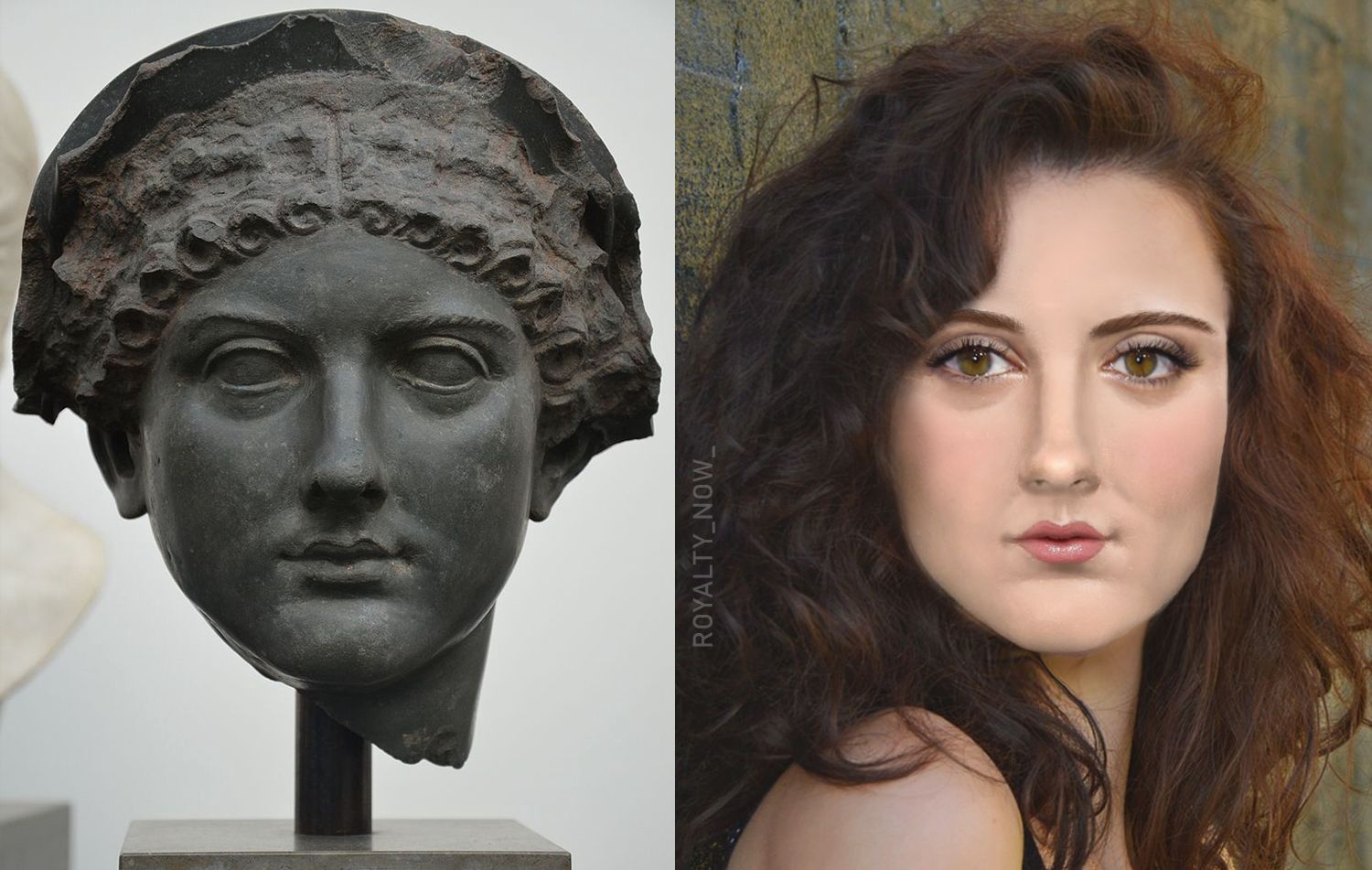
Agrippina the Younger
Former Roman EmpressWikipedia
112
MENTIONS
22
EPISODES
18
PODCASTS
Search complete. 112 mentions across 22 episodes found for "Agrippina the Younger".
Nov 3, 2026

speaker_2HOST
By then, he was a mature man, of delicate health since his youth, and famous throughout Rome for his eloquence.
speaker_2HOST
The person who brought him back was Agrippina, the new wife of the Emperor Claudius.
speaker_2HOST
Agrippina was an intelligent woman, ambitious and utterly without scruples.
speaker_2HOST
She had a son of about twelve, Lucius Domitius, and a plan.
speaker_2HOST
to make him emperor.
speaker_2HOST
Seneca didn't enter that family out of ambition.
speaker_2HOST
He entered it, in large part, out of gratitude.
speaker_2HOST
He owed his return to Agrippina.

John BatchelorHOST
Certainly the Roman Empire is filled with betrayal.
John BatchelorHOST
We could tell a couple of whoppers, but all I have to do is mention Agrippina the Minor and everybody gets it.
John BatchelorHOST
Yeah, yeah, exactly.
John BatchelorHOST
She not only poisoned the emperor, She was murdered by an emperor.

Erick HaydenHOST
And I, Claudia, said Derek Jacoby, and, I mean, Brian Blessed was in that.
Erick HaydenHOST
I forget, I forget Agrippina or whatever, but John Hurt was, like, it's so fabulous.
Erick HaydenHOST
This will make you sick how good this is.
Erick HaydenHOST
So if you haven't seen it, I guess Charlie is suggesting you do.

Kate J. ArmstrongGUEST
There were some really, really powerful freedmen, they were called, who ended up having really high positions of power and a lot of money.
Kate J. ArmstrongGUEST
And so like Agrippina, who's another woman who I'm fascinated by from later in Roman history, was very good at cultivating those kinds of relationships.
Kate J. ArmstrongGUEST
So I think remembering that relationships matter, understanding the power of getting the right collection of people in a room and getting them talking, being able to kind of bring people around to your side or at least get them to see your side.
Kate J. ArmstrongGUEST
I also think there's something to be said for not having to act like a man or emulate a man in order to get ahead.
Kate J. ArmstrongGUEST
It's like I don't think it was an easy time to be a woman, either highborn or low.
Kate J. ArmstrongGUEST
And I think it must have been very frustrating for women who knew their own minds and were smart and ambitious and just wanted to do their own thing because they always had to find their power, typically through a man.
Kate J. ArmstrongGUEST
And we see that in women like Agrippina, who ends up, you know, marrying her uncle, which is a whole other thing, marrying her uncle in order to become the empress and then wielding power through her son, the famously terrible Nero.
Kate J. ArmstrongGUEST
But she, you know, I think she probably would have been an incredible leader in her own right.

GiaGUEST
This goes back to Roman times.
GiaGUEST
Emperor Claudius, to secure the succession of her son Nero, it is said that one of Claudius' wives, Agrippina, said, was a murderess, which is very interesting.
GiaGUEST
So, it is said that she gave him a drink with death caps somehow, and that that's what killed him.
GiaGUEST
Now, there's been some doubt casts here, because Claudius wasn't exactly a healthy guy.

Felipe VogelNARRATOR
In 49, however, Fortune, whom Seneca as a Stoic so often ridicules, came to his rescue.
Felipe VogelNARRATOR
Agrippina had him recalled and appointed tutor to her son, later to become the emperor Nero.
Felipe VogelNARRATOR
Holding the usual offices of state, and growing in prominence, Seneca administered the affairs of the prince, in partnership with Burrus, the praetorian.
Felipe VogelNARRATOR
Together they maintained the balance of power between throne and senate, until the death of Burrus in the year 62.

Steven SaterGUEST
So we really know the heartbeat of the show, But there really is tinkering.
Steven SaterGUEST
I mean, Lindsay called me last night and said, you know, she says this twice, Sally's character Agrippina, about her uncle.
Steven SaterGUEST
And we don't need it really twice.
Steven SaterGUEST
And it was like, okay, you're right.
Steven SaterGUEST
The adjective is true, yeah.
Mickey JoHOST
But it's also because I write so many young roles.
Mickey JoHOST
I was gonna say, this is the great thing as well, is it's not only writing young roles, but it's really giving agency to those characters.
Mickey JoHOST
That's

Kara ShallenbergNARRATOR
And although in chains, he looked so proud and noble that many even of the Romans were sorry for him.
Kara ShallenbergNARRATOR
When he was brought before the emperor and empress, Claudius and Agrippina, he did not behave like a slave or a captive, but like the freeborn king and Briton he was.
Kara ShallenbergNARRATOR
I am as nobly born as you, he said proudly to Claudius.
Kara ShallenbergNARRATOR
I had men and horses, lands and great riches.
speaker_0HOST
The story, moreover, has an ending that almost seems written on purpose as a lesson.
speaker_0HOST
In the year 49, Claudius married Agrippina and, according to Tacitus, it was she who had Seneca recalled from exile to make him tutor to her son, a young lad called Nero.
speaker_0HOST
Seneca got back Rome, power, his audience, his wealth, everything he had missed on the island, and he discovered what it costs.
speaker_0HOST
He spent years at an increasingly dangerous court beside a pupil who ended up as one of the most feared emperors in history.

Jen McMenemyHOST
I absolutely also said this about Virgil.
Jen McMenemyHOST
I said this about Agrippina the Younger, like everybody.
Jenny WilliamsonHOST
It's not unusual.
Jen McMenemyHOST
No, but I did really feel this in my heart.
12 more episodes mention Agrippina the Younger.
Create an account to see the whole feed, search across every transcript, and follow the entities you care about.