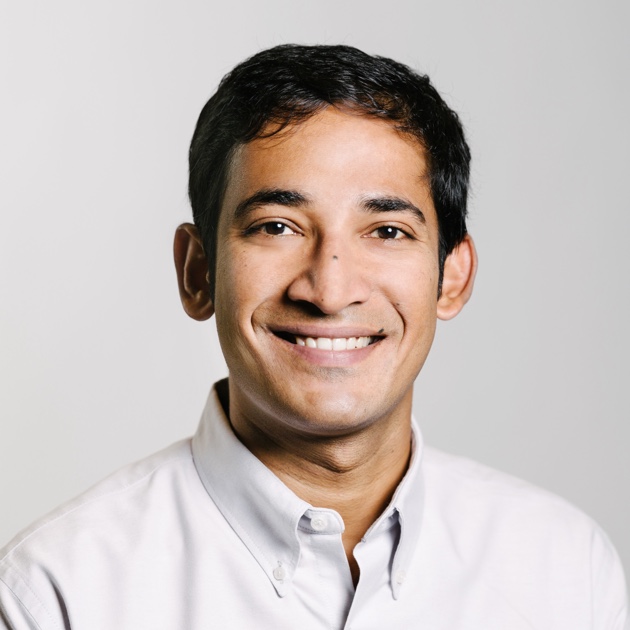
Aditya Agarwal
Indian-American engineer and investor
9
APPEARANCES
8
PODCASTS
Oct 16, 2026


Aditya AgarwalGUEST
I remember this was maybe about three or four months into joining Mark and the Facebook team, that Mark came up to me and he was just like, "Yo, dude, you have to write a search engine for Facebook." And then my first thought is like, "I have zero idea about how to write a search engine, and why don't we go hire somebody from Google or Yahoo? They know how to make search engines, so they should come and make search engines." And I remember very clearly Mark is like, "Yeah, we could, or you could just write it.
Aditya AgarwalGUEST
And guess what? I didn't know how to write Facebook until I built Facebook." Hi, everyone.
Aditya AgarwalGUEST
I was the CTO at Dropbox after that, and now I am a general partner at South Park Commons.


Derek AndersenHOST
Where do you stand on that? Or do you feel like we are better off slowing down the rate of change, or do we continue on with the way we've been going the last few years?
Aditya AgarwalGUEST
First one is I, I strongly ag- kind of agree with, um, the stuff that was unveiled at the White Hou- uh, White House last week, and Jensen also talked about this, that it-- as, as did Zuck.
Aditya AgarwalGUEST
These are engineering problems, right? Like, I think that each lab has a moral responsibility to make sure that it tests its systems in isolation.
Aditya AgarwalGUEST
I think it's kinda weak sauce to kinda be like, "Oh, my agent escaped, and it basically did a bunch of bad stuff." I'm like, "Well, have better engineering," right? Like, figure out how to, like, have better sandboxing.
Aditya AgarwalGUEST
Um, so I think that it is incumbent on each of these major, um- Uh, model labs and kind of like people are building these core infrastructure pieces to kinda make sure that the systems are safe.


Keith AdamsHOST
And I'm not sure exactly when I realized like, I guess, when did you realize you were going to spend a meaningful chunk of your waking life on this? When did you realize this was really going to be one of the things that defined your adulthood?
Aditya AgarwalGUEST
If I'm being super honest, obviously I learned how to program And then, you know, we were in Indonesia.
Aditya AgarwalGUEST
From there, it felt almost without a ton of thought, honestly, kind of to be like, oh, I want to go to school to study computer science.
37 MINS LATER


Samir KajiHOST
What made it so compelling to you to leave Oracle and this great person that you were working with to join-- Like, tell us that first interview with Mark.
Aditya AgarwalGUEST
I tell people that if you met Mark in two thousand and five, he was nineteen years old.
Aditya AgarwalGUEST
The first one is just his sheer intensity, his desire to build something that he can be proud of and something that will, like, fundamentally change the arc of humanity.
6 MINS LATER
Samir KajiHOST
Are there certain things that you picked up, and recognizing Mark is the e- one of the N of one people, of things that still inform you in what you look for founders or things that you had to discard because it was too unrealistic to expect people to be like Mark Zuckerberg?

Aditya AgarwalGUEST
mean?What that really means is that, you know, when you, when you kinda leave a big tech job or you kinda leave academia, uh, it's super tempting to go and just work on the first thing that comes to your mind.
Aditya AgarwalGUEST
You know, I st- you know, I started SPC because when I, when I left Dropbox, I was the CTO there, I was pretty lucky to have a number of amazing options.
Aditya AgarwalGUEST
You know, go join a blue-chip venture firm, go start another company, uh, go join as an exec.
Aditya AgarwalGUEST
But Si- Silicon Valley is so good at kinda giving you kind of the, the, the, the pattern match to, like, what you should do.
Ed LudlowHOST
Take this fund and apply it to how you'd now approach Cognition and continue backing them.


Jordi HaysHOST
Um, but what is it, what is it, like, what are you telling teams that have maybe raised a seed round, and they're going out for their A? What are you-- what kind of expectations are you setting with them if, uh, if they're just not an obvious, you know, hundred million dollar check from a, from a platform fund?
Aditya AgarwalGUEST
I mean, listen, I think that you can either be what we, we talk a lot about, you're either in show mode or tell mode, right? Like, if you're kind of just kind of laying down the metrics, laying down the traction, laying down the momentum, I think the big thing that you have to show right now is a certain degree of absolute numbers.
Aditya AgarwalGUEST
Uh, but I think that ultimately, if you're trying to raise a hot round for the Series A, you're just judged by growth rate, right? Like, that is the actual only important thing that matters, right? Like, have you doubled, tripled revenue in six months, right? It might be a small base, but are you kind of like demonstrating insane pull from the market? And, you know, if you're judged by AI standards, right, like everything grows a lot quicker today, right? Like, this is kind of the beauty of kind of being in like a super cycle.
Aditya AgarwalGUEST
Um, so you can't actually hide behind the fact that like, "Oh, this is a tougher sales cycle.
Aditya AgarwalGUEST
It takes a little bit longer." No, everybody's buying the shit that like, you know, is actually going to make them more productive at doing it.
Jordi HaysHOST
We've seen, we've seen-- we've had healthcare, uh, companies on the show that are growing like a best-in-class PLG company from like five years ago.


Jason CalacanisHOST
Aditya, what are you seeing in terms of how founders are using this technology to maybe, um, push off hiring somebody, or maybe even, uh, you know, two or three founders who are not developers or not great developers being able to get product market fit with a two or three-person team and less than 100K?
Aditya AgarwalGUEST
Um, you know, at, at South Park Commons, at least, we prefer to invest in highly technical founders.
Aditya AgarwalGUEST
Um, so my preference is to actually, uh, invest in companies, uh, where it's not easy, uh, to wipe code or kind of like to use these AI agents to kind of build version zero of what you have, right? Um, I think that the most interesting companies today are the ones where code is a immense accelerant, but in some ways is not the only limiting factor, right? Like, so you have to have some other core insight.
7 MINS LATER
Jason CalacanisHOST
Uh, and what they should know when they're working on their side hustle [laughs] and on their corporate laptop maybe.


Akash PasrichaHOST
What was it like for you to see these agents and these vibe coding tools do it for you?
Aditya AgarwalGUEST
I think it was, it's actually just a profound wonder to kind of start, you know, because I think that, you know, ChatGPT came out roughly about three and a half years ago.
Aditya AgarwalGUEST
And I think in that time period, every time I tried it out, you know, I could use it and I, you know, I would have this mental kind of reaction like, oh, this is cool.
Aditya AgarwalGUEST
It can do all the simple stuff, but it can't really make all of the things that I'm good at making, you know, the kind of the complex interplay of data and compute and, and storing data correctly, making it efficient.
Aditya AgarwalGUEST
And to go from that sense of the AI is a good junior programmer slash a good intern kind of programmer or somebody that can assist me, to now being able to one-shot end-to-end produce things of high complexity, it was just a sense of profound wonder that it could actually happen.
Aditya AgarwalGUEST
And once that happens, the second reaction that I had was actually a sense of grief, which is that this thing that I was world-class at, this thing that I took a lot of pride in essentially being a part of my identity, even though I'm an investor today, I don't write code.
Akash PasrichaHOST
But for me, it's just learning a new skill that you have to, even if you're 60 years old, I mean, you have to do it now.
speaker_35UNKNOWN
Mm-hmm.
Aditya AgarwalGUEST
We frame ourselves essentially as like an exploration society, kind of the Royal Exploration Society in the 1800s in the UK, with the idea being that like being a founder is kind of being like an explorer in the early days, right? You're trying to navigate the IDMAs, uh, you should be able to like, you know, throw away like the bad ideas in pursuit of the great ones.
Aditya AgarwalGUEST
Um, and then over time, what we realized is that this is actually an interesting model for early stage kind of like company exploration, right? So we would basically provide a place where people would come in and essentially it was very hard to get in, right? It's, you know, we do maintain super rigorous standards for essentially getting in.
Aditya AgarwalGUEST
So for instance, this people, this year, 20,000 people plus will apply, uh, to be part of SPC, uh, across 250 spots across SF, New York and Bangalore.
Aditya AgarwalGUEST
Um, so it's very rigorous to get in, but once people essentially got in, we would kind of like have like a very vibrant intellectual environment where we would invite like really interesting people at the frontier of their fields.
Aditya AgarwalGUEST
Uh, you know, so for instance, I remember back in 2016 and 2017, a young Vitalik would be like walking through kind of like SPC, just talking to people about some of his ideas around distributive systems.
speaker_37UNKNOWN
Yeah.