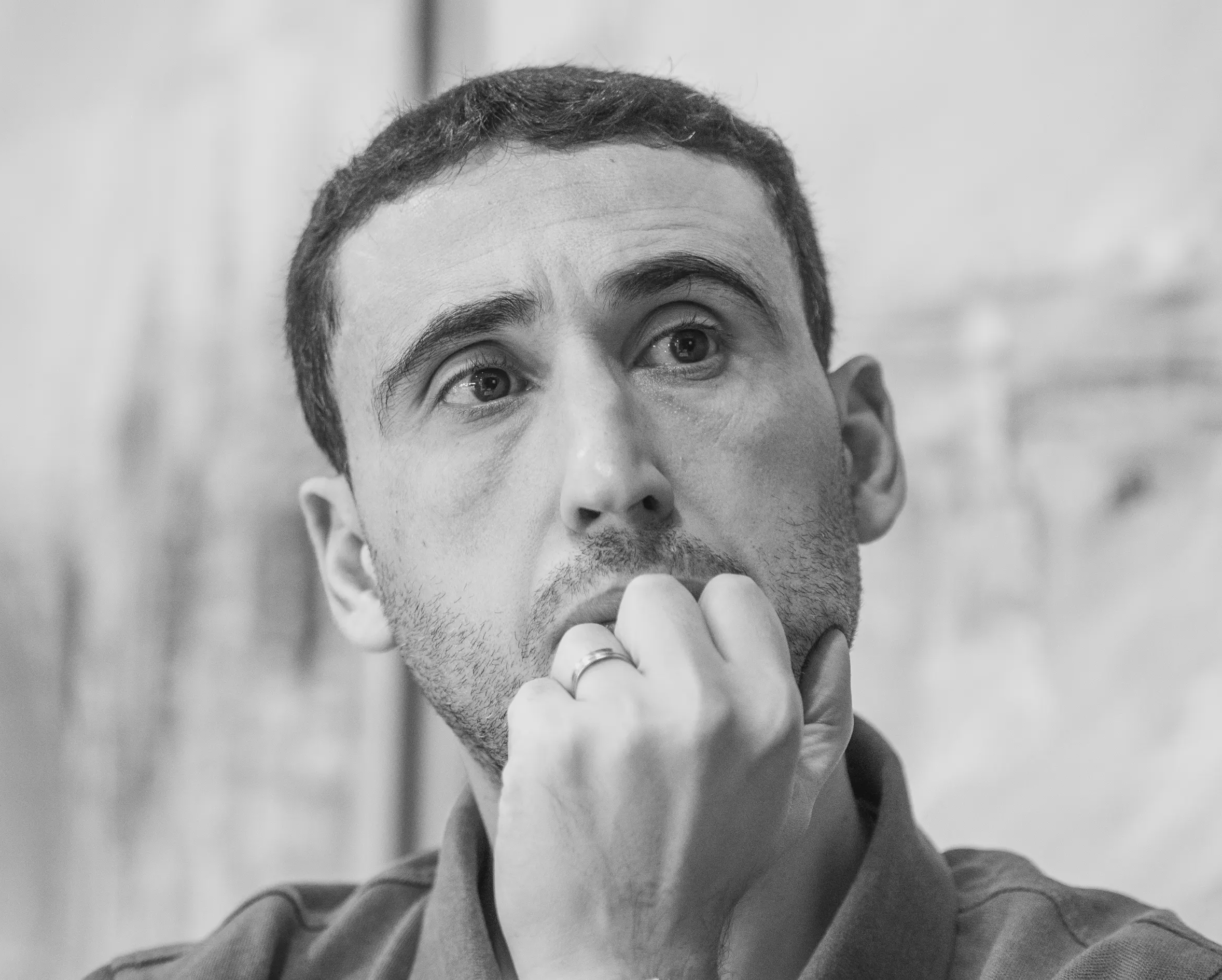
Abi Bae
Korean researcher and activist; Palestine solidarity co-coordinator at the Transnational Institute and co-editor (with Hamza Hamouchene) of "Towards Palestinian Liberation" (Daraja Press, 2026).
3
APPEARANCES
3
PODCASTS
Sep 29, 2026


Abi BaeGUEST
Firstly, thank you Yara, and thank you Al-Shabaka, the Rethinking Palestine team, for inviting us to the podcast to talk about the book, to talk about this collection.
Abi BaeGUEST
Maybe before I answer your question directly, just to kind of comment on some of the things that Hamza also shared.
Abi BaeGUEST
As Hamza highlighted, this project came out of the genocide during the early months, where not only were there misconceptions about the Palestinian struggle as a liberation struggle, but we were also witnessing the genocide live stream, while also witnessing quite clearly a coordinated campaign of Western and global media outlets and governments to isolate Palestine from their own history and from the rest of the world to justify Israel's genocide and settler colonial expansion.
Abi BaeGUEST
As this was happening, we also saw the world respond, and very much from the Global South, refusing this complicity, refusing justifications for genocide, as literally millions of people took to the streets globally across the Global North and the Global South, and governments were pressured to take some sort of action, most notably with South Africa's case against Israel in the International Court of Justice.
Abi BaeGUEST
And looking at the countries that have supported South Africa's case versus Israel's case, you can already see that there is a divide in terms of Global North, Global South, the countries like Namibia, Zimbabwe, and Bolivia, and Colombia supporting South Africa's case, Germany, the US, and the UK supporting Israel's case.
Abi BaeGUEST
And as this was happening, in terms of what was going on within movement spaces, the very visible global response in support of Palestinians also drew some curiosity, but also criticisms from within our movement spaces, wondering or questioning why.

Yara HawariHOST
I was wondering, do you see that particular era as a genuine template for solidarity today, or has too much changed? Has the world moved on from that moment, from that revolutionary moment?


Hamza HamoucheneGUEST
So I think this is briefly an introduction of myself and how this book came about, and I'm sure that Abby has more to say.
Abi BaeGUEST
So my name is Abby Bae, and I'm a Korean researcher currently working on trade and extractivism issues in the Asia-Pacific region.
Abi BaeGUEST
I just wanted to follow up on some things that also Hamza highlighted, and particularly starting with the misconceptions that he highlighted, which we felt that were prevalent in the spaces that we were present in, particularly from people from the West, who in principle supported the Palestinian cause because of their values.
Abi BaeGUEST
However, the rupture of October 7th and the start of the genocide demonstrated to us that principles and values alone are not enough to build solidarity.
28 MINS LATER
37:26

So which of the cases in the book of international solidarity has surprised you or fascinated you? And why?

Hamza HamoucheneGUEST
Let's turn this into a book so we reach wider audiences or maybe different audiences, and hopefully, um, we will get it translated into, into other languages some, at some point." So I think this is briefly, um, an introduction of myself and how, how this book came about, and I'm sure that Abey has, has more to say.
Abi BaeGUEST
Thanks, Hamza, and thank you, Sarah, for inviting us to the New Books Network podcast.
Abi BaeGUEST
Um, so my name is Abey Be, and I'm a Korean researcher currently working on trade and extractivism issues in the Asia Pacific region.
Abi BaeGUEST
Um, I just wanted to follow up on some things that also Hamza highlighted, um, and particularly starting with the, the misconceptions that, um, he highlighted, which we felt that were prevalent in the spaces that we were present in, um, particularly from people from the West, um, who, in principle, supported the Palestinian cause because of their values.
Abi BaeGUEST
However, the rupture of October seventh and the start of j-- uh, start of the genocide demonstrated to us that principles and values alone are not enough to build solidarity, and this is because recognizing complicity is not a moral cause to bring a sense of guilt and shame to mobilize and organize.
Abi BaeGUEST
Rather, to recognize complicity is to recognize the transnational infrastructure of settler colonialism, of genocide, and ultimately of imperialism through how governments, corporations, particularly in the West, but not only, materially support and ideologically sponsor Israel on the one hand, while also simultaneously cracking down on efforts to push back against this co-complicity at home through increased surveillance, criminaliz-criminalization of solid-solidarity efforts, and ultimately the facilitation of faci-fascism, which we've been seeing for the last three years.
23 MINS LATER
34:15
So which of the cases in the book of international solidarity has surprised you or fascinated you, um, and why?