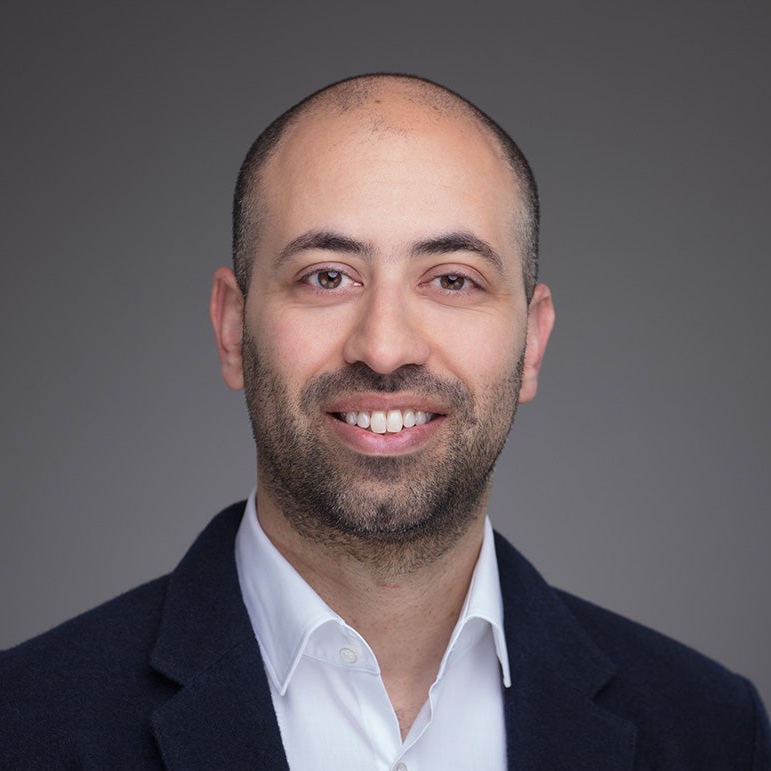
Abdullah Al-Arian
Abdullah Al-Arian, historian at Georgetown University in Qatar and editor of Football in the Middle East, commentator on Middle East politics and the World Cup.
2
APPEARANCES
2
PODCASTS
Jul 14, 2026


Sharif Abdel KouddousCORRESPONDENT
St- set the stage for us, and then we can get into some of these other issues.

Abdullah Al-ArianGUEST
Um, you know, I think even before a single match was played, uh, this quite possibly was the most politicized World Cup in maybe in history, uh, uh, certainly within my lifetime that I can remember.
Abdullah Al-ArianGUEST
Uh, on the one hand, I think we've never seen the organization this explicitly linked to a particular political project as we've seen, uh, you know, in terms of how much FIFA has been completely, um, enlisted, essentially, into, uh, into the Trump administration's agenda over the last couple of years.
Abdullah Al-ArianGUEST
And of course, we know there's a much longer history of, of kind of, uh, you know, being integrated into various political projects.
16 MINS LATER
Sharif Abdel KouddousCORRESPONDENT
And after that match, um, one journalist, Abdelkader Sabbah, messaged me, and he said, I'm paraphrasing, he said, "We live in an unjust world, even in football."


Abdullah Al-ArianGUEST
Yeah, I mean, I think there's a, there's a very long history there, uh, first in the sense that I think organized sports was very much, uh, integral to the nation-building process in the first place, to national identity construction as it occurred.
Abdullah Al-ArianGUEST
You know, during the period of colonialism, of course, sports, especially football, was introduced by colonial powers, usually, um, to local elites who used it as a way to kind of, uh, you know, assert their own autonomy and independence and agency in the context of European imperialism.
Abdullah Al-ArianGUEST
Um, starting clubs, you know, like Al-Ahly in Egypt, for instance, was started to be a national club in the face of all of these exclusive and exclusionary European clubs that were founded, um, for the local colonial elites, uh, in these countries.
Abdullah Al-ArianGUEST
And this also became a space for political organizing and, uh, nationalist activity when political parties were banned and, and precluded from being developed.
Abdullah Al-ArianGUEST
So there's, there's always that kind of longer history in terms of what the sport actually, uh, represented in these contexts.
Abdullah Al-ArianGUEST
And at the same time, you know, as you kind of move further, uh, into a, a more regional or global context, the idea of being recognized by these international bodies became something that was very much part and parcel of, uh, claiming independence, right? So in as much as a state like, you know, Egypt wanted, uh, membership in the League of Nations, but they also wanted to be recognized by, uh, you know, the, uh, International Olympic Committee or by FIFA in its very earliest stages because that also signifies a certain kind of international, uh, recognition for a nation's sovereignty.
19 MINS LATER

Saree MakdisiHOST
But what do you think of the, the visibility or invisibility of Palestine in this World Cup?