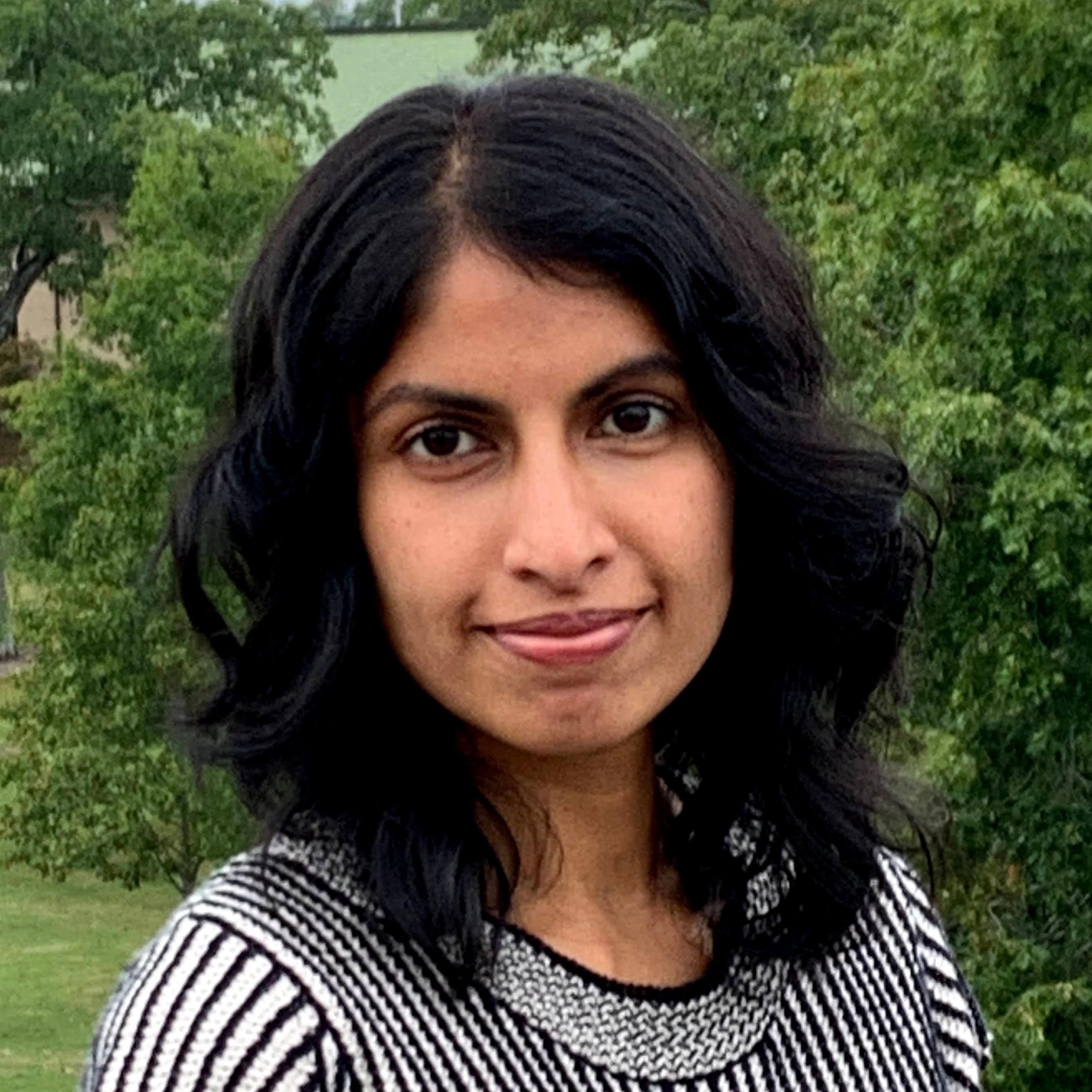
Aarthi Vadde
5
APPEARANCES
5
PODCASTS
Aug 15, 2026

Arnab Dutta RoyHOST
What inspires you to do what you do as a literary critic, a storyteller, academic, and also as an educator?

Aarthi VaddeGUEST
So I guess the first thing I should say was I only really learned that English professor was a job my senior year of college, which tells you how behind the curve I was on this.
Aarthi VaddeGUEST
No, I was an English major and I was planning to go to law school, but I don't think I had a real passion for it.
Aarthi VaddeGUEST
um and then in my senior year i i took a literary theory course which i didn't expect to like as much as i did um and it kind of gave me a framework in which to put everything i had been reading until then which retrospectively I thought, oh, I was collecting before.
Aarthi VaddeGUEST
And now I'm like integrating these things into like ideas and discourses and traditions that I didn't even understand existed in this like contested or theoretical way.
15 MINS LATER
Arnab Dutta RoyHOST
But again, as you mentioned, it is a kind of a Faustian bargain, right? So could you also talk about the political, social, and ethical implications of, I mean, I know you've already done this, but could you talk about these implications of platform literature, particularly focusing on how problems and issues of surveillance, algorithmic manipulation, data extraction, plagiarism, and corporate control is kind of changing literary culture.

Arnab Dutta RoyHOST
What inspires you to do what you do as a literary critic, a storyteller, academic, and also as an educator?
Aarthi VaddeGUEST
So I guess the first thing I should say was I only really learned that English professor was a job my senior year of college, which tells you how behind the curve I was on this.
Aarthi VaddeGUEST
[laughs] Um, no, I, I was an English major, and I was planning to go to law school, but I don't think I had a real passion for it.
Aarthi VaddeGUEST
I just thought, you know, "That's a profession." Um, and then in my senior year, I, I took a literary theory course, which I didn't expect to like as much as I did.
Aarthi VaddeGUEST
Um, and I-- it kind of gave me a, a framework in which to put everything I had been reading until then, which retrospectively I thought, oh, I was collecting before, and now I'm, like, integrating these i- things into, like, ideas and discourses and traditions that I didn't even understand, um, existed in this, like, contested or theoretical way.
Aarthi VaddeGUEST
So that just jump-started my interest in grad school, which meant that I kind of felt like I was, like I said, just behind every-- the people who already always knew they wanted to be English professors.
14 MINS LATER
Arnab Dutta RoyHOST
But again, as you mentioned, it is a kind of a Faustian bargain, right? So, uh, could you also talk about, like, the political, social, and ethical implications of, I mean, I know you've already done this, but could you talk about these implications of platform literature, um, particularly focusing on how problems and issues of surveillance, um, algorithmic manipulation, data extraction, plagiarism, and corporate control is kind of changing literary culture?

Arnab Dutta RoyHOST
What inspires you to do what you do as a literary critic, a storyteller, academic, and also as an educator?
Aarthi VaddeGUEST
So I guess the first thing I should say was I only really learned that English professor was a job my senior year of college, which tells you how behind the curve I was on this.
Aarthi VaddeGUEST
[laughs] Um, no, I, I was an English major, and I was planning to go to law school, but I don't think I had a real passion for it.
Aarthi VaddeGUEST
I just thought, you know, "That's a profession." Um, and then in my senior year, I, I took a literary theory course, which I didn't expect to like as much as I did.
Aarthi VaddeGUEST
it kind of gave me a, a framework in which to put everything I had been reading until then, which retrospectively I thought, oh, I was collecting before, and now I'm, like, integrating these i- things into, like, ideas and discourses and traditions that I didn't even understand, um, existed in this, like, contested or theoretical way.
15 MINS LATER
Arnab Dutta RoyHOST
I mean, I know you've already done this, but could you talk about these implications of platform literature, um, particularly focusing on how problems and issues of surveillance, um, algorithmic manipulation, data extraction, plagiarism, and corporate control is kind of changing literary culture?

Arnab Dutta RoyHOST
What inspires you to do what you do as a literary critic, a storyteller, academic, and also as an educator?
Aarthi VaddeGUEST
So I guess the first thing I should say was I only really learned that English professor was a job my senior year of college, which tells you how behind the curve I was on this.
Aarthi VaddeGUEST
No, I was an English major and I was planning to go to law school, but I don't think I had a real passion for it.
Aarthi VaddeGUEST
um and then in my senior year i i took a literary theory course which i didn't expect to like as much as i did um and it kind of gave me a framework in which to put everything i had been reading until then which retrospectively I thought, oh, I was collecting before.
Aarthi VaddeGUEST
And now I'm like integrating these things into like ideas and discourses and traditions that I didn't even understand existed in this like contested or theoretical way.
14 MINS LATER
Arnab Dutta RoyHOST
But again, as you mentioned, it is a kind of a Faustian bargain, right? So could you also talk about like the political, social and ethical aspects implications of, I mean, I know you've already done this, but could you talk about these implications of platform literature, particularly focusing on how problems and issues of surveillance, algorithmic manipulation, data extraction, plagiarism, and corporate control is kind of changing literary culture?

Arnab Dutta RoyHOST
What inspires you to do what you do as a literary critic, a storyteller, academic, and also as an educator?
Aarthi VaddeGUEST
So I guess the first thing I should say was I only really learned that English professor was a job my senior year of college, which tells you how behind the curve I was on this.
Aarthi VaddeGUEST
[laughs] Um, no, I, I was an English major, and I was planning to go to law school, but I don't think I had a real passion for it.
Aarthi VaddeGUEST
I just thought, you know, "That's a profession." Um, and then in my senior year, I, I took a literary theory course, which I didn't expect to like as much as I did.
Aarthi VaddeGUEST
it kind of gave me a, a framework in which to put everything I had been reading until then, which retrospectively I thought, "Oh, I was collecting before," and now I'm, like, integrating these i- things into, like, ideas and discourses and traditions that I didn't even understand, um, existed in this, like, contested or theoretical way.
15 MINS LATER
Arnab Dutta RoyHOST
But again, as you mentioned, it is a kind of a Faustian bargain, right? So could you also talk about like the political, social, and ethical implications of, I mean, I know you've already done this, but could you talk about these implications of platform literature, particularly focusing on how problems and issues of surveillance, algorithmic manipulation, data extraction, plagiarism, and corporate control is kind of changing literary culture.