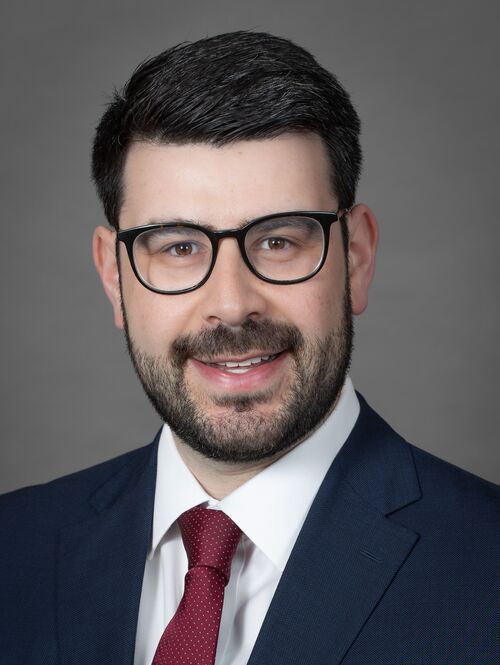
Aaron Zelikovich
Neuromuscular neurologist at Lenox Hill Hospital (Northwell Health) and host of the Neurology® Podcast and NeurologyLive Mind Moments.
7
APPEARANCES
2
PODCASTS
Nov 2, 2026

Aaron ZelikovichGUEST
I'm Aaron Zelikovich, a neuromuscular specialist at Lenox Hill Hospital in New York City.
Aaron ZelikovichGUEST
Today, I'll be discussing a recent article, Efficacy and Safety of Gryphilimab and Generalized Myasthenia Gravis, a Phase III randomized clinical trial published in JAMA Neurology in September of 2026.
Aaron ZelikovichGUEST
Gifrullimab is a novel nanobody targeting complement protein C5 that has demonstrated efficacy in the treatment of acetylcholine receptor antibody-positive generalized myasthenia gravis.
Aaron ZelikovichGUEST
Generalized myasthenia gravis is an antibody-mediated disease that affects the extraocular bulbar and proximal limb muscles.
Aaron ZelikovichGUEST
The most common pathogenic antibody in generalized myasthenia gravis targets the acetylcholine receptor.


Aaron ZelikovichGUEST
I am back again following the recording of a podcast episode with my colleague, Bhaskar Roy, describing his paper published in Neurology, Bayesian Meta-analysis on all the new myasthenia gravis treatments in the past decade.
Aaron ZelikovichGUEST
Bhaskar, based on your study showing similar efficacy with all the new therapies in myasthenia gravis, how do you recommend neurologists navigate these treatment decisions for patients who have myasthenia gravis?
Aaron ZelikovichGUEST
Bhaskar's paper was published in the August eleven, two thousand and twenty-six issue of Neurology.


Isabella CicconeHOST
What have we learned thus far from the minimal evidence that we do have right now?
Aaron ZelikovichGUEST
So the first group of patients are the young children who have been dosed with gene therapy, either part of newborn screening or early identification.
Aaron ZelikovichGUEST
who are not developing normally, it's pretty clear to us that a second agent, whether it's oral SMN modification or intrathecal SMN modification, is essential to either preserve the function that they have or to allow them to improve.
Aaron ZelikovichGUEST
And I think the scientific community has pretty much adopted that, and we follow the post-gene therapy kids very closely, and the earliest signs that their motor function is declining, then we start to add a second agent.
Aaron ZelikovichGUEST
In the younger kids, sorry, the older kids and the older adults, it's a much more nuanced discussion, right? Because typically what happens when patients switch therapies It's because of side effects or tolerability or inability to tolerate procedures.
Aaron ZelikovichGUEST
There really is no evidence about meeting certain milestones from a motor standpoint to then add on a second therapy or to bring it down.
5 MINS LATER
Isabella CicconeHOST
So from your end of things, and obviously somebody who is so entrenched in the research side of the realm, what more do we need to be doing from a research end? And what more can the clinical community be doing to kind of further advance this conversation so we can maybe have a few more answers within the next couple of years per se? Yeah.
speaker_0UNKNOWN
[outro jingle]
Aaron ZelikovichGUEST
I'm Aaron Zelikovich, a neuromuscular specialist at Lenox Hill Hospital in New York City.
Aaron ZelikovichGUEST
Today, I'll be discussing a recent article, "Vamorolone for Duchenne Muscular Dystrophy: A Cross-Trial Efficacy Comparison with Classic Corticosteroids from the 4DMD Trial," published in Neurology.
Aaron ZelikovichGUEST
Vamorolone is a novel dissociative corticosteroid developed as an alternative to traditional agents such as prednisone and deflazacort.
Aaron ZelikovichGUEST
In a twenty-four week study, it demonstrated similar efficacy to prednisone with potential benefits in reducing growth suppression.
Aaron ZelikovichGUEST
Duchenne muscular dystrophy, or DMD, is an X-linked progressive muscle disorder caused by mutations in the dystrophin gene.
Aaron ZelikovichGUEST
Today, I'll be discussing a recent article published in Lancet Neurology titled, Efficacy and Safety of Chemdisoran Silencing RNA in Myasthenia Gravis, the NIMBL trial, a double-blind, randomized, placebo-controlled phase 3 study.
Aaron ZelikovichGUEST
Chemdisoran monotherapy showed modest improvement in symptoms of generalized myasthenia gravis compared to placebo.
Aaron ZelikovichGUEST
Recent therapeutic strategies have targeted the FCRN receptors and complement-mediated pathways.
Aaron ZelikovichGUEST
In particular, C5 complement inhibitors such as ecolizumab, ravelizumab, and zilocoplant have demonstrated clinical benefit in large phase III trials.
speaker_0ADVERTISER
Hear directly from leading Rett Syndrome experts as they discuss real-world treatment strategies in an engaging video series created for healthcare providers, available at learnaboutrett.com.
Aaron ZelikovichGUEST
My name is Aaron Zelikovich, a neuromuscular specialist at Lenox Hill Hospital in New York City.
Aaron ZelikovichGUEST
Today, I'll be discussing a recent article titled, Low Prevalence and Inconsistency of LRP4 IgG Detection in Suspected Myasthenia Gravis that was published in Neurology, Neuroimmunology, and Neuroinflammation.
Aaron ZelikovichGUEST
The key takeaway is that LRP4 antibodies are neither sensitive nor specific for myasthenia gravis and are not currently recommended as part of the routine diagnostic workup.
Aaron ZelikovichGUEST
Myasthenia gravis is an autoimmune disorder of the neuromuscular junction in which autoantibodies impair neuromuscular transmission, which leads to clinical symptoms of fluctuating weakness.
Aaron ZelikovichGUEST
The two most common antibodies associated with myasthenia gravis are the acetylcholine receptor and musk antibodies.
speaker_0ADVERTISER
Hear directly from leading Rett Syndrome experts as they discuss real-world treatment strategies in an engaging video series created for healthcare providers, available at learnaboutrett.com.
Aaron ZelikovichGUEST
My name is Dr. Aaron Zelikovich, a neuromuscular specialist at Lenox Hill Hospital in New York City.
Aaron ZelikovichGUEST
Today, we'll discuss part three of a three-part series reviewing a recent article titled, Safety and Efficacy of Adjunct Dexamethasone in Adults with Herpes Simplex Virus Encephalitis in the United Kingdom, a multi-center, observer-blind, randomized, phase three controlled trial published in The Lancet Neurology.
Aaron ZelikovichGUEST
In this episode, we'll focus on the clinical outcomes observed during and after the acute infection and how these findings can inform physicians counseling patients in both acute HSV encephalitis and its long-term sequelae.
Aaron ZelikovichGUEST
Mortality from HSV encephalitis remains at approximately 10% and 50% of survivors have moderate to severe disability long-term and only 20% of patients can return to their jobs.
Aaron ZelikovichGUEST
Herpes simplex virus encephalitis is a strong predilection for the temporal lobes, which correlates with the patient's acute and long-term complications.