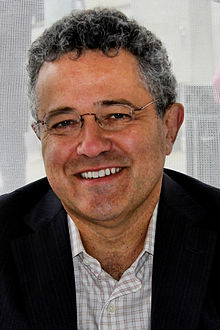
Jeffrey Toobin
American lawyer and author
66
APPEARANCES
13
PODCASTS
Sep 24, 2026

Jeffrey ToobinGUEST
Not really, 'cause th- this is the same judge who, uh, did the Jim Acosta case, our former colleague, who, um, uh, th- was thrown out of the White House a- because they didn't like his coverage back in the first term, and, uh, Judge Kelly promptly returned him.
Jeffrey ToobinGUEST
But what he did was he, he heard argument, and then a day or two later called everybody back into the courtroom and said, um, J- um, Jim Acosta has to have the, hi- his press pass back.
Jeffrey ToobinGUEST
You know, as for the national security thing, I mean, it's understandable why the, um, White House is trying this, is because the courts are at their most deferential to the executive branch when it comes to national security.
Jeffrey ToobinGUEST
Th- this is something we give to the executive." However, it can't be a pretext, and it really looks like, uh, especially when it comes to this press coverage issue, that the national security argument is completely a pretext.

Anderson CooperHOST
I, what message, which may, it may be some of that or all of that, uh, what pres- what message do you think the president's trying to send by banning news outlets right when China's leader is visiting here?
Jeffrey ToobinGUEST
I, I, I, I mean, I think he, he hates the press and a lot, uh, uh, he hates certain parts of the press and CNN included, but, um, so do a lot of his supporters.
Anderson CooperHOST
So, Jeff, is there a way this, I mean, is there any way this ban from the president is constitutional?
Jeffrey ToobinGUEST
Well, Anderson, you know, I'm usually wary about making ironclad predictions, but I'm going to make an exception tonight.
Jeffrey ToobinGUEST
This is never going to stand up in court, in part because the law is clear, but in part also because the federal district court in Washington just decided this exact case a couple of years ago.
Jeffrey ToobinGUEST
In 2018, as you may remember, our former colleague Jim Acosta had his press pass, his hard pass, his permanent pass to the White House removed by the president because they didn't like his coverage.
Jeffrey ToobinGUEST
And the federal district court in Washington, a Trump appointee, said you can't do that.
Jeffrey ToobinGUEST
He said, in part, the president can't pick and choose based on content, based on the reporting he doesn't like.
Jeffrey ToobinGUEST
But also, he said, you can't just remove a government benefit without due process.
Anderson CooperHOST
Jeff, I mean, if the ban is reversed by the courts, would those news organizations be reinstated at the White House immediately?
Jeffrey ToobinGUEST
I mean, that's what's so bizarre about this whole thing, is he's taking credit for something that he did the opposite of.
Jeffrey ToobinGUEST
But legally, I think he might actually win because he is not technically changing the name.
Jeffrey ToobinGUEST
The other part of the order, of the judge's original order, said he, they shut down for two years without any study.

Jeffrey ToobinGUEST
Now they have actually done some study, and, uh, they, they think two years is, i- is reasonable.
Jeffrey ToobinGUEST
... of what happened here, and even though we have two minutes of video, which is more than we often have in these situ- situations.
Jeffrey ToobinGUEST
But, you know, the larger question of, what is ICE doing, and are people effectively trained, um, for these kind of encounters? That's come up over and over again.
Jeffrey ToobinGUEST
You know, the outfits they were wearing, they weren't exactly in plainclothes, but they weren't exactly in a uniform.
Jeffrey ToobinGUEST
I mean, all of those have been controversial, certainly were controversial in Minnesota, which led to the two deaths there.
Jeffrey ToobinGUEST
Um, you know, I- ICE is not something, um, we can talk, you know, the f- the former head of it, but this is not the kind of work that they have done, um, and particularly not well, uh, lately.
Anderson CooperHOST
It's kind of amazing w- just looking at those gloves, Jeff, you, I mean, you, if you see a ICE officer, you'd have no idea whether or not they have these shock gloves on.

John BermanHOST
But I will note that the formally, the, the filing, like, literally says, "Respectfully submitted, Janine Farris Pirro." I mean, so can she plausibly distance herself from this at this point?
Jeffrey ToobinGUEST
I mean, th- this is a high-profile case that she had to know what was going on.
Jeffrey ToobinGUEST
But let's focus, at least for a minute, on what a disgrace that filing was because it is the fundamental responsibility of a prosecutor that before he or she files charges, you do a complete investigation.
Jeffrey ToobinGUEST
And this idea that she's somehow blaming the Department of the Interior, it was her job to check with the Department of the Interior and do a thorough investigation before she charged Mr. Hern with felonies.

Jeffrey ToobinGUEST
You know, the- the pardon power is an anomaly under, uh, the American Constitution, because the Constitution is based on the idea of che- uh, of checks and balances.
Jeffrey ToobinGUEST
But the pardon power comes directly from the royal prerogative of the King of England.
Jeffrey ToobinGUEST
Um, the president, you know, the- the- the- the, um, can't stop him, the courts can't stop him, and it is, um, a- a- and that has led presidents, um, to a lot of problems, and it also is really revealing.
Jeffrey ToobinGUEST
I mean, in a way, pardons offer us a history of the American presidency, because one of the things I conclude in the book is that pardons operate like an X-ray into the characters of presidents of the United States, and we can learn a lot about Nixon, Ford-

Arroe CollinsHOST
I wasn't expected to understand it, but I do know where we are in history today, and I wonder if our own vice president today was questioned before getting the job, "If I do something wrong, will you, will you give me a pardon?" And that had to have been a question that he had to answer.
Jeffrey ToobinGUEST
Well, that, that, I, I cannot, I, I cannot answer whether, whether Vance was, was asked that question, uh, be- before, before he was chosen.

Jeffrey ToobinGUEST
He started in Texas before, um, the Republican Party was in ascendancy there, and he is not gonna torpedo this nomination.
Jeffrey ToobinGUEST
Th- I- it is a shame that this is all we're talking about in the terms of the nomination of Todd Blanche at a time when the Justice Department is in a complete shambles, when judges can't believe what prosecutors say when they come into their courtroom.
John BermanHOST
I mean, how likely is the Supreme Court to take the timing into the ac- you know, account here?
Jeffrey ToobinGUEST
I, I wanna be very careful in answering this question because, you know, many of us thought that the birthright citizenship case was like a nine-nothing slam dunk against Trump.
Jeffrey ToobinGUEST
There were only five votes against Trump on the constitutional issue in that case.
Jeffrey ToobinGUEST
This is a very pro-Trump court, and I think we need to wrap our heads around that.
Jeffrey ToobinGUEST
Even so, this case procedurally, it would be very complicated for the ch- for the Supreme Court to take up right now.
Jeffrey ToobinGUEST
First of all, since it's the middle of the summer, they're spread all around the world, the nine justices.
John BermanHOST
You know, Jeffrey, your piece today, uh, your op-ed, talks about some Democrats who are kind of looking at November, you know, in a break glass moment there, or concerned that Trump may go to extraordinary ends to influence the election.

John KingHOST
Uh, Jeff, he frustrated the Democrats at times, frustrated some of the Republicans a little bit, exasperated people at times, but at the end of the day, is his path to confirmation there?
Jeffrey ToobinGUEST
Um, you know, w- the thing that really came across in that hearing is how tribal the United States Senate is.
Jeffrey ToobinGUEST
People thought Thom Tillis, the Republican senator from North Carolina, um, who is a lame duck, was gonna be a swing vote.
Jeffrey ToobinGUEST
John Cornyn, um, we heard, uh, Manu's interview with him, you know, he technically is undecided.


Jeffrey ToobinGUEST
As, as I was, you know, preparing to talk to you today, I realized that I, I'd sort of been forcing the 250th celebration, if you wanna call it that, out of my head.
Jeffrey ToobinGUEST
I mean, it, it is such an ugly time, and the public celebrations, starting with that ridiculous UFC event, have been so, at least to me, repugnant to what we should be celebrating that, you know, I had to sort of force myself, um, to, to try to come up with, you know, the, the genuine reasons to celebrate, and there are reasons to celebrate.
Jeffrey ToobinGUEST
And, you know, when I was in college, my, um, area of specialization, such as it was, was early American history, the American Revolution.
26 MINS LATER
Jeffrey ToobinGUEST
W- when, when Trump says outrageous things, behaves in a completely undignified manner, you know, um, d- defaces the White House, you know, the alternative, y- the, the example you hear f- from the other side is, "Yeah, well, do you want Kamala Harris and have, um, you know, trans ath- you know, uh, boys playing girl sports?" That's the alternative.

Anderson CooperHOST
Jeff, does, does all this raise any legal concerns or, or just eth- I mean, certainly ethical concerns, but he can do this, right?
Jeffrey ToobinGUEST
Well, the Supreme Court has said that any official action he takes may not be the subject of criminal charges, and it can't even be investigated.
Jeffrey ToobinGUEST
And if we can just talk about crypto, you know, the regulation of crypto is one of the hottest issues being dealt with in the executive branch now.
Jeffrey ToobinGUEST
So he is in charge of regulating something that is putting literally billions of dollars in his pocket.
Jeffrey ToobinGUEST
But regulating crypto is an official action of, of the, of the p- the executive branch.
21 MINS LATER
Anderson CooperHOST
A- and Jeff, what are the rulings we've seen from the court this term do to balance the power between the three branches of government? We've seen them expand executive power while at the same time rolling back a lot of laws passed by Congress.
Anderson CooperHOST
Jeff, we're gonna get to the, the other rulings in a moment, but first, what stands out to you about the decision on the president's ability to fire officials in what has historically been independent government agencies?
Jeffrey ToobinGUEST
agencies?Th- this is just a major change in how the American government is organized.
Jeffrey ToobinGUEST
You know, since the progressive era and the New Deal, Congress has set up these independent agencies, the Federal Trade Commission, the Securities and Exchange Commission, the Federal Election Commission, with the idea that they had a measure of independence from, um, from the president.
Jeffrey ToobinGUEST
I mean, the, the president could appoint certain members, but they did operate somewhat independently.
Jeffrey ToobinGUEST
Basically, what the Supreme Court has now said is that there is only one president, and he has all the power that could conceivably be exercised by the executive branch.
Jeffrey ToobinGUEST
There is no power sharing that is acceptable, except perhaps for the Federal, uh, for the Federal Reserve.
Jeffrey ToobinGUEST
But the idea of independent federal agencies, which has been a part of American government for 100 years or even more, that's just gone, and, um, we're gonna be feeling the effects of that, you know, for the foreseeable future.


Andy OstroyHOST
What's the strongest case that Trump has moved the country towards a more authoritarian model of government? And what's the strongest argument against that claim?
Jeffrey ToobinGUEST
You know, the system is designed so that the three branches of government operate as something like a check on each other.
Jeffrey ToobinGUEST
And there has been absolutely no check from Congress during this first year and a half.
Jeffrey ToobinGUEST
And when you think about the fundamental power of the purse, which is basically Congress's most important power under our constitution, which is deciding how the government spends its money.
Jeffrey ToobinGUEST
From the very beginning of this second term, starting most importantly with the Elon Musk Doge operation, Trump has basically said, I'm going to decide whether and when to spend the government's money, not Congress.
31 MINS LATER


Tavis SmileyHOST
that the folk who supported this team for half a century couldn't afford to go to the games.
Jeffrey ToobinGUEST
Well, as you say, Tavis, this is really a discussion about where we are in our current state of late capitalism.
Jeffrey ToobinGUEST
I mean, the love for sports is... is happening in spite of not because of the corporate ownership.
Jeffrey ToobinGUEST
Also, you know, the sport soccer is the very definition of the sport of the people.
18 MINS LATER
Anderson CooperHOST
Uh, what do you think the chances are that Todd Blanche will be the permanent attorney general?
Jeffrey ToobinGUEST
I, I think presidents almost always get their way when it comes to a, uh, Cabinet appointments, but this is gonna be a, a real fight, and there are some votes in play.
Jeffrey ToobinGUEST
You have the two Republican senators who just lost their race, uh, Ca- Cassidy and, and Tillis, who's not running.
Jeffrey ToobinGUEST
Um, and, and you have maybe, maybe Cornyn, although it's hard for me to imagine Cornyn wouldn't vote against him.
Jeffrey ToobinGUEST
You have John Fetterman, the Pennsylvania Democrat, who's, you know, frequently switching sides.


Jeffrey ToobinGUEST
Well, and, and, and you know, it, it, it operates in a way that reflects Trump's values.
Jeffrey ToobinGUEST
And, and I think, um, perhaps the most neutral way you can talk about Trump's values is to say that he is transactional.
Jeffrey ToobinGUEST
Um, he, he, he gives you something only when he gets something in return, and that's how the pardon syste- system works.
Jeffrey ToobinGUEST
Um, you know, he, he began, um, his second term, uh, with the pardon of the January 6th rioters, you know, almost 1,600 of them.
Jeffrey ToobinGUEST
And, you know, he views that as, um, a- a- as proof that they did nothing wrong.
Jeffrey ToobinGUEST
That, that b- by pro- by invalidating all their prosecutions, that vindicates their effort, and thus his effort to overturn the election in 2020.
9 MINS LATER
Jeffrey ToobinGUEST
I, I think he, um, and the other plaintiff, uh, have a very good moral argument, a very good political argument, but I don't think they have a good legal argument under the Supreme Court's rule of standing.
Jeffrey ToobinGUEST
I- in, in the way federal lawsuits work now is that plaintiffs have to assert that they suffered an injury in fact from the claimed, um, uh, of the, the, the basis for their lawsuit.
Jeffrey ToobinGUEST
Here, I don't think the plaintiffs have a good claim that these payments injure them.
Anderson CooperHOST
The, the lawsuit also lays out a challenge based on the 14th Amendment, which states that neither the United States nor any state shall assume or pay any debt or obligation incurred in aid of insurrection or rebellion against the United States.
Jeffrey ToobinGUEST
And in fact, I mean, as bad as you described it, it's actually worse because there is no definition in the paperwork of what weaponization and lawfare is.
Jeffrey ToobinGUEST
So these five people will have virtually unlimited discretion to give this money away to anyone they want.
Jeffrey ToobinGUEST
... all the people who pr- who, who Robert Mueller prosecuted, people who were convicted by juries, Robert Manafort, Roger Stone, people who pleaded guilty.


Jeffrey ToobinGUEST
W- well, um, you know, a- a- as, as you were describing that in the context of this conversation, you know, Merrick Garland, who is someone I, I know well and have known for many years, could ac- accurately be described as the anti-Donald Trump.
Jeffrey ToobinGUEST
He is the opposite of Donald Trump in so many ways, and I mean that almost entirely as praise, uh, because he is highly ethical, intelligent, serious, and, and, uh, has a great reverence and respect for the rule of law.
Jeffrey ToobinGUEST
But one way I think he errs too much on the side of restraint and caution is in his role as the public voice of the rule of law in America.
Jeffrey ToobinGUEST
He is the attorney general of the United States, and he has the opportunity, and I would suggest the obligation, to, uh, be a spokesman for the rule of law.
Jeffrey ToobinGUEST
And here we have, you know, Donald Trump traveling, traveling the country, whether he's in Waco or, or any- anywhere else or, or, or on social media, basically saying that the January 6th people are political prisoners and, um, the, the election, um, was, was marred by fraud and he really won.
17 MINS LATER
John BermanHOST
You wrote, "The fact that Ms. Bondi has failed in these abusive prosecutorial efforts is cause for relief, not dismissal." Talk to us more about that.
Jeffrey ToobinGUEST
The idea that the President of the United States is using the Department of Justice or wants to use the Department of Justice to punish and imprison his enemies is unprecedented in American history.
Jeffrey ToobinGUEST
And, and remember there was that infamous email or, or text that he sent, um, to Bondi last September where he said, "Where are the prosecutions of James Comey, of Adam Schiff, of Letitia James?" And that's what her job was.
Jeffrey ToobinGUEST
Well, that's the, the, the key point, is that, um, the states run elections and the federal government has limited authority over, um, how these elections are run.
Jeffrey ToobinGUEST
The way they're trying to get around that is by involving the Postal Service, which is part of the, y- uh, of the federal government.
Jeffrey ToobinGUEST
Um, certainly the, there will be lawsuits v- by blue states trying to invalidate this.
Jeffrey ToobinGUEST
Um, I, I, I think we're gonna have to know more about precisely what they expect the Postal Service to do.
Jeffrey ToobinGUEST
Uh, but, you know, it, it is just a weird obsession that the president has with mail-in voting, considering, A, he does it himself, and B, it's often been of benefit to Republicans-
Jeffrey ToobinGUEST
I'm not sure, you know, a case could be thrown out as a result of this, but, you know, there are bedrock principles that the government has operated by, at least since Watergate, and probably before then, which is that the President of the United States does not get directly involved in who is investigated, how they are investigated, uh, who does the investigating.
Jeffrey ToobinGUEST
All of that has been thrown out the window in this administration, as we have seen the president direct, um, investigations of his enemies, and now to pursue his pet causes, like his false claim that he won the 2020 election.
Jeffrey ToobinGUEST
Well, I mean, the, the FBI traditionally has had some, it, it, a role in protecting voting rights.
Jeffrey ToobinGUEST
Uh, whether that is protecting voting rights or intimidating, uh, Donald Trump's opponents from going to the polls, that's the question that, you know, that hangs over this issue.
Jeffrey ToobinGUEST
But, you know, statements like what the president made yesterday are, are- or today, are one reason why so many people are worried about the fairness of the midterm elections coming up, to say nothing of the presidential elections in 2028.
Jeff ToobinGUEST
But there is a tremendous amount of information in the stuff that was released today, and frankly, we're all just starting to scratch the surface.
Jeff ToobinGUEST
And the thing that just jumped out to me, is that there are a lot of very serious allegations against a lot of people.
Jeff ToobinGUEST
Some of them, um, will surely be, uh, without merit and, um, you know, in, in, and wrong.
Jeff ToobinGUEST
But, you know, you have to r- ask the question, as the survivors are asking, is why has only Jeffrey Epstein been the only person identified as abusing women, when it certainly suggests that there were more people doing it?
Jeff ToobinGUEST
Well, there haven't been any prosecutions for several years, and the odds are there are not gonna be any more prosecutions, but a lot of people are gonna be looking at these documents, and at least suggesting, I th- I bet, that there are cases still to be made out there.
Anderson CooperHOST
Do you think this is one kind of step toward, uh, preparing people for an Insurrection Act?
Jeffrey ToobinGUEST
You know, the, the, the last time, as I understand it, that the Insurrection Act was used over the objection of local officials was by President Eisenhower during the school integration crises.
Jeffrey ToobinGUEST
I mean, this is something that has almost never been done in American history, and it would be a very dramatic step.
Jeffrey ToobinGUEST
And remember, the Insurrection Act involves the military, not the National Guard.
Jeffrey ToobinGUEST
So what you're talking about is moving tanks, and the US military, not the National Guard.
Jeffrey ToobinGUEST
Pe- you know, our soldiers are trained for many things, but they are not trained for, uh, controlling demonstrations in American cities, and it is a chilling thought to think that they might be brought out when Minneapolis is, again, as far as I can tell, i- is...
33 MINS LATER
Jeffrey ToobinGUEST
And, and also, I think they recognize that this is an attempt to distract, to distract attention away from President Trump and, and Epstein.
Jeffrey ToobinGUEST
But they do have a secret weapon, the, um, the Clintons do, which is that this process, uh, even if they're held in contempt, which seems likely at this point-
Anderson CooperHOST
Release all their names, embarrass them, and get back to helping our country." Um, that's to bolster their argument this is just political.
Jeffrey ToobinGUEST
It, it is just political, and, and you know what's shocking is seeing politics taking place in the Congress.
Jeffrey ToobinGUEST
That may be a good thing or a bad thing, but it is a constitutional thing in our system, that c- that Congress gets to call the witnesses they want, and the witnesses, by and large, don't get to, uh, don't get to, uh, say, "Well, I, I don't wanna do it." Ironically, one of the best arguments Clintons have here re- is the Trump versus United States Supreme Court case, which, of course, put President Trump's, a- as, as a former president, off limits from, uh, criminal prosecution.
Scroll for more appearances