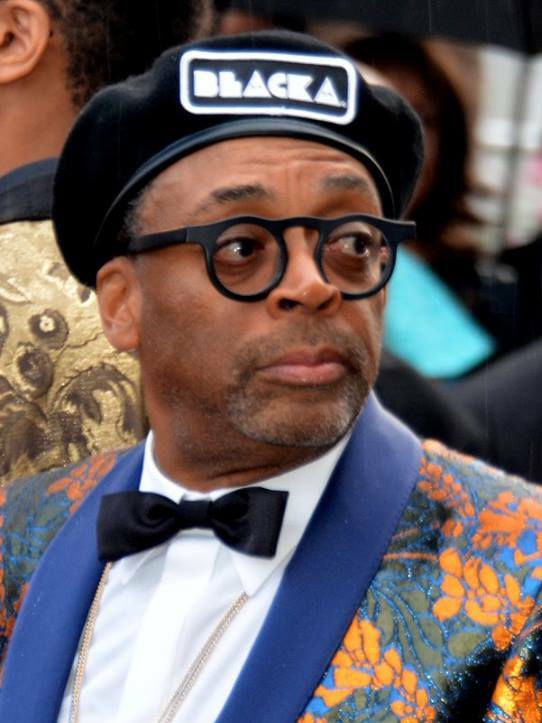
Spike Lee
American filmmaker and actor
33
APPEARANCES
26
PODCASTS
Nov 2, 2026


Charlie RoseHOST
and then going to NYU to film school, how did those things set you on a certain path?
Spike LeeGUEST
I was born in Atlanta and then we moved to Chicago because my father was a jazz player, bassist, and then we moved to New York.
43 MINS LATER
Charlie RoseHOST
Speaking of stories, what story have you not told that you want to tell, that you have wanted to tell for a while?

7 MINS LATER

Charles BarkleyHOST
My question is, when you're doing like, a real live person's life, do you feel like that put added pressure, especially somebody of that magnitude?


Matt HillmanHOST
I know you were in the arena, so you didn't hear this, but on the broadcast, Mike Breen gave everybody permission to cry, but what were the few moments like for you immediately once they won? To tell the truth, my mind


10 MINS LATER


MattHOST
Oh, Lee, what about you, buddy? What have you been watching?

LeeGUEST
I finally got to watch something off my watch list, and it's been on for quite a while, but I couldn't find a good copy of it.
LeeGUEST
It's a kind of a little known mercenary film from that time starring Ben Gazzara and Paul Winfield.
3 HRS 14 MINS LATER
CDRHOST
I want more problems.


Spike LeeGUEST
My father used to play at this club called West Blue Doc, and that's where Walt Frazier would always go.
Spike LeeGUEST
It's over on the West Side, the jazz club, and that's where W- Walt would always go there and at the game.
Spike LeeGUEST
So my first autograph was a, a tab [laughs] from the bar that, that Willis, excuse me, that, that Walt signed for me.
Spike LeeGUEST
So I go way back, you know, Coach Red Holzman, Senator Bradley, Dave DeBusschere, Dick Barnett, Walt Frazier.


Omar JimenezCORRESPONDENT
I just wonder, you are the, the Knicks fan ambassador, I think is fair to say.
Spike LeeGUEST
I can't speak for all disciples, but I just find it strange that this had to happen now.

speaker_5SOUNDBITE_SPEAKER
That's the quote.
Spike LeeGUEST
She lived, of course, on the other side of Washington Park, Fort Greene, Brooklyn.
13 MINS LATER
speaker_12SOUNDBITE_SPEAKER
You know, just people were digging in the ashes, you know, among the rubble trying to find their loved ones.


Spike LeeGUEST
[laughs] But, uh, it's not the first time this country's been through stuff, uh, has found a better way to, uh, to live.
Spike LeeGUEST
And, and let's realize, Black folks, we got a lot of our stuff through the voting.
15 MINS LATER
Spike LeeGUEST
Because first of all, if you're a, a, a movie, a critic, and you're complaining about the stuff that, you know, all this other stuff, but the movie ends in '88.
Spike LeeGUEST
And it's stuff, you're talking about accusations happened, so you're critiquing the film on something that you don't- you wanted, but it doesn't work in the timeline of the film.


Spike LeeGUEST
Well, again, she was teaching St. Ann's, Brooklyn Heights, even today, still a great school, where my siblings went while she was teaching.
Spike LeeGUEST
And, uh, wasn't feeling well and got checked out, and then they checked her into Brooklyn Hospital, which is in Fort Greene, where we grew up.
Spike LeeGUEST
"Yeah, you know, it looks like we're gonna lose your, your mother." So I came home, and for two weeks, this is the middle of school.
Spike LeeGUEST
And then my father said, "You know, you should go back to school." So I went back to school, went back to Atlanta, called the house.
Spike LeeGUEST
When I landed, called the house to see how my mother's doing, and my Aunt Nancy picked up the phone.


Pamela KirklandCORRESPONDENT
How do you have those discussions at the same time? Very carefully.
Spike LeeGUEST
So, not all my films, but some films about what's happening today, and that's what the story's about.
Spike LeeGUEST
And it pains me that some of the stuff we were talking about school days was still going through.
Spike LeeGUEST
I mean, I let the audience rather figure that out, and what they say is what we could do to stop that stuff, but I've been very fortunate to make films, and I'm honored to come back to Atlanta and show this film 38 years later where we shot it.
Pamela KirklandCORRESPONDENT
And that film had real impact, because you got a phone call about that one.

8 MINS LATER

Scott FeinbergHOST
well there was a game no I'm saying on the parade both happening on the subway as this is going down you've said you referenced earlier French Connection as an inspiration talk about that and also some of your other favorite set pieces from the course of your movies


Spike LeeGUEST
But AS- he stood right there, and they were going toe to toe, so the, the, the genius of, of Denzel lifted that whole scene, which lifted the movie because this is, this is at the end of the film too.
6 MINS LATER
Spike LeeGUEST
As I got older, I saw, you know, before I was like I had, you know, I had a certain feeling.
Spike LeeGUEST
But as I got older, I understood, you know, he had scruples and morals and he was not gonna play electric bass.


Tonya MosleyHOST
What was it in particular about this story, re-imagining this story, that you felt like was so important to tell right now?
Spike LeeGUEST
But Kurosawa's film, the great Akira Kurosawa, who made this film postwar Japan in 1963, is from a book by a writer, Ed McBain.
Spike LeeGUEST
And the strength of this film, the strength of the book and Kurosawa's film, it really deals with morality.
Spike LeeGUEST
And when you have an actor, and in the, in the Japanese version, Toshiro Mifune, one of the great, great actors, and then with Denzel, who's right there, great actors.
Spike LeeGUEST
When they're going through trials and tribulations, the audience becomes engaged, and they're with that person every step of the way.


Rebecca LoweHOST
Denzel Washington of course, you two together, how could it not be? Can you just give us a little insight real quick about the inspiration behind the movie?


Spike LeeGUEST
But as, myself as an artist, I'm not just gonna close my eyes and not acknowledge, you know, how this hateful stuff has gone on and- and definitely affected the world.
6 MINS LATER
Spike LeeGUEST
I, I, I just felt that the world needed to see what these ticks of bi- what these ticks of dynamite did to these beautiful young girls who could have grown up to be doctors, lawyers-


Spike LeeGUEST
If we had done what had been scripted and, and Jesus beats his father 11-zip, it, it would not have been the same.
6 MINS LATER


Spike LeeGUEST
And that summer, all, all we would do was play sports, you know, stickball, stoop ball, stuff like that.
10 MINS LATER
speaker_2UNKNOWN
(laughs)


Spike LeeGUEST
And I, I, uh, somewhere, I just, party or something, and I grabbed him, I gave him a hug.
9 MINS LATER


Spike LeeGUEST
Well, this is the fifth time, the fifth time that great Denzel Washington have worked together.
Spike LeeGUEST
And both Denzel and I- and I, my brother Nott know, the last time we worked together was 19 years.
Spike LeeGUEST
Denzel, the script was going around town, I mean LA for a while, and he got the script, and he called me up and says, "Spike, I'm sending you something, and you'll get it today's- tomorrow." And before I hung up the phone, I knew I wanted to do the film.
Spike LeeGUEST
So this is a- not a remake, re- a reincarnation of a Japanese film, a great Japanese filmmaker, Akira Kurosawa.


David RemnickHOST
How much do you discuss scenes ahead of time, and how much do you leave it to chance and improvisation?
Spike LeeGUEST
And so a lot of times we audition actors, you know, we see there's something, you know, we don't have to fix this part in the script.
Spike LeeGUEST
There's a hundred percent, I gotta tell young filmmakers, reading the script is not the same as hearing the words that are written.
13 MINS LATER


Scroll for more appearances