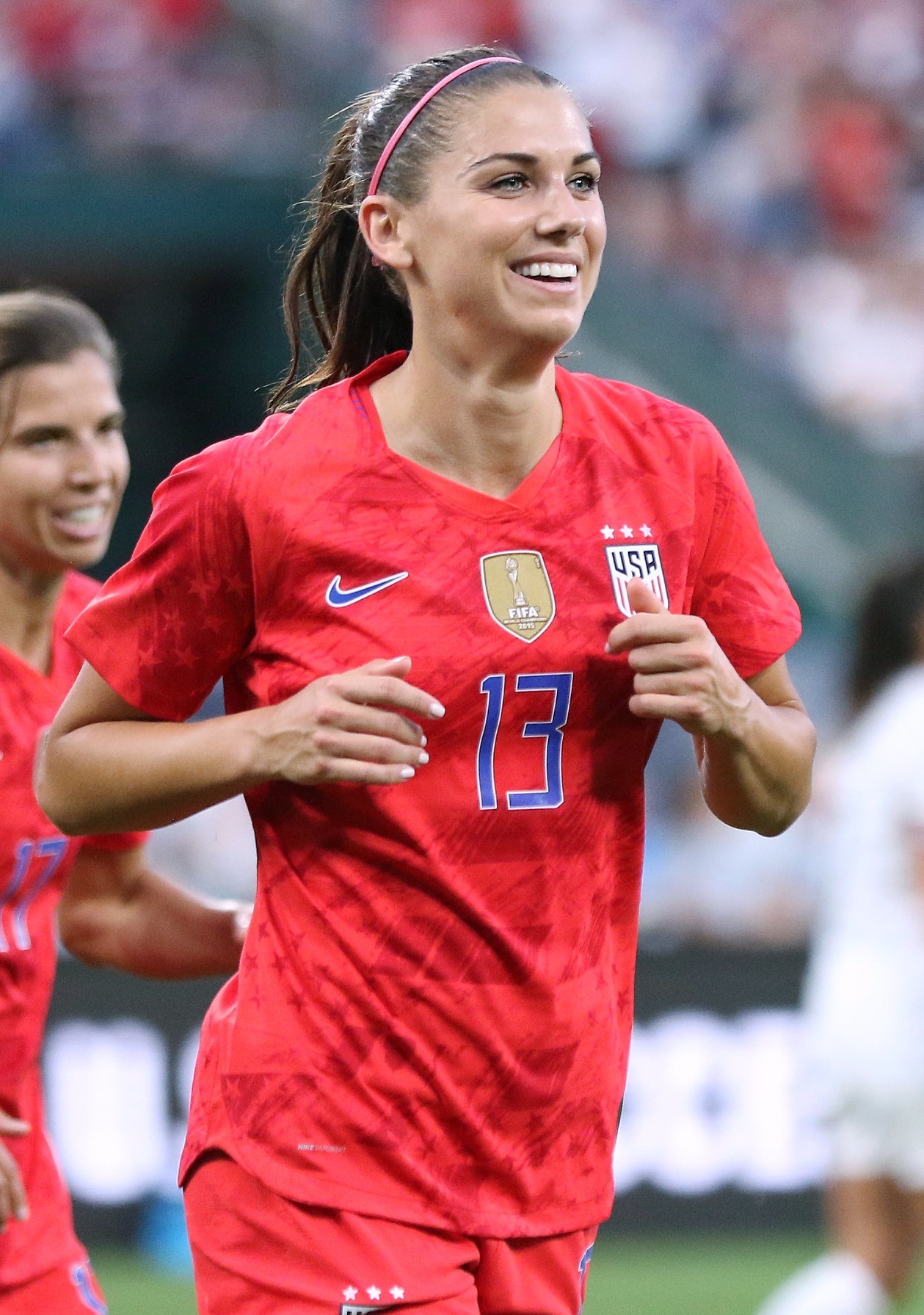
Alex Morgan
American former soccer player
11
APPEARANCES
10
PODCASTS
Aug 25, 2026


Greg OlsenHOST
Like, when you think back to the soccer, the soccer you grew up with, maybe as, as compared to the soccer now that we're living and experiencing particularly here in America, like, how would you compare and contrast the two?

Alex MorganGUEST
Well, I think the opportunity now and the, the opportunity to play at a high level at a young age, um, is endless for girls, which is awesome.
Alex MorganGUEST
Growing up for me, um, there wasn't as many teams around, but also I would say growing up, like, I didn't make the jump from rec soccer to club- youth club soccer until I was 13 years old.
Alex MorganGUEST
People are flabbergasted by that because they're starting their kids at, like, seven years old now.
Alex MorganGUEST
I just don't think that you need to really suck the fun out of it and be training multiple times a week with games on the weekend every weekend, and traveling both in and out of the state at that age.
Alex MorganGUEST
Um, so I think that there's definitely pros and cons to it, but my experience was a little bit different because I chose to play on my city rec AYSO soccer team for many years, and my parents were like, "When you are ready to make the jump, you're ready to make the jump," and I did, and propelled, um, after that getting on the youth national team and getting scouted for college, but I was definitely late to the game, um, s- back then, and now it would be unheard of.
Greg OlsenHOST
Was there a ton of pressure? Was the pressure coming from coaches? Was the pressure coming from, like, your friends' family? Like, what were you feeling when you were one of the few maybe holdouts for as good as you were, one of the few holdouts that wasn't going the real competitive club route at that young age?


Alex MorganGUEST
... you know, fancy title, but also involves, as you can imagine, quite a lot of travel.
Alex MorganGUEST
Really, really, really w- was always thinking about, like, what, what next? What opportunities could I look for? And really quite focused on climbing that ladder.
16 MINS LATER


Eric RitchieHOST
But what were you doing before the academy and, and what led you to sign up for the academy? And, and I guess even more specifically, what, what made you decide Sargent was the place you wanted to, to give it a go, so to speak? And, uh, Alex, why don't we start with you?
Alex MorganGUEST
I came, uh, straight out of high school, had a two-week lull there, and then started the academy.
Alex MorganGUEST
I didn't have, you know, a degree that was in the back of my mind that I wanted.
Alex MorganGUEST
Um, so I, I probably would have ended up at, uh, you know, like a small town construction outfit around my neighborhood or whatever.
13 MINS LATER
Eric RitchieHOST
When, when did you know that was, or what was the moment that you, you decided you wanted to head in that path? And I'm kinda curious if there were any folks around you that had a positive influence on, on helping you in that direction.


Scott WapnerHOST
I'm not sure if, if you realize this, 'cause I certainly didn't, that less than 5% of registered soccer coaches globally and only 16% of FIFA council members are women.
Alex MorganGUEST
That is, uh, something that I think we can both be doing from the top down from FIFA, but from the bottom up as well.
Alex MorganGUEST
Um, and I think that it's important to recognize that, and, um, and to increase that.
Alex MorganGUEST
And that has been very slow over the 15 years that I have played, um, on, uh, on the international stage, and it has been slower than we have wanted, for sure.
Scott WapnerHOST
The, the implication of course is that, you know, with the lack of representation, some of the critical decisions that are being made about al- almost everything important to athletes like you, uh, and the other ladies on our national team and playing in the, in the professional league here in the US, is you just have less say regarding everything, salaries, broadcasting, uh, logistical decisions, decisions that are being made by people who have never experienced the game from a, a woman's perspective, certainly not a woman soccer, uh, player's perspective.


Raleigh TarverGUEST
And honestly, if people who don't follow soccer probably did something like this case, maybe gaming and sports is part of the conversation about labor rights, sexism, media coverage, and the downside of basing something on athletics.
MorganGUEST
Players like Alex Morgan, Megan McNeil-Ragnum, Charlie Lloyd, Becky Sovereign, and others against the United States Sovereign Federation, often referred to as the USS F.

Jennifer RomeroGUEST
The players also alleged unequal treatment in travel-arranged, fanciful telecom nations, meaning support staffing and financial
MorganGUEST
The women argued that they were often required to play on artificial turf, while the men were more frequently allowed to play on natural grass, which a lot of athletes believe was safer and more consistent.


Alex MorganGUEST
Yes, I've been completely unaware of this link between autism, ADHD and Ehlers-Danlos.
Alex MorganGUEST
But having read about it, it's remarkable that the two things do seem to come together disproportionately.
Alex MorganGUEST
And I think there's a huge amount of very high number of women who are undiagnosed autistics who are struggling to work out what their difficulties are to do with.
10 MINS LATER


Alex MorganGUEST
It's a game that, you know, the culture around it is so, I think, inviting and exciting and, like, different, right? All these different countries bring a different element when they're cheering for their teams.
Alex MorganGUEST
Like, I think that sports is one of the u- the most uniting things that we have.


Doug BlecherHOST
How do you think the concept of safety looks different for you since learning about your autism?
10 MINS LATER

Alex MorganGUEST
You don't know how your body is going to respond, and, um-Now with all of the- the family support from the NWSL and the national team, it makes it a lot easier, um, to have kids and continue to play soccer.
Jeff KassoufHOST
(laughs) And the celebration too that I- I think you've talked about a little bit of the attention that it brought, right?
Alex MorganGUEST
I never would have thought, you know, I- I stepped on the bus, um, to go to the game, um, from our hotel and I was drinking coffee.

Alex MorganGUEST
I feel like I just have given so much to this city and I just absolutely love living here, raising my kids here.
Alex MorganGUEST
And so to have my number retired, um, this weekend is gonna be a really great moment for me and my family.
12 MINS LATER
Alex MorganGUEST
"... be one of the best clubs in the world? How can I continue to advocate for the NWBL for women's sports, for women's soccer?" Um, it was always, like, top priority for me.
Alex MorganGUEST
And, um, I feel grateful that I get to not only have, like, a lasting, um, like, job and connection with San Diego-


Alex CooperHOST
Do you feel like there was a point in your career where you had a shift in your confidence level? Like, I get the imposter syndrome is weird because it's like who would get used to millions of people tuning in in these huge moments in your career? But, like, did your confidence ever be like, okay, I'm feeling better about myself and my game and, like, who I am in this league?
Alex MorganGUEST
I think in 2015, we won the World Cup and I felt like it was like that was the first time in a long time we had won the World Cup.
Alex MorganGUEST
And we felt like, okay, we want to celebrate and we want to party, but we still have to be, like, buttoned up and we still have to be, like, girls.
Alex MorganGUEST
You can't curse, you can't, like, you don't want to be seen, like, drinking, God forbid, smoking a cigar when you celebrate.
31 MINS LATER
Alex CooperHOST
And for my listeners who may not be as familiar, can you talk about what led you and your teammates to sue the US Soccer Federation for equal pay?