Sep 3, 2026 · 59 min · 12 segments
The international trade in shark fins is a behemoth; vast, complex and difficult to disentangle. But for molecular and forensics expert Dr Diego Cardeñosa, one of the most powerful tools we have to…
Diego CardeñosaGuestIsla HodgsonHostIf you love sharks or you don't know that much about them and are just curious to learn more, you are definitely in the right place because this is a podcast all about them, their relatives, the rays, skates and chimeras and the ocean they all call home.
And it's brought to you by the Save Our Seas Foundation, which is an organisation dedicated to the research and conservation of our cartilaginous friends.
My name is Isla, I'm a scientist and professional shark nerd for the Save Our Seas Foundation and every episode I sit down with experts in shark science, conservation, education and storytelling to take you on a deep dive into a different part of the wonderful, wonderful world of sharks.
Now, one of the not so wonderful parts of the world of sharks is threats to their survival.
We know that sharks and rays are one of the most threatened groups of animals on the planet.
Up to 100 million sharks and rays are removed from the ocean every single year at a rate that heavily outpaces their slow reproductive strategies.
Put another way, sharks cannot replenish their populations fast enough to keep up with the rate that we are fishing them, and so their populations are just plummeting.
Today, we're going to be taking a closer look at one of the biggest and most convoluted industries behind overfishing, the fin trade.
Over the last century, rising demand for shark fins and the industrialization of fishing practices has transformed what was once a niche luxury into an international billion dollar industry.
But thanks to the tireless efforts of so many people, scientists, practitioners, policy makers, campaigners, NGOs, government officials, we are finally starting to tackle the beast.
We have more information than ever before on where finning occurs, which species are targeted, how the trade works, who the main players are, and most important of all, the true impact that this is having on sharks and rays around the world.
We've talked about that before on the podcast and something else that we've talked about before is that there are so many really amazing people who work around the clock to help these regulations be implemented on the ground.
Inventing and developing tools to help ID the Finns when they come into port, for example, or figuring out ways to make the trade more sustainable, legal and traceable.
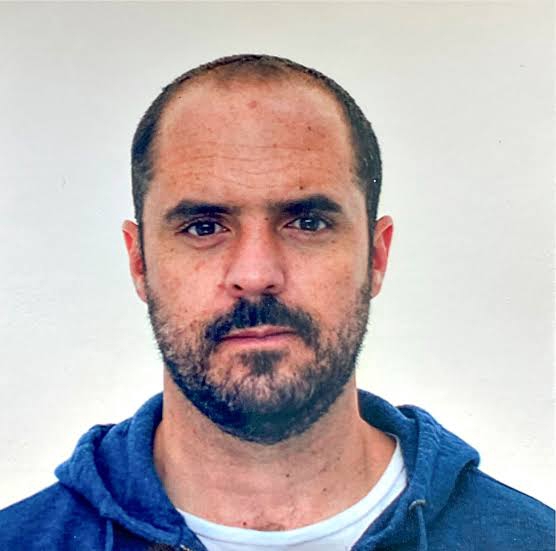
Dr. Diego Cordeñosa is an internationally renowned scientist and assistant professor at Florida International University, who specializes in using the tiniest parts of a shark, their DNA, to help fight this massive international scale trade.
He has worked across the world from Hong Kong to Latin America, pioneering molecular and forensic tools that have helped us to better understand and combat trafficking of CITES-listed endangered shark and ray species.
Diego has also developed and implemented the Lab in a Backpack, a rapid, portable, and inexpensive DNA ID kit that can be used by pretty much anyone to detect the presence of endangered species in products.
This is especially crucial when you consider that an enforcement officer might be faced with a pile of shark fins that aren't attached to the rest of its body and that all look the same, or even a bag of powder that was once part of a shark.
Diego's work has been instrumental in securing better regulations for endangered shark species and also in ensuring that these regulations are effectively implemented.
We had him on in the very, very early days of this podcast to talk about the Fin trade.
And so much has happened since then in the policy space and in Diego's own work.
We also talk about what it's been like to work on the ground, scouring fish markets, training officials, persuading governments and even running across busy airports.
And along the way, we find out how Diego's passion for sharks led him from a childhood exploring the beaches of his home country, Colombia, to lab coats and the bustling streets of Hong Kong.
As always, there will be links to everything we've discussed today in the show notes.
He has a very cool Instagram account, which even features some extremely cute doggos.
If that sounds like your bag, you can find links to everything by heading to www.saveourseas.com forward slash world of sharks forward slash podcast.
Alrighty, without further ado, grab your pipettes and put on your lab in a backpack and let's dive in to our episode.
Read the full transcript.
Create an account to read the whole episode, search across every transcript, and follow the shows you care about.
If you love sharks or you don't know that much about them and are just curious to learn more, you are definitely in the right place because this is a podcast all about them, their relatives, the rays, skates and chimeras and the ocean they all call home.
And it's brought to you by the Save Our Seas Foundation, which is an organisation dedicated to the research and conservation of our cartilaginous friends.
My name is Isla, I'm a scientist and professional shark nerd for the Save Our Seas Foundation and every episode I sit down with experts in shark science, conservation, education and storytelling to take you on a deep dive into a different part of the wonderful, wonderful world of sharks.
Now, one of the not so wonderful parts of the world of sharks is threats to their survival.
We know that sharks and rays are one of the most threatened groups of animals on the planet.
Up to 100 million sharks and rays are removed from the ocean every single year at a rate that heavily outpaces their slow reproductive strategies.
Put another way, sharks cannot replenish their populations fast enough to keep up with the rate that we are fishing them, and so their populations are just plummeting.
Today, we're going to be taking a closer look at one of the biggest and most convoluted industries behind overfishing, the fin trade.
Over the last century, rising demand for shark fins and the industrialization of fishing practices has transformed what was once a niche luxury into an international billion dollar industry.
But thanks to the tireless efforts of so many people, scientists, practitioners, policy makers, campaigners, NGOs, government officials, we are finally starting to tackle the beast.
We have more information than ever before on where finning occurs, which species are targeted, how the trade works, who the main players are, and most important of all, the true impact that this is having on sharks and rays around the world.
We've talked about that before on the podcast and something else that we've talked about before is that there are so many really amazing people who work around the clock to help these regulations be implemented on the ground.
Inventing and developing tools to help ID the Finns when they come into port, for example, or figuring out ways to make the trade more sustainable, legal and traceable.
Dr. Diego Cordeñosa is an internationally renowned scientist and assistant professor at Florida International University, who specializes in using the tiniest parts of a shark, their DNA, to help fight this massive international scale trade.
He has worked across the world from Hong Kong to Latin America, pioneering molecular and forensic tools that have helped us to better understand and combat trafficking of CITES-listed endangered shark and ray species.
Diego has also developed and implemented the Lab in a Backpack, a rapid, portable, and inexpensive DNA ID kit that can be used by pretty much anyone to detect the presence of endangered species in products.
This is especially crucial when you consider that an enforcement officer might be faced with a pile of shark fins that aren't attached to the rest of its body and that all look the same, or even a bag of powder that was once part of a shark.
Diego's work has been instrumental in securing better regulations for endangered shark species and also in ensuring that these regulations are effectively implemented.
We had him on in the very, very early days of this podcast to talk about the Fin trade.
And so much has happened since then in the policy space and in Diego's own work.
We also talk about what it's been like to work on the ground, scouring fish markets, training officials, persuading governments and even running across busy airports.
And along the way, we find out how Diego's passion for sharks led him from a childhood exploring the beaches of his home country, Colombia, to lab coats and the bustling streets of Hong Kong.
As always, there will be links to everything we've discussed today in the show notes.
He has a very cool Instagram account, which even features some extremely cute doggos.
If that sounds like your bag, you can find links to everything by heading to www.saveourseas.com forward slash world of sharks forward slash podcast.
Alrighty, without further ado, grab your pipettes and put on your lab in a backpack and let's dive in to our episode.