Oct 27, 2026 · 15 min · 10 segments
🎧 AUDIO TOOLS MENTIONED IN THIS VIDEO: Reprogram Your Mind app, the 21-day Theta program with 18 audio sessions. LIFETIME ACCESS, one payment, no subscription: https://syncmind.gumroad.com/l/tqsjv…
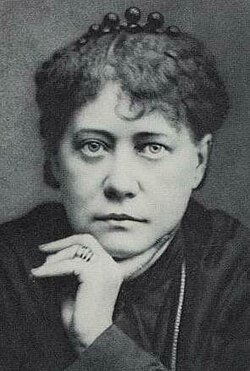
Helena Blavatsky's journey was marked by travels that led her to delve into the esoteric traditions of various cultures.
The Secret Doctrine, her masterpiece, reflects this journey, combining teachings from Buddhist, Hindu and Egyptian traditions with advances in Western science.
With the founding of the Theosophical Society alongside Henry Steele Olcott and William Kwan Judge, she established an arena dedicated to the study of religion, philosophy and science, pursuing an understanding of the laws governing the universe.
Her pioneering approach to esoteric Buddhism and the Kabbalah stood out, unveiling traditions rich in occult teachings about the structure of the cosmos.
Blavatsky scoured these and other esoteric doctrines in search of universal wisdom, proposing a unity of humanity beyond cultural and religious barriers.
She sought to reveal a universal truth that permeates all religions and spiritual traditions and argued that true wisdom does not come from obedience to dogmas, but from a personal quest for spiritual knowledge.
Her psychic abilities were not just supernatural phenomena, but evidence of a broader reality, encouraging the exploration of the self and the universe.
They were the manifestation of a broader conviction that beyond what we can see, there exists a vast domain of spiritual consciousness waiting to be discovered.
Challenging the limits of her time, Blavatsky paved the way for a more holistic understanding of reality, both physical and spiritual.
She upheld the belief in the evolution of human consciousness, viewing each person as a spark of the divine, destined to achieve their full potential through self-improvement and dedication to the common good.
This optimism about the human essence and its future represented a counterpoint to the more pessimistic views of traditional religions at the time.
Blavatsky left a legacy that resonates to this day.
Her ideas on reincarnation, multiple existences and the law of karma are integrated into numerous spiritual currents and new age movements.
Her advocacy for a personal and direct search for spiritual knowledge has echoed in meditative practices and self-awareness around the globe.
She proposed that our actions reverberate beyond our present existence, influencing our future and our long-term spiritual progress.
The principles of karma and reincarnation essential to theosophical philosophy introduced a new understanding of cosmic justice and spiritual evolution.
The rest of this transcript — segmented and speaker-labeled, so you land on the exact moment something was said
Search every transcript — by keyword, by phrase, or by meaning, across every show Radar indexes
Trends — what is surging across podcasts, measured against its own baseline
Alerts — when a name you follow appears in a newly indexed episode
No account is needed to search Radar.