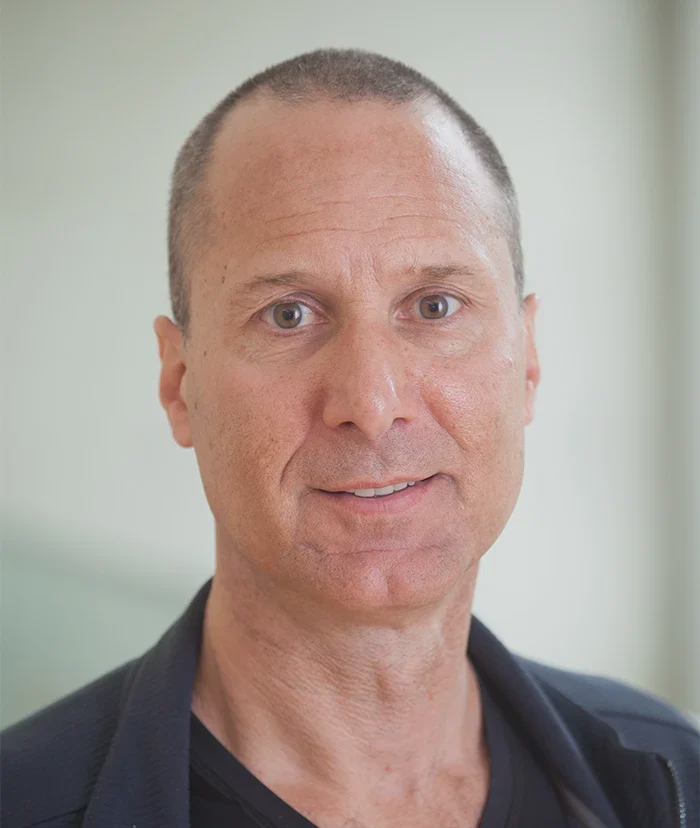
Can We Slow Human Aging? What Would Count as Proof? | Dr. Nik Schork
Sep 28, 2026 · 44 min · 11 segments
🎬 EPISODE OVERVIEW The Longevity Consortium is mapping the biology of aging. We review the NIH-funded research aiming to delay chronic disease.The NIH-supported Longevity Consortium is a massive…
🎬 EPISODE OVERVIEW The Longevity Consortium is mapping the biology of aging. We review the NIH-funded research aiming to delay chronic disease.The NIH-supported Longevity Consortium is a massive effort to understand the biology of aging to reduce risks of cancer, dementia, and frailty. We examine their five core focus areas, ranging from exceptional longevity cohorts to candidate drug screening. Dr. Nik Schork and Dr. George Murphy break down the current strategy for targeting age-related decline.This initiative represents a distinct pivot in geroscience research, moving beyond single-pathway hypotheses to look at systemic biological markers. We analyze the scope of these projects to see which are likely to yield clinical outcomes and which remain preliminary explorations. Understanding the biology of aging remains a complex challenge, but this consortium provides a structural framework for how we might eventually mitigate chronic disease. 🔑 KEYWORDS Longevity • Healthspan • Aging Biology • NIH • NIA • Longevity Consortium • Nik Schork • Centenarians • Human Cell Models • Geroscience 📌 KEY TAKEAWAYS ◆ Healthspan and lifespan are related goals, but improving a biological measurement is not the same as proving that people live longer. ◆ Exceptional longevity may reflect protective biology alongside disease-risk variants, as well as behavior and environmental exposures. ◆ The five projects connect discovery with functional testing. A genetic association still needs a biological explanation and follow-up experiments. ◆ Human cell models help isolate a signal; animal studies and human research test whether it matters in a more complex system. ◆ Public funding supports collaboration across disciplines and exploratory work that may not begin with a single commercial product. ◆ Shared aging mechanisms could offer opportunities to address multiple diseases. That is a research goal, not a claim that a proven universal treatment exists. ◆ A critical approach to evidence matters when evaluating claims about measuring or reversing biological age. 🎙️ THE REPROGRAM PERSPECTIVE Longevity Biology Without the Hype. The important question is not simply whether an intervention changes a marker, but whether it produces a meaningful, reproducible benefit for people. This conversation follows the research pathway; it does not present a finished anti-aging treatment.⏱️ CHAPTERS 00:00 Can we slow aging? 01:08 Meet Dr. Nik Schork 02:01 From philosophy to longevity science 03:53 What is the Longevity Consortium? 05:24 Healthspan versus lifespan 06:31 Why team science matters07:55 Project 1: Predicting human longevity 09:23 Project 2: Lessons from long-lived species 12:46 Project 3: Centenarians and resilience 14:50 Disease-risk genes and exceptional longevity 16:20 Project 4: From genes to candidate drugs 19:04 Project 5: Testing ideas in human cells 21:42 Connecting a discovery across the consortium 24:45 The challenge of proving human benefit 26:38 What public funding makes possible 29:12 Shared aging mechanisms and the public payoff 32:13 What success could look like 35:02 Lightning round: Can aging biology be modified? 36:12 Misconceptions about publicly funded science 37:24 How to evaluate longevity claims 39:13 How the science shapes Nik’s own health choices 41:50 Closing the conversation 42:48 The ReProgram takeaway 📝 SELECTED NOTES AND REFERENCES 1\. Longevity Consortium overview. Official description of the research program and its integrated approach.https://www.longevityconsortium.org/overview/ 2\. Longevity Consortium projects and resources. Explore the five projects and their leadership. https://www.longevityconsortium.org/ ▶ Mechanism over marketing. Evidence over anecdotes. Trade-offs over hype.Knowledge is power.
🎬 EPISODE OVERVIEW The Longevity Consortium is mapping the biology of aging. We review the NIH-funded research aiming to delay chronic disease.The NIH-supported Longevity Consortium is a massive…