The India Energy Hour Presented by 101Reporters
Jul 16, 2026 · 1 hr 4 min · 11 segments
As India races towards a cleaner energy future, the conversation often revolves around solar and wind. But are we overlooking a reliable, round-the-clock source of clean energy that lies beneath our…
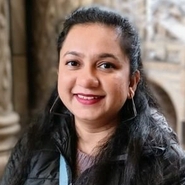
Kartik GanesanGuest
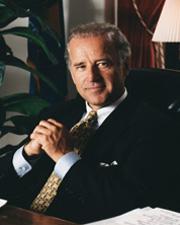
Sandeep PaiHost
Shreya JaiHost
As far as I am, and maybe I'm wrong, this is one of the most elaborate reports I've seen.

So, Your new report that you just released, The Future of Geothermal in India, Powering Economic Growth and Prosperity with Abandoned Domestic Energy, by the way, it's a very long title, but I appreciate the sentiment.

So tell us about this report, first of all, by starting by saying, like, what was the motivation and what are some big picture headline findings out of this report?

So, you know, I would say the motivation for the report, to be honest, was an opportunity to work with this group called Project InnerSpace, which you may have heard of, right? Which is the one that's the primary partner that's worked with us on this.

And we readily sort of jumped onto, you know, that request when they came and asked, do you want to work with us? Because it was really an opportunity for us to learn.

Because the last time I looked at geothermal was probably in class 9 or 10, right? When you hear about all the things that are geothermal and you hear about conventional hydrothermal resources and you wonder, oh, wow.

And it felt like being able to learn from this group is something that would be useful.

And more importantly, they'd convened a set of actors from across the spectrum in India, both academia.

They also asked other think tanks and other individual contributors to be part of it.

And it felt like the right effort to be able to sort of go and contribute to.

And more importantly, having worked in renewable energy for so many years, We understand that, you know, even in our pursuit of solar and wind, Sandeep, we're kind of naturally limiting ourselves to just two sources, right? If anybody asks you what is the renewable energy future, it's still just two things, not nearly as diverse as it ought to be.

to give you the strength of conviction that, hey, this will serve me X years down the line.

This will serve me when the weather is not great, when the wind's not blowing or during the monsoons, when the sun's not around for many days or during early winters in India, for instance, when there's no wind, there's no solar.

So there is a need for diversity to cover for things that current set of renewable energy sources don't have access to.

Now, in fact, Project Inner Space, the group, is also in some sense funded by a bunch of organizations and entities that have their roots in the way the US is thinking about diversifying energy.

As far as I am, and maybe I'm wrong, this is one of the most elaborate reports I've seen.

So, Your new report that you just released, The Future of Geothermal in India, Powering Economic Growth and Prosperity with Abandoned Domestic Energy, by the way, it's a very long title, but I appreciate the sentiment.

So tell us about this report, first of all, by starting by saying, like, what was the motivation and what are some big picture headline findings out of this report?

So, you know, I would say the motivation for the report, to be honest, was an opportunity to work with this group called Project InnerSpace, which you may have heard of, right? Which is the one that's the primary partner that's worked with us on this.

And we readily sort of jumped onto, you know, that request when they came and asked, do you want to work with us? Because it was really an opportunity for us to learn.

Because the last time I looked at geothermal was probably in class 9 or 10, right? When you hear about all the things that are geothermal and you hear about conventional hydrothermal resources and you wonder, oh, wow.

And it felt like being able to learn from this group is something that would be useful.

And more importantly, they'd convened a set of actors from across the spectrum in India, both academia.

They also asked other think tanks and other individual contributors to be part of it.

And it felt like the right effort to be able to sort of go and contribute to.

And more importantly, having worked in renewable energy for so many years, We understand that, you know, even in our pursuit of solar and wind, Sandeep, we're kind of naturally limiting ourselves to just two sources, right? If anybody asks you what is the renewable energy future, it's still just two things, not nearly as diverse as it ought to be.

to give you the strength of conviction that, hey, this will serve me X years down the line.

This will serve me when the weather is not great, when the wind's not blowing or during the monsoons, when the sun's not around for many days or during early winters in India, for instance, when there's no wind, there's no solar.

So there is a need for diversity to cover for things that current set of renewable energy sources don't have access to.

Now, in fact, Project Inner Space, the group, is also in some sense funded by a bunch of organizations and entities that have their roots in the way the US is thinking about diversifying energy.
The rest of this transcript — segmented and speaker-labeled, so you land on the exact moment something was said
Search every transcript — by keyword, by phrase, or by meaning, across every show Radar indexes
Trends — what is surging across podcasts, measured against its own baseline
Alerts — when a name you follow appears in a newly indexed episode
No account is needed to search Radar.