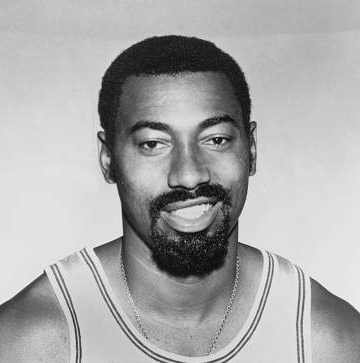
Rarely does a hometown kid get to make good for the local college team, but Harold Everett Greer did just that.
Nicknamed Hal, Greer played for the all-black Douglas High School in Huntington before the end of school desegregation.
In 1955, he went just a few blocks away to become the first African-American player not only for Marshall University, but in West Virginia.
His years at the school would take Marshall to its first appearance in the NCAA championship.
and Greer would win many honors, All-American being the most notable.
In 1958, Greer was drafted by the NBA's Syracuse Nationals, where his star would ascend and he was selected for the All-Star team in 1961.
Along with fellow legend Wilt Chamberlain, Greer led the team to defeat the San Francisco Warriors, now called Golden State, to take the NBA championship in 1967.
Before retiring, Greer would rack up a slate of superlatives.
He still holds the franchise record for points scored, field goals, and games and minutes played.
He was inducted into the Basketball Hall of Fame in 1983 and named one of the NBA's 50 Best Players in 1996.
Greer received parallel honors from both Marshall and Philadelphia, with each team retiring his jersey and each erecting statues of the champion outside their respective arenas.
In 1978, the city of Huntington renamed 16th Street Hal Greer Boulevard, leading fans through the community where he grew up and to Marshall University, the places where he began a basketball career that would make him a titan of the sport.
The rest of this transcript — segmented and speaker-labeled, so you land on the exact moment something was said
Search every transcript — by keyword, by phrase, or by meaning, across every show Radar indexes
Trends — what is surging across podcasts, measured against its own baseline
Alerts — when a name you follow appears in a newly indexed episode
No account is needed to search Radar.