Oct 23, 2026 · 31 min · 10 segments
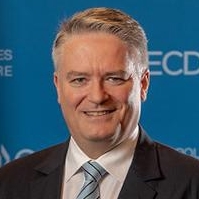
Former Finance Minister and now OECD Secretary-General Mathias Cormann says the cost-of-living crunch is fuelling frustration and pulling voters to populist parties.
Look, you did make the point over the weekend looking across Australia the 38 member countries of the OECD, that in your words, mainstream parties that respond to a populist surge by adopting its economics do not recover their voters.
They lose twice, once to the original, which the electorate will always prefer to the copy, and once to the centre, which has nowhere else left to go.

Well, what I'm saying is, like, take the grievances that people have seriously and think about what the best way to respond to them, the best way to solve the problems would be.

And, you know, in Australia, we know what works because, I mean, we've had a period of 20 years of successful reforms that led to increases in real incomes and increases in living standards.

stronger productivity growth and competition that was able to keep prices down.

It's just that in the end, we were so successful and then the mining boom happened.

I mean, politicians need to have a license, need to be able to, I guess, gain license from the public to be able to pursue ambitious structural reforms.

And when things were so good that national income was increasing without the need for, you know, the productivity growth at the same level, the appetite for reform went down.

Now that people are really feeling the squeeze, and they are feeling the squeeze, they're more receptive to what might be the seemingly easier solution.

But, you know, essentially, I mean, rebates or subsidies or price caps, I mean, none of that actually leads to a reduction in costs.
that, because your comments there about, you know, not trying to re-regulate our way to higher wages, to subsidise a manufacturing renaissance, that seems to be a message to some of the things that the Albanese government, that Labor's been doing lately when it comes to future made in Australia subsidies and certainly boosting the wages in the care sector.

I mean, I think in my speech, I sing the prizes of both sides of politics in saying, you know, well done for the reforms of the 80s and 90s and what that has delivered for Australia.

And I say to both sides of politics, including covering the period when I was in government myself, we haven't done as well as we could have and should have.

Let's try and get ourselves on a better, stronger trajectory based on the lessons of the past.

Now, I mean, you know, in the end if you i mean you can legislate a pay rise but you can't legislate an increase in real wages because you got to think about what else happens in the economy if you legislate to increase wages without you know aligning that with what's happening to productivity growth you know in the economy what you do is you end up driving up inflation so you know people will end up I mean they'll just end up paying more and so they will not actually feel any better off I mean in the end what matters is that your wages grow faster than the cost of the goods you have to buy so And that is not something that you can legislate.

I mean, what we need is we need stronger productivity growth to drive stronger increases in real incomes.
The rest of this transcript — segmented and speaker-labeled, so you land on the exact moment something was said
Search every transcript — by keyword, by phrase, or by meaning, across every show Radar indexes
Trends — what is surging across podcasts, measured against its own baseline
Alerts — when a name you follow appears in a newly indexed episode
No account is needed to search Radar.